 ultimate-guide
What Are Combo Brows: The Ultimate 2026 Guide
Table of Contents
- What Are Combo Brows and How They Work
- Microblading vs. Combo Brows: Key Differences
- Combo Brows vs. Powder Brows: Which Suits Your Skin
- The Combo Brows Healing Process and Timeline
- How Long Do Combo Brows Last and Touch-Up Schedules
- Who Is the Ideal Candidate for Combo Brows
- The Combo Brows Procedure: What to Expect
- Aftercare and Long-Term Skin Health
- Frequently Asked Questions
Last Updated: October 8, 2026
What Are Combo Brows and How They Work
Combo brows merge the precision of microblading with the coverage of machine shading, delivering fuller definition while maintaining a natural appearance. At Tonni Petty PMU Artistry, we've refined this technique over more than two decades, combining manual hairstrokes with automated shading to create dimension neither technique achieves alone.
The Hybrid Technique Explained
Combo brows layer two application methods. The artist first creates individual hairstrokes with a manual microblading tool, mimicking natural brow hairs and forming the foundational architecture, arch, tail definition, and overall shape, mapped precisely to your facial structure. The second layer, machine shading, fills gaps between hairstrokes and adds density, creating a powdered or ombré effect. The result looks fuller and more defined than microblading alone, yet retains the natural hair-like quality powder brows sometimes lose. This hybrid approach solves a core challenge: microblading fades unevenly, while powder brows can read as too uniform.
Manual Hairstrokes Meet Machine Shading
The manual component uses a handheld tool with a single or multi-needle cartridge to create strokes mimicking natural hair growth patterns, each placed at a specific angle and depth. Machine shading follows, using a rotary or coil-based PMU device; the artist adjusts pressure, speed, and needle configuration to achieve the desired density and fade, creating the gradient effect that makes combo brows appear naturally shadowed rather than drawn-on. Timing matters: applying shading over fresh hairstrokes requires experience to avoid overworking the skin and compromising the hair-like definition underneath.
Microblading vs. Combo Brows: Key Differences
Understanding how combo brows differ from microblading clarifies which technique suits your goals and skin type.
Definition and Natural Look
Microblading creates the finest hair-like strokes in permanent makeup. The manual tool deposits pigment at a shallow 0.5-1.5mm into the dermis, producing crisp hairstrokes that look remarkably like natural brow hairs, especially in the first few weeks.
Combo brows trade some fine hair definition for density and longevity. Machine shading fills space and adds depth, so hairstrokes remain visible but less pronounced. The effect is more "enhanced brow" than "individual hair replica."
For a barely-there enhancement, microblading may suit better; for visible definition and fuller brows, combo brows deliver. After healing, microblading's strokes fade faster and may show gaps by month six, while combo brows maintain more consistent color and density.
Longevity and Fade Patterns
Microblading typically lasts 12-18 months before a touch-up, varying by skin type: oily skin breaks down pigment faster, dry skin retains it longer. Combo brows generally last 18-24 months, sometimes longer, because machine shading deposits pigment deeper than hairstrokes; even as the microblading component fades, the shading provides a baseline of color and definition. Fade patterns differ too: microblading can leave visible gaps where hairstrokes were densest, while combo brows fade more uniformly because shading fills those spaces.
Combo Brows vs. Powder Brows: Which Suits Your Skin
Powder brows, also called ombré or shading brows, use only machine application for a soft, powdered look. Comparing them to combo brows reveals key considerations around skin type and aesthetic preference.
Skin Type Considerations
Oily skin challenges microblading most: natural oils break down pigment faster and blur fine hairstrokes. Combo brows perform better because the shading component is less dependent on crisp line definition, pigment sits deeper and resists oil-induced blurring. Powder brows also work on oily skin but can appear darker initially because machine shading deposits pigment densely. Dry skin is forgiving for all three: microblading retains clarity longer, combo brows maintain excellent definition, and powder brows can appear chalky if the artist isn't careful with pigment and pressure. Mature skin, often thinner and more fragile, benefits from combo brows because the dual approach requires less aggressive needling than pure microblading.
The Combo Brows Healing Process and Timeline
Healing reveals combo brows' complexity: the skin must recover from two application methods, each depositing pigment at different depths and trauma patterns.
Week-by-Week Healing Stages
Days 1-3: Brows appear darker and bolder than the final result, with minimal swelling possible.
Days 4-7: Light scabbing begins, the critical period where aftercare determines the final result. Scabs protect healing skin but trap dead cells and pigment particles; picking accelerates fading.
Week 2: Scabbing peaks and sheds. Brows look patchy and incomplete, but underneath, new skin forms and pigment settles.
Weeks 3-4: Most scabbing resolves. Brows are noticeably lighter as regeneration pushes out excess pigment and dead cells, revealing the true color, often much lighter than week one.
Weeks 4-6: Brows lighten slightly as healing completes. Color stabilizes by week six, with subtle shifts up to eight weeks, the point to assess whether pigment color is correct or needs touch-up adjustments.
Scabbing, Fading, and Color Settling
Scabbing is inevitable with combo brows because both components create micro-wounds. Protective scabs typically shed within 7-14 days, varying by healing speed and skin thickness. Fading during healing is substantial, typically 20-40% of initial color is lost, so artists apply pigment darker and denser than the target final color. Color settling continues subtly for 6-8 weeks as pigment oxidizes and regeneration stabilizes particles in the dermis; true color assessment shouldn't happen until at least week six.
How Long Do Combo Brows Last and Touch-Up Schedules
Combo brows typically last 18-24 months before a touch-up, though individual variation is significant. Several factors influence retention.
Retention Factors and Individual Variation
Skin type is the primary factor. Oily skin may see noticeable fading by month 12; dry skin often maintains definition through month 24; combination skin falls in between. Sun exposure accelerates fading, pigment is organic matter that breaks down under UV radiation. Skincare routine matters more than most realize: harsh exfoliants, retinoids, and acids accelerate pigment breakdown, while gentle cleansing and moisturizing support retention. Metabolism influences how quickly the body breaks down pigment particles, independent of skin type or lifestyle. Pigment quality and color also matter: high-quality pigments formulated for skin tone and undertone fade more gracefully, and reds and oranges typically fade faster than browns and blacks.
Who Is the Ideal Candidate for Combo Brows
Not everyone benefits equally from combo brows. Several factors determine whether this technique aligns with your goals and lifestyle.
Skin Type, Brow Goals, and Lifestyle Fit
Ideal candidates have combination to slightly oily skin, want visible definition without looking heavily made-up, and commit to proper aftercare. They value longevity, don't mind touch-ups every 18-24 months, and understand results emerge over 6-8 weeks. Combo brows suit professionals wanting polished brows without daily makeup, and active individuals who exercise or swim. Less ideal candidates include those with very oily skin (faster fading), a history of keloid or hypertrophic scarring (permanent makeup risk), or unrealistic expectations; those wanting the finest hair detail should choose pure microblading.
The Combo Brows Procedure: What to Expect
Understanding the appointment reduces anxiety and helps you prepare mentally and physically.
Brow Mapping and Pigment Selection
The procedure begins with brow mapping, which determines final shape, arch placement, and symmetry.
Mapping takes 15-20 minutes, drawing the proposed shape with a surgical pencil. You see the design before any pigment is applied and can request adjustments to arch height, tail length, and overall shape.
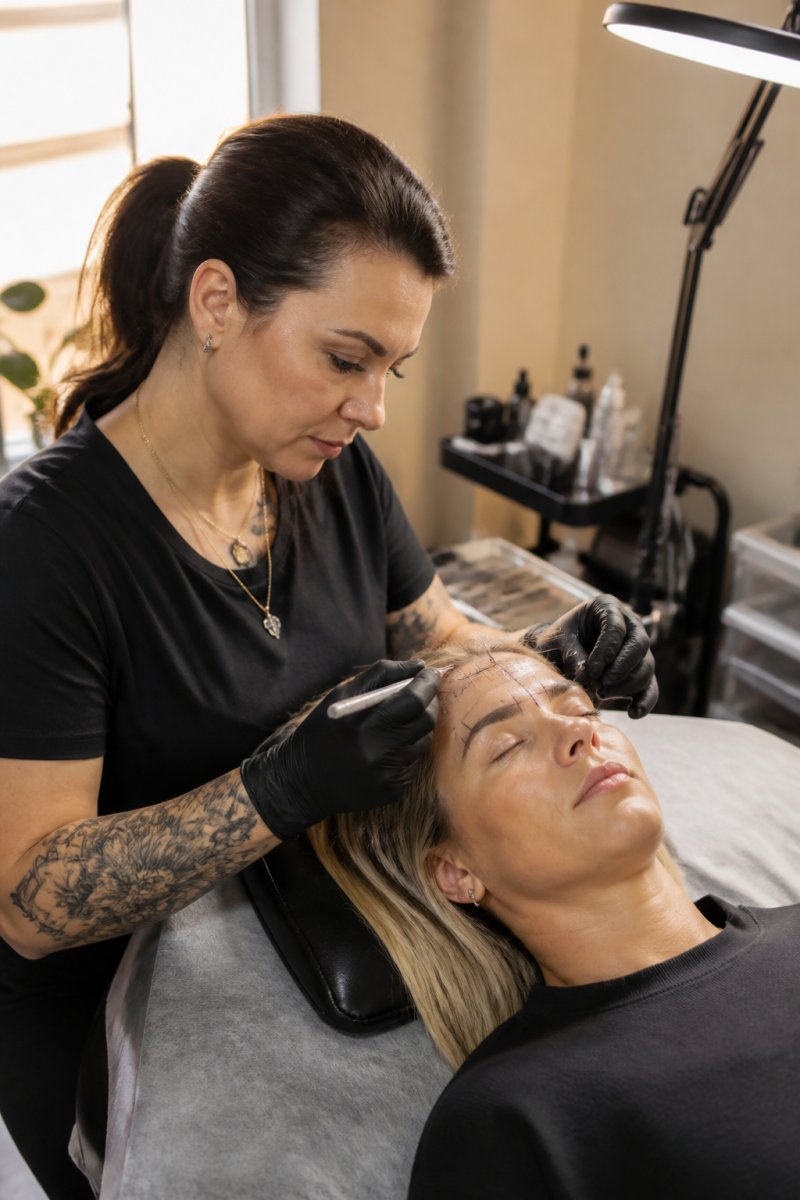
Pigment selection follows. Your technician shows samples and discusses how colors appear on your skin tone and undertone, accounting for natural hair color, skin depth, and fade over time.
The Application Process and Topical Anesthetic
Once you approve the map and pigment, the technician applies topical anesthetic, which takes 10-15 minutes to reach full effectiveness. Most clients report minimal pain, you'll feel pressure and vibration, but sensation is significantly reduced. The microblading portion comes first: the artist uses a handheld tool to create individual hairstrokes, taking 20-30 minutes. Machine shading follows, taking 15-20 minutes; the rotary or coil device deposits pigment to fill gaps and create density, a buzzing vibration rather than the scratching feel of the manual tool. The entire procedure takes 60-90 minutes including mapping, numbing, and both application methods, and your technician may apply additional anesthetic partway through if you report discomfort.
Aftercare and Long-Term Skin Health
The two weeks following your procedure determine your final result. Proper aftercare prevents infection, minimizes scarring, and maximizes pigment retention.
Critical First 14 Days
Days 1-7: Keep brows dry, no direct face showers, swimming, or excessive sweating. Moisture disrupts healing and causes pigment loss.
Apply the provided aftercare ointment 2-3 times daily to create a protective barrier and prevent excessive drying.
Avoid makeup, sunscreen, and other products on the brows, they introduce bacteria or interfere with healing. Wear a wide-brimmed hat outdoors instead of sunscreen.
Days 8-14: Continue gentle care as scabs shed. Don't pick or scratch, let them fall naturally. Brows look patchy and incomplete, which is normal.
By day 14, most clients return to normal face washing and light makeup (avoiding the brows). Continue protecting brows from direct sun for at least four weeks.
Pre-Procedure Lifestyle Preparation
Preparation influences healing and results. Avoid blood-thinning medications and supplements for one week prior if possible, consult your doctor before stopping prescribed medications. Avoid alcohol for 24 hours before, as it thins blood and increases bleeding. Stay hydrated the week before and after, hydrated skin heals better and holds pigment more effectively. Avoid intense exercise for 3-5 days after, as sweating introduces bacteria and disrupts healing.
Combo brows demand precision, skill, and commitment to proper healing, but the results justify the investment. At Tonni Petty PMU Artistry, we've spent over 22 years perfecting this hybrid technique to deliver brows that enhance your natural features while lasting through your busy life.
Frequently Asked Questions
Is combo brows better than microblading?
Combo brows and microblading serve different goals. Microblading creates fine hairstrokes for a natural, feathered look but fades faster and works best on dry skin. Combo brows blend hairstrokes with powder shading for fuller definition and longer retention, especially on oily skin. The better choice depends on your skin type, desired brow density, and how long you want results to last. A consultation with a certified technician can determine which suits your features best.
How long do combo brows last?
Combo brows typically last 18 months or longer, though retention varies by skin type, aftercare adherence, and individual metabolism. Oily skin tends to break down pigment faster, while dry skin may retain color longer. Most clients need a touch-up appointment to refresh faded areas and ensure symmetry. Regular sun protection and proper aftercare extend longevity significantly.
What should I do to prepare before getting combo brows?
Avoid caffeine, alcohol, and intense exercise the day of your procedure. Arrive with clean skin, free of makeup or sunscreen. Discuss any skin sensitivities, medical conditions, or previous permanent makeup experiences with your technician during your consultation.
What does the combo brows healing process look like?
Healing unfolds in distinct stages. Follow strict aftercare to prevent infection. Light scabbing and itching occur as the skin sheds; do not pick or scratch. Fading continues as scabs fall away naturally and pigment settles into the skin. Final color emerges as healing completes. During the entire healing period, avoid water, sweat, direct sunlight, and makeup on the brows to ensure proper pigment retention.
| Technique | Best For | Longevity | Healing Time | Natural Look |
|---|---|---|---|---|
| Microblading | Fine hair detail, dry skin | 12-18 months | 6-8 weeks | Extremely natural |
| Combo Brows | Fuller definition, combination skin | 18-24 months | 6-8 weeks | Natural with density |
| Powder Brows | Oily skin, soft appearance | 18-24 months | 6-8 weeks | Makeup-like finish |