
 how-to
How to Prevent Permanent Makeup Fading: 2026 Guide
Table of Contents
- Why Permanent Makeup Fades: The Science Behind Pigment Loss
- Skincare Ingredients to Avoid with Permanent Makeup
- How to Prevent Permanent Makeup Fading with Daily Sun Protection
- Permanent Makeup Color Boost Frequency: Timing Your Touch-Ups
- How to Identify Scalp Micropigmentation Fading
- The Buffer Zone Technique: A Pro Approach to Longevity
- Lifestyle and Internal Factors That Accelerate Fading
- Conclusion: Protect Your Permanent Makeup Investment
- Frequently Asked Questions
Last Updated: September 13, 2026
Why Permanent Makeup Fades: The Science Behind Pigment Loss
Permanent makeup fading is the gradual loss of pigment saturation caused by skin cell turnover, UV exposure, and chemical breakdown of pigment particles. Understanding how to prevent permanent makeup fading starts with knowing why it happens: your skin is not a static canvas. It constantly renews itself, and that renewal pushes pigment out over time.
At Tonni Petty PMU Artistry, clients who understand the biology before buying aftercare products maintain their results best.
Pigment sits in the dermal layer, below the epidermis. As the epidermis turns over, it carries some pigment away; the rest stays embedded but can shift color as the body metabolizes it.
Epidermal Turnover and Pigment Retention
Epidermal turnover, the skin's natural shedding cycle, directly controls pigment retention. Every few weeks your body replaces its outermost cells; pigment placed too shallow goes with them, while correct depth lasts longer.
A common mistake is choosing an artist who implants too superficially to reduce healing discomfort. Those brows look sharp for months, then blur and vanish. Depth is a longevity decision, not just a comfort one.
Color Shift and Pigment Oxidation
Color shift happens when pigment particles break down and change hue. Warm brow tones can oxidize toward orange or red as the body processes them, the reason so many people ask why their old microblading turned ashy or gray.
Pigment quality, implant depth, and aftercare all influence how quickly this shift occurs. You cannot stop oxidation entirely, but you can slow it dramatically.
Skincare Ingredients to Avoid with Permanent Makeup
The skincare ingredients to avoid with permanent makeup are not one category but a spectrum ranked by how aggressively each accelerates epidermal turnover. "Avoid acids and retinoids" is useless advice when your cleanser has lactic acid and your serum has glycolic acid, those two behave very differently over implanted pigment.
The distinction matters: using these ingredients elsewhere on your face is fine. Applying them on your brows, lips, or scalp is what causes premature fading.
The Acid Spectrum: Which Ones Are Destructive vs. Tolerable
AHAs and BHAs dissolve the bonds holding dead skin cells together, forcing faster epidermal replacement. The smaller the molecule, the deeper it penetrates and the more pigment it drags out.
- Glycolic acid, the smallest AHA molecule, penetrates fastest, and is the most aggressive over permanent makeup. Found in toners, peels, and many "brightening" serums. Treat it as off-limits over treated areas.
- Salicylic acid, a beta hydroxy acid that is lipid-soluble, so it dives into pores and keeps exfoliating for hours after application. Common in acne cleansers and spot treatments. Keep it off brows and lips.
- Lactic acid, a larger AHA molecule that sits closer to the surface. Milder than glycolic, but still a turnover accelerator. Occasional contact is less damaging; daily use over pigment is not.
- Mandelic acid, the largest of the common AHAs, with the slowest penetration. Many practitioners consider it the most forgiving option for clients who want gentle exfoliation near treated areas, though it is still not a product to layer directly on healed pigment.
- Polyhydroxy acids (PHAs) such as gluconolactone, larger still, and generally the gentlest exfoliating class. A reasonable choice for the rest of the face when you want to keep actives well away from your brows or lips.
Retinoids: The Turnover Accelerators
Retinoids speed up epidermal turnover by design, great for acne and fine lines, a problem over tattooed pigment. Tretinoin, adapalene, retinol, and retinaldehyde all push cells through their cycle faster, carrying upper-dermal pigment toward the surface to be shed sooner.
A common pattern practitioners report: clients using a prescription retinoid near their brows see visible lightening within a few weeks of consistent application, while clients using an over-the-counter retinol see a slower but still measurable shift over a few months.
The Buffer Zone: How Far to Keep Products Away
"A finger's width" is imprecise. Keep actives at least one centimeter, roughly a pencil eraser's width, from the outer edge of your permanent makeup. Lip blush clients should check every lip product label, since balms, plumpers, and glosses often contain exfoliating acids.
A practical workflow:
- Apply your retinoid or acid serum first, to the areas of your face that need it.
- Wash your hands.
- Apply a dedicated brow or lip product, one formulated without actives, to the treated area.
- Do not layer the active over the top of the treated area "just at the edges." The edges are exactly where fading shows first.
How to Prevent Permanent Makeup Fading with Daily Sun Protection
Sun protection is the single highest-impact habit for preventing permanent makeup fading. UV rays break down pigment particles and trigger the color shifts that make brows and lips look tired, so daily broad-spectrum protection is not optional.
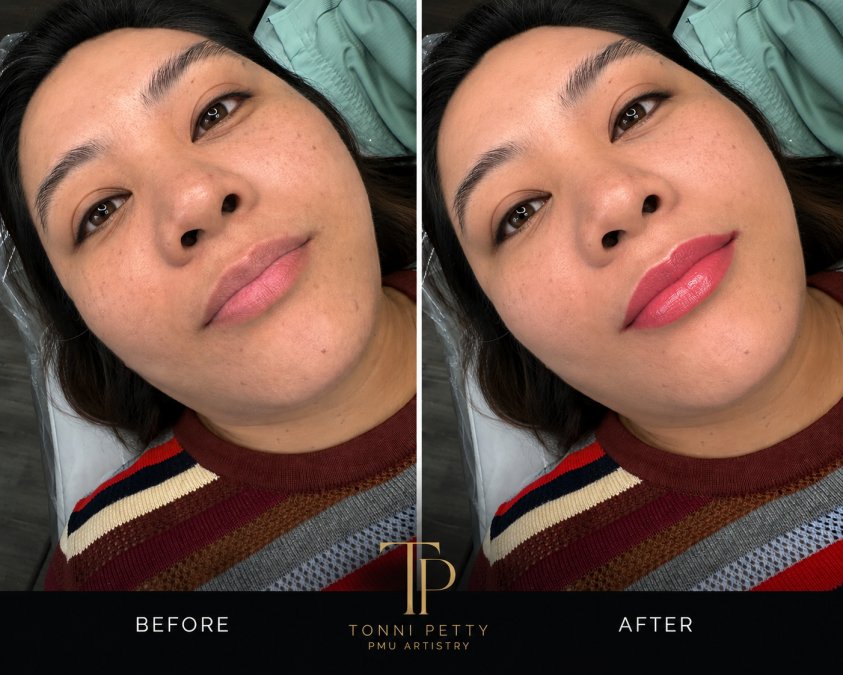
Mineral SPF is better over permanent makeup because it reflects UV rather than absorbing it. Zinc oxide and titanium dioxide formulas sit on top of the skin without irritating freshly healed pigment.
Mineral SPF and Physical Barriers
A physical barrier means sun protection you can see and feel: a hat with a brim, UV-blocking sunglasses, and a mineral sunscreen with broad-spectrum protection. Layer them. According to Skin Cancer Foundation sun protection guidance, daily broad-spectrum sunscreen use significantly reduces UV damage accumulation over time.
For lips, use a mineral SPF balm. Lip blush fades faster than brows in most clients simply because lips get more sun and more friction.
Permanent Makeup Color Boost Frequency: Timing Your Touch-Ups
Permanent makeup color boost frequency typically falls between 12 and 24 months for brows and 12 to 18 months for lips, depending on skin type and lifestyle. A color boost is a light refresh, not a full redo, adding saturation back to unevenly faded areas.
Your touch-up schedule should be set by your artist, not by the calendar alone. Sun exposure, skincare habits, and skin metabolism all shift the interval.
| Service | Typical Boost Interval | Main Fading Driver |
|---|---|---|
| Powder or combo brows | 12-24 months | UV exposure, retinoids |
| Lip blush | 12-18 months | Sun, friction, acids |
| Scalp micropigmentation | 24-36 months | Sun, scalp products |
| Microblading | 12-18 months | Shallow implant depth |
Waiting too long means more work to restore saturation and less predictable color matching. Book when you first notice unevenness, not when the pigment is gone.
How to Identify Scalp Micropigmentation Fading
Scalp micropigmentation fading shows up as reduced contrast between pigment dots and scalp, not a color change. Early signs: a softer hairline, less density at the crown, and dots that blend into skin rather than standing out.
Check your scalp in the same lighting each month. Natural daylight near a window reveals fading that bathroom lighting hides. If your hairline looks blurrier in photos than it did a year ago, that is your signal.
The same drivers apply: sun, exfoliating scalp treatments, and time. Scalp micropigmentation holds longer than brows because the scalp gets less friction and fewer acid-based products.
The Buffer Zone Technique: A Pro Approach to Longevity
The Buffer Zone technique leaves a margin between treated areas and the skin most exposed to actives and UV. Instead of implanting to the edge of the brow or hairline, the artist works slightly inside the boundary.
The buffer zone absorbs the first wave of fading: when the outer margin lightens, the core shape still reads clearly, so brows or hairline keep their definition longer between touch-ups.
This is one of the angles most guides skip entirely.
Lifestyle and Internal Factors That Accelerate Fading
Internal health and metabolic factors influence how long pigment lasts, and most aftercare advice ignores them. Skin metabolism varies; faster turnover means faster fading, no matter how careful you are with sunscreen.
This is the angle almost no competing guide covers.
How Skin Metabolism Sets Your Fading Clock
Pigment is cleared by the same immune and cellular processes that remodel skin. When hormones, nutrient status, or medication speed those processes up, pigment clears faster too, two clients with identical brows, sunscreen habits, and artists can see a difference in retention purely from what's happening inside the body.
Iron Deficiency and Thyroid Conditions
Iron is required for normal skin cell turnover and repair; low stores can make the renewal cycle irregular and pigment retention less predictable. Thyroid conditions are more direct: both hypo- and hyperthyroidism alter turnover rate, and hyperthyroidism is associated with faster epidermal renewal. If you have a thyroid condition and fade faster than expected, talk to your doctor, not just your technician.
Medications That Increase Photosensitivity
Some prescription medications make skin more reactive to UV, which compounds the sun damage that breaks down pigment. Common categories include certain antibiotics (notably tetracyclines), some acne medications, and a range of blood pressure and diabetes drugs. If your medication carries a photosensitivity warning, your sunscreen and physical-barrier habits need to be stricter than average, not looser.
Smoking and Circulation
Smoking restricts blood flow and impairs oxygen and nutrient delivery for healing and repair. For permanent makeup, that means slower, less predictable healing after each session and faster-aging skin. Smokers often need touch-ups sooner and see more uneven fading than non-smokers.
Stress, Sleep, and Healing Windows
High stress and poor sleep disrupt healing and repair. The window that matters most is the two to four weeks after a session, when skin rebuilds over implanted pigment. Clients who book during a low-stress stretch, sleep well, and avoid illness in that window may experience better retention.
What to Do With This Information
You cannot change your metabolism, but you can stop guessing about your touch-up schedule:
- Get routine bloodwork if you suspect iron or thyroid issues, and share relevant results with your artist.
- Tell your artist about any new prescription medication, especially anything with a photosensitivity warning.
- If you smoke, expect a shorter boost interval and plan for it.
- Schedule sessions when you can protect your sleep and stress levels for the following few weeks.
If your pigment fades faster than predicted, mention any health changes at your next appointment. A revised touch-up schedule often solves it.
Conclusion: Protect Your Permanent Makeup Investment
Permanent makeup fades no matter what you do. The goal is not permanence, it is control: slowing the process, timing your boosts well, and choosing an artist who plans for how pigment ages. That is where most of the outcome is decided.
At Tonni Petty PMU Artistry, we build longevity into every appointment. Our master-level artistry, personalized consultation process, and 22 years of experience mean your brows, lips, or scalp micropigmentation are placed with depth, tone, and buffer zones in mind. As a Master Technician certified through the American Institute of Intradermal Cosmetics and a member of the American Academy of Micropigmentation, Tonni Petty designs results around your skin type and lifestyle, not a template.
Get started with Tonni Petty PMU Artistry and protect the results you paid for.
Frequently Asked Questions
Will retinol help fade microblading?
Retinol accelerates cell turnover, which can cause permanent makeup to fade faster. If you use retinol, avoid applying it directly on or near your brows, lips, or scalp. Instead, apply it only to areas away from permanent makeup. For anti-aging benefits without risking your pigment, ask your dermatologist about alternatives that do not increase epidermal turnover in treated areas. Always inform your PMU artist about your skincare routine during consultations.
Why is my microblading not fading after 3 years?
Microblading that lasts more than three years often indicates deeper pigment placement or a high-quality, stable ink. Some clients simply retain pigment longer due to slow skin metabolism, less sun exposure, or good aftercare. If you want it to fade, avoid aggressive exfoliation or laser treatments without professional guidance. To assess your options, consult a certified permanent makeup artist who can evaluate your skin and recommend safe removal or color adjustment methods.
How often should I get a color boost for my permanent makeup?
A color boost is typically needed every 12 to 18 months for brows, and every 2 to 3 years for lips or scalp micropigmentation. However, frequency depends on your skin type, lifestyle, and how well you protect your skin from sun and active ingredients. Your artist can assess fading during a consultation and recommend a personalized touch-up schedule. Booking a color boost before significant fading occurs helps maintain crisp, even results.
Does sun exposure cause permanent makeup to change color?
Yes, UV rays break down pigment particles and can shift warm tones like brown to orange or red. Daily broad-spectrum SPF 30 or higher on treated areas is essential. Mineral sunscreens with zinc oxide or titanium dioxide are ideal because they sit on top of the skin and block UV without irritating pigment. Reapply every two hours when outdoors, and wear hats for added protection. Consistent sun protection significantly extends the life of your permanent makeup.