
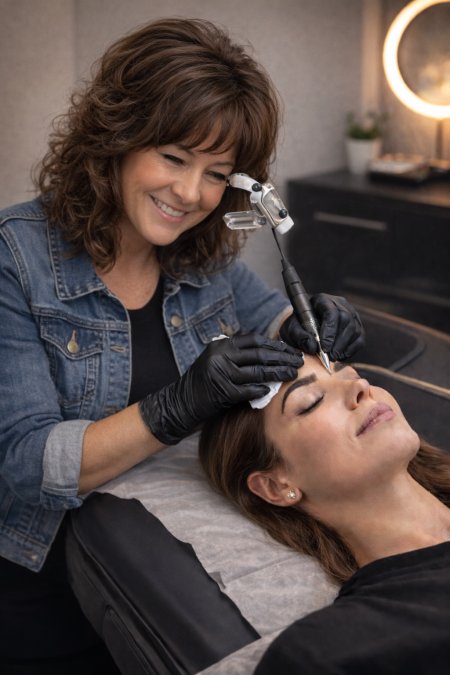
 ultimate-guide
Permanent Makeup Correction: What to Expect
Table of Contents
- Why Permanent Makeup Correction Matters
- Common Reasons for Permanent Makeup Mistakes
- Emergency PMU Removal: When Immediate Action Is Needed
- Permanent Makeup Color Correction Techniques
- PMU Removal Healing Timeline and What to Expect
- How Many Sessions Does Correction Actually Take
- Choosing the Right Correction Specialist
- Frequently Asked Questions
Last Updated: September 18, 2026
Why Permanent Makeup Correction Matters
When permanent makeup goes wrong, it affects more than just your appearance. A botched brow, mismatched lip color, or poorly placed pigment can shake your confidence daily. The emotional weight of looking in the mirror and seeing something that doesn't match your vision is real, and it's exactly why permanent makeup correction exists.
The Psychological Impact of Botched Permanent Makeup
Research in cosmetic dermatology consistently shows that visible facial features directly influence self-esteem and social confidence. When permanent makeup fails, whether through color shifting, asymmetry, or poor placement, the psychological consequences extend beyond vanity. Clients report avoiding social situations, feeling self-conscious during professional meetings, and experiencing anxiety about their appearance that persists for months or years.
Unlike a bad haircut that grows out in weeks, botched permanent makeup is literally tattooed onto your face. This permanence amplifies the emotional distress. You can't simply wash it off or change it without professional intervention. Many clients describe a sense of helplessness, especially if they trusted a technician who promised natural results and delivered the opposite.
The good news: recognizing this emotional impact is the first step toward healing. Correction isn't just a cosmetic fix, it's a pathway to reclaiming confidence in your appearance. Understanding that your feelings about the mistake are valid, and that correction is genuinely possible, shifts the narrative from "I'm stuck with this" to "I can fix this."
How Correction Restores More Than Appearance
When clients undergo permanent makeup correction and see results that match their original vision, the psychological relief is often as significant as the visual improvement. They stop avoiding mirrors. They feel comfortable in photos again. They regain agency over how they present themselves to the world.
At Tonni Petty PMU Artistry, we understand that permanent makeup mistakes happen. Pigment shifts to unexpected colors. Lines settle unevenly. Previous technicians misjudged symmetry or skin tone compatibility. The good news: correction is possible, and it doesn't require starting from scratch.
This guide covers everything you need to know about getting permanent makeup correction service, from understanding what went wrong to choosing the right specialist to fix it. Whether you're dealing with a recent procedure or a years-old mistake, the path forward is clearer than you might think.
Common Reasons for Permanent Makeup Mistakes
Permanent makeup failure falls into a few predictable categories. Knowing which one applies to you matters because it determines your correction strategy.
Color shifting is the most common complaint. Pigment oxidizes over time, or it was chosen poorly from the start. What looked like a warm brown at application turns orange or red months later. This happens because the undertones in certain pigments react differently depending on your skin's pH and undertones. A technician who didn't account for your specific skin chemistry during the initial procedure left you with a color correction problem.
Asymmetry and shape issues come second. One eyebrow sits higher than the other. The arch is in the wrong place. Lips are uneven. These mistakes often stem from poor brow mapping or inadequate consultation about your natural features. Some technicians rush through the planning phase and pay for it during application.
Faded or patchy pigment develops when the initial implantation was too shallow or inconsistent. Pigment migration, where the ink spreads into surrounding tissue, creates blurry, undefined edges that look nothing like the crisp lines promised during consultation.
Wrong color choice happens when a technician selected a shade without properly analyzing your skin undertones, hair color, or personal preferences. You asked for a natural brown and got something that reads as muddy or too warm against your complexion.
Understanding your specific issue narrows down which correction technique will work best for you.
Emergency PMU Removal: When Immediate Action Is Needed
Some permanent makeup errors demand urgent attention. If you're dealing with an allergic reaction, severe infection, or pigment that's actively migrating into surrounding tissue, emergency removal becomes necessary rather than optional.
Emergency PMU removal differs from standard correction because speed matters. The goal isn't perfection, it's stopping damage and stabilizing the situation. This is when Magnetic PMU Removal or laser removal becomes the priority over color correction.
Magnetic PMU removal uses advanced technology to safely lift pigment from the skin. This method works effectively on both fresh and older applications, making it ideal for emergency situations where rapid, controlled removal is needed.
Alternatively, saline tattoo removal uses a saline solution to lift pigment from the skin. The solution is implanted at the same depth as the original pigment, creating a scab that pulls the unwanted color to the surface as it heals.
Laser removal targets pigment with light energy, breaking it into smaller particles that your body's immune system can gradually eliminate. Laser works on older procedures and darker pigments, but it requires multiple sessions.
The choice between magnetic removal, saline, and laser depends on how long ago the original procedure was done, the pigment depth, and your skin type. A specialist will assess these factors during consultation and recommend the fastest, safest path forward.
Permanent Makeup Color Correction Techniques
Color correction is the art of neutralizing unwanted pigment tones without removing the entire application. This is where skilled technician expertise becomes non-negotiable.

The primary technique involves implanting a neutralizing pigment over the existing color. If your brows turned orange, a technician applies a cooler, ashy tone that cancels out the warmth. If lips are too red, a brown or mauve overlay shifts the overall appearance toward a more natural shade. This isn't covering, it's strategic color theory applied to your face.
Corrective pigments are specifically formulated to work against unwanted tones. They're different from standard PMU pigments because they're designed to interact with existing color rather than sit on a blank canvas. A technician experienced in permanent makeup color correction understands which pigment combinations neutralize which mistakes.
The technique requires precision because you're layering new pigment over old. The depth matters. The angle matters. The density matters. Apply too much, and you've created a darker, muddier problem. Apply too little, and the correction doesn't take. This is why choosing a specialist with demonstrated experience in correction, not just initial applications, is critical.
Touch-up sessions often follow the initial correction. Your skin's healing response might reveal that additional adjustments are needed once the first layer fully settles.
PMU Removal Healing Timeline and What to Expect
Healing after permanent makeup removal or correction is different from healing after a fresh application. Your skin is being asked to process pigment removal while also potentially accepting new corrective pigment. Understanding the timeline helps you plan accordingly and manage expectations.
The first 24-48 hours are the most intense. Swelling peaks. The treated area will be darker and more pronounced than the final result. Scabbing begins if you've had saline removal. Redness is normal. Your skin is in active repair mode.
Days 3-7 mark the heaviest scabbing phase for saline removal. Scabs will be visible and tempting to pick, don't. Picking disrupts healing and can cause scarring or uneven pigment removal. Let scabs fall naturally, which usually happens by day 7-10.
Weeks 2-4 show the most dramatic changes. Scabs shed, revealing lighter, sometimes patchy skin underneath. The pigment continues to lift as your body processes the saline solution. This is when color correction becomes more visible too, as the new pigment settles and the old pigment's tone shifts.
Full healing typically takes 4-6 weeks, though some clients experience extended healing up to 8 weeks depending on their skin's response.
How Many Sessions Does Correction Actually Take
The number of sessions required for permanent makeup correction depends entirely on the severity of the original mistake and which correction method you're using.
Choosing the Right Correction Specialist
This decision determines whether you get the correction you need or create another problem to fix later. The stakes are high because you're trusting someone with visible facial features. A qualified specialist doesn't just have a portfolio, they have a medical screening process.
Medical Screening and Contraindications
Conditions that may contraindicate correction include:
- Keloid or hypertrophic scar tendency, If your skin forms raised, thick scars, saline or laser removal could trigger excessive scarring on delicate facial skin.
- Active skin conditions, Eczema, psoriasis, rosacea, or dermatitis in the treatment area can worsen with correction procedures and may prevent proper healing.
- Immunocompromised status, Conditions like HIV, uncontrolled diabetes, or medications that suppress immune function slow healing and increase infection risk.
- Photosensitivity disorders, Conditions like lupus or porphyria make laser removal contraindicated due to light sensitivity.
- Pregnancy, Most specialists defer correction procedures during pregnancy due to unknown fetal effects of pigment and removal solutions.
- Recent facial procedures, Chemical peels, microdermabrasion, or other cosmetic treatments within the past 4-6 weeks can compromise skin barrier function.
- Certain medications, Blood thinners, retinoids, or immunosuppressants may interfere with healing or increase bleeding during the procedure.
- Metal allergies, Some corrective pigments contain iron oxide or other metals; clients with documented metal sensitivities need pigment testing before application.
- Uncontrolled hypertension, High blood pressure increases bleeding during the procedure, making precise pigment placement difficult.
Verifying Credentials and Expertise
Consultation Quality as a Screening Tool
Frequently Asked Questions
How does emergency PMU removal work?
Emergency removal addresses immediate reactions or severe mistakes through saline tattoo removal or laser removal techniques. Saline removal uses a specialized solution to lift pigment from the dermal layer, while laser removal breaks down pigment particles. Both require professional application and multiple sessions. The choice depends on pigment depth, color, and skin type. A consultation determines which method suits your situation and recovery timeline.
How many sessions are required for pigment removal?
Most permanent makeup correction requires 2-4 sessions spaced 6-8 weeks apart, though complex cases may need more. The number depends on pigment depth, how long the original application has been in place, and your skin's response to treatment. During your consultation, a technician can estimate your specific timeline based on the original pigment application and your desired outcome.
Is permanent makeup correction painful?
Correction procedures cause discomfort similar to the original permanent makeup application. Most clients describe it as a scratching or vibrating sensation rather than sharp pain. Topical numbing cream is applied before the procedure to minimize sensation. Post-procedure tenderness typically lasts 24-48 hours. Pain tolerance varies by individual and the specific correction technique used.
Can all permanent makeup mistakes be corrected?
Most mistakes can be corrected or significantly improved, but results depend on the type of error, pigment used, and how long it's been in place. Color shifts, asymmetry, and unwanted darkness respond well to correction. Very deep pigment or scar tissue from poor application may require more sessions or a combination of techniques. A professional consultation determines what's possible for your specific situation.