 how-to
Can Microblading Fix Uneven Eyebrows?
Last Updated: October 27, 2026
Quick Summary
Microblading can fix uneven eyebrows when the cause is a technique error rather than natural facial asymmetry, usually by adding pigment, reshaping the arch, or adjusting a tail. Wait until weeks 4 to 6, when pigment retention settles, before judging the healed shape. If placement or shape problems remain past week 6, correction or removal can be considered.
- Natural asymmetry is normal, but a skilled artist aims for brow balance, not mirror-image brows.
- Do not judge shape in days 1 to 7, when swelling and darkness distort the brows.
- If the problem is color or density, healing and a touch-up usually solve it.
- Placement or shape errors will not fix themselves with healing and need a correction plan.
- Wait at least eight weeks from the last session if a previous artist did the work.
Table of Contents
- Why Your Eyebrows Look Uneven (and When Microblading Can Help)
- How to Correct Eyebrow Microblading: Mapping, Shape, and Balance
- Microblading Healing Stages: What's Temporary and What's Permanent
- Microblading Touch-Up Timing: When Correction Is Safe
- Bad Microblading Removal Options: When Correction Isn't Enough
- Choosing a Correction Specialist for Uneven Brows
- Book a Brow Correction Consultation
- Frequently Asked Questions
Why Your Eyebrows Look Uneven (and When Microblading Can Help)
Fixing uneven eyebrows with microblading starts with one honest truth: no face is perfectly symmetrical. Some unevenness is natural, and some is the result of a technique error. Knowing which one you're looking at changes everything about the fix.
Uneven eyebrows are a normal part of facial symmetry. Most people have one brow sitting slightly higher, or one arch that peaks a little differently. That's anatomy, not a flaw.
The trouble starts when a previous microblading session made the gap wider instead of closing it. That's when correction becomes the conversation.
Natural Asymmetry vs. Technique Errors
Natural asymmetry shows up in small ways. One brow front might sit lower. One tail might extend further out.
Technique errors look different. Watch for these signs:
- One brow is visibly thicker or darker than the other
- The arches don't match in height
- One tail drops or extends too far
- The fronts are blocky or squared off
- Pigment healed patchy on one side only
If you're weighing natural asymmetry against what a technician did, our guide on managing expectations for brow symmetry walks through what's realistic for your face.
Here's the part most people miss. A skilled artist doesn't chase perfect mirror-image brows. That looks unnatural. The goal is brow balance, where both brows read as a matched pair even with small differences.
How to Correct Eyebrow Microblading: Mapping, Shape, and Balance
Eyebrow mapping is the step that decides the outcome. Your artist measures from the center of your face, your brow bone, and your hairline to place the brow fronts, arches, and tails. Good mapping accounts for your natural asymmetry rather than ignoring it.
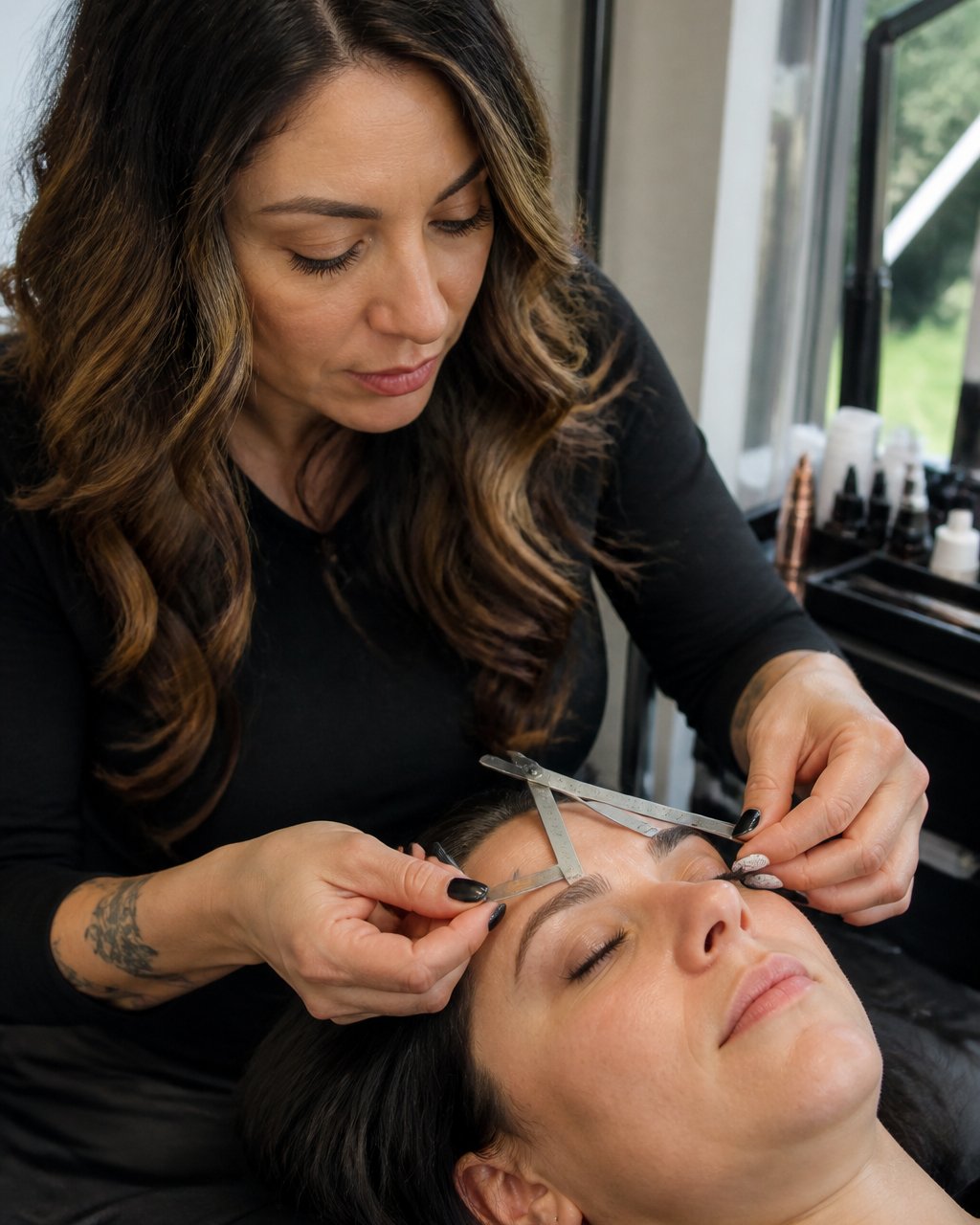
From there, correction usually follows one of these paths:
- Add pigment to the lighter or thinner brow to match the stronger one
- Reshape the arch so both peaks sit at the same height
- Extend or shorten a tail to balance the width of the face
- Soften a heavy front so it doesn't dominate the brow
The right method depends on what's already on your skin and how it healed. If you want the full walkthrough, our article on fixing uneven microblading with natural correction methods breaks down each approach.
Microblading Healing Stages: What's Temporary and What's Permanent
Many uneven results are temporary. Microblading goes through a healing process that changes how the brows look for weeks, and judging the shape too early is a common mistake. The harder question is knowing which changes will settle on their own and which ones signal a problem that needs action. Use the decision tree below to sort that out.
The healing timeline, stage by stage
- Days 1-3: Brows look dark, sharp, and slightly swollen. One side can look heavier simply because of swelling or how you slept. Do not judge shape yet.
- Days 4-7: Scabbing begins and flakes can leave patchy results that look uneven. This is normal. Picking or scratching scabs can pull pigment and create real gaps, so leave them alone.
- Weeks 2-3: Pigment looks light or faded as skin renews. Brows may appear almost gone in spots. This is the "ghosting" phase and is expected.
- Weeks 4-6: True pigment retention and final brow color settle in. This is the first point where the healed shape can be assessed honestly.
Decision tree: fresh versus fully healed
Ask yourself where you are in the timeline before you do anything.
- Are you within the first 7 days? Wait. Do not contact the artist about shape yet unless you see signs of infection (covered below). Swelling and darkness distort the shape.
- Are you between weeks 1 and 4? Wait, but document. Take clear photos in the same lighting each week. Patchiness and fading are expected, and photos give your artist useful information at the follow-up.
- Are you at week 4 to 6 and still see a clear imbalance? Contact the original artist. Most practitioners schedule a touch-up in this window, and a touch-up is the first correction tool, not a new procedure.
- Are you past week 6 with a shape problem that did not improve? This is when correction or removal can be considered. Placement errors, one brow mapped too high, arches at different heights, a tail that extends too far, will not fix themselves with healing.
- Did a previous artist do the work and you are unsure of the timeline? Wait at least eight weeks from the last session before anyone touches the skin again, so the skin has fully settled.
What is permanent
If you are past the six-week mark and still see a clear imbalance, our overview of what to expect from permanent makeup correction walks through the consult-to-healed process.
Here is how the healing timeline unfolds and what each stage means for judging unevenness.
| Stage | What happens | What to do |
|---|---|---|
| Days 1-3 | Brows dark, sharp, slightly swollen; one side can look heavier | Do not judge shape yet |
| Days 4-7 | Scabbing begins; flakes can leave patchy, uneven-looking results | Leave scabs alone; picking can pull pigment |
| Weeks 2-3 | Pigment looks light or faded; "ghosting" phase | Expect it; do not panic |
| Weeks 4-6 | True pigment retention and final brow color settle in | First point to assess healed shape honestly |
| Past week 6 | Clear imbalance that did not improve | Correction or removal can be considered |
| Unsure of timeline | Previous artist did the work | Wait at least eight weeks from last session |
Microblading Touch-Up Timing: When Correction Is Safe
Microblading touch-up timing matters more than most people realize. Working on skin that's still healing risks scarring and poor pigment retention.
If you're planning a correction, our overview of what to expect from permanent makeup correction covers the full process from consult to healed result.
Bad Microblading Removal Options: When Correction Isn't Enough
Sometimes correction can't fix what's there. If the pigment is too dark, too deep, or the shape is badly off, removal comes first.
Saline removal lifts pigment gradually through the skin. It's gentle and works well for shallow, faded work. It usually takes multiple sessions.
Laser removal breaks pigment down faster but needs a trained provider and careful timing. It's often the better choice for dense or dark pigment.
Our comparison of saline tattoo removal versus laser for brows helps you weigh the trade-offs before you commit.
Choosing a Correction Specialist for Uneven Brows
Correction work is harder than a first-time brow. You are working around existing pigment, scar tissue, and someone else's mapping decisions. That is why the artist matters more here than anywhere else, and why safety has to be part of the conversation, not an afterthought.
What to ask before you book
- How many correction cases have you handled, and can I see healed before-and-afters rather than fresh photos?
- What is your plan if correction is not enough, do you offer or refer for saline or laser removal?
- Are you certified and insured, and what certification body are you credentialed through?
- What is your pre-care and aftercare protocol, and what do you do if a client shows signs of a reaction?
At Tonni Petty PMU Artistry, Master Instructor Tonni Petty has over 22 years of experience in permanent cosmetics and is certified through the American Institute of Intradermal Cosmetics.
Contraindications and who should pause
Most practitioners will ask about these before booking, and you should raise them yourself if they apply:
- Pregnancy and breastfeeding, many artists decline to work during this time.
- Active skin conditions in the brow area, such as eczema, psoriasis, or active acne, which can affect healing and pigment retention.
- Blood thinners and certain medications, some increase bleeding and affect pigment deposit; disclose everything on your medication list.
- History of keloid scarring or known allergies to pigments or topical anesthetics.
- Recent cosmetic procedures in the area, including Botox or fillers, which usually require a waiting period.
Warning signs after a session
If you are ready to see what is possible for your brows, book a brow correction consultation and we will map out a realistic plan together.
Book a Brow Correction Consultation
We offer microblading. If you're ready to explore your options, book an appointment.
Frequently Asked Questions
Can microblading fix asymmetrical eyebrows?
Microblading can balance uneven eyebrows by adding pigment where hair is sparse and adjusting brow height, arch, or tail shape. It works best when the asymmetry is mild to moderate and your natural bone structure supports a balanced result. A brow artist maps both brows to your facial proportions before starting. Severe asymmetry or active skin conditions may need a different approach, so a consultation is the first step.
How long should I wait before correcting uneven microblading?
Wait until the brows are fully healed, usually four to six weeks after the initial session. During the microblading healing stages, scabbing, flaking, and pigment fading can make brows look patchy or uneven even when the shape is fine. A touch-up at the right microblading touch-up timing lets your artist assess the true healed result and correct only what is needed.
When is removal a better option than a microblading correction?
Magnetic PMU removal is available. Your artist can discuss whether it is appropriate for your situation.
How do I choose a qualified technician for brow correction?
Check credentials, including membership in professional bodies such as the American Academy of Micropigmentation.
Fixing uneven eyebrows starts with an honest assessment, not a promise. If you're tired of covering up asymmetry with makeup every morning, we can help you find a shape that actually fits your face. Get started with Tonni Petty PMU Artistry and book a consultation for customized brow results built around your features and skin type.