 how-to
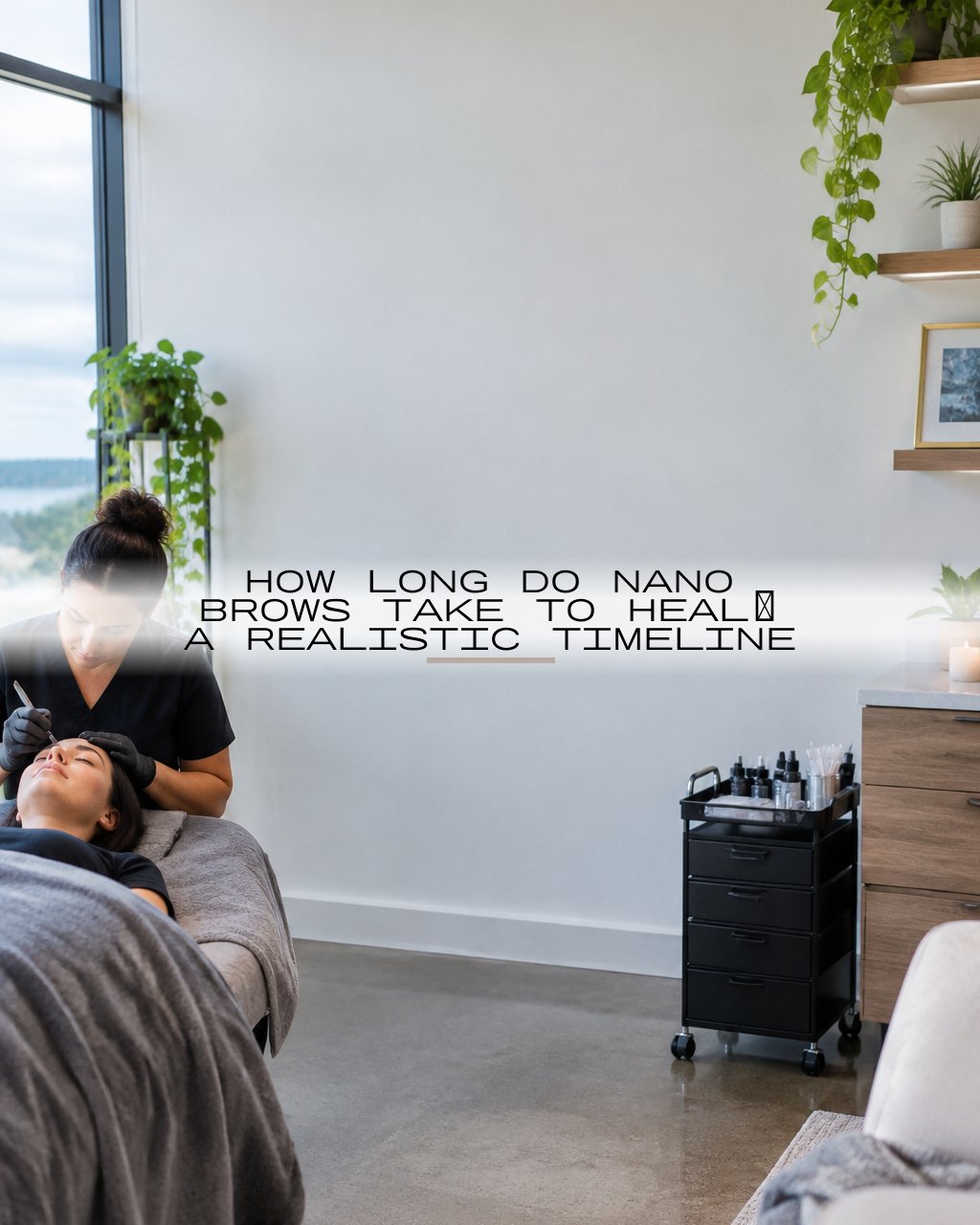
How Long Do Nano Brows Take to Heal? A Realistic Timeline
Last Updated: November 6, 2026
Quick Summary
Nano brows take about 7 to 14 days to heal on the surface, but the full healing timeline runs 4 to 6 weeks, with an outer estimate of 6 to 8 weeks for full pigment settling. Your brows will look done long before they are done, so expect faint, patchy color during the ghosting phase in week two.
- Flaking and peeling usually start around day four and peak near day seven.
- The ghosting phase hits in the second week, when brows suddenly look faint.
- Treat 4 to 6 weeks as the earliest point your result can be fairly evaluated.
- Oily skin tends to heal faster but hold pigment less evenly.
- Sleeping on your back for the first week helps protect fresh pigment.
Table of Contents
- The Short Answer: Surface Healing vs. Full Pigment Settling
- The Nano Brow Healing Process Day by Day
- How Long Do Nano Brows Take to Heal With Proper Aftercare?
- Nano Brows Healing Process Pictures Week-by-Week
- Normal Healing vs. Warning Signs You Shouldn't Ignore
- Factors That Change Your Healing Timeline
- What to Do If Healing Looks Uneven or Pigment Fades
- Booking Your Nano Brow Consultation and Touch-Up
- Frequently Asked Questions
The Short Answer: Surface Healing vs. Full Pigment Settling
Nano brows take about 7 to 14 days to heal on the surface, but the full healing timeline runs 4 to 6 weeks, and the outer estimate can extend to 6 to 8 weeks. That gap between surface healing and internal healing is where most people get confused. Your brows will look "done" long before they are done.
Nano brows are a semi-permanent brow technique that uses a fine digital pen to place pigment in tiny dots along the brow line. The result is soft, natural-looking brows.
So what actually happens? Two things, on two different clocks:
- Surface healing: the outer skin closes over in roughly 7 to 14 days
- Internal healing and pigment settling: the deeper skin recovers and color locks in over 4 to 6 weeks, with a realistic outer range of 6 to 8 weeks
Most guides blur these together. We won't. Keep reading, because knowing which stage you're in tells you whether what you're seeing is normal or a problem.
Why the Two Timelines Diverge
The surface clock is driven by the epidermis, the thin outer layer of skin that turns over roughly every two to four weeks. When the nano pen deposits pigment, it creates thousands of micro-channels in that outer layer. The epidermis responds by closing those channels and shedding the damaged cells, which is why flaking and peeling stop in about one to two weeks.
The internal clock is driven by the dermis, the deeper layer where the pigment is meant to stay. There, the skin's healing response wraps pigment particles in a thin layer of collagen and immune cells, a process practitioners call pigment encapsulation.
This is why a brow can look healed on the surface while the final result is still weeks away. The visible skin is closed; the pigment is still settling.
Reconciling the 4-6 Week and 6-8 Week Estimates
You will see both ranges online, and both can be correct depending on what is being measured.
- 4 to 6 weeks is the common window for the initial healing cycle to complete and for the touch-up to be scheduled.
- 6 to 8 weeks is the more conservative outer range for full pigment settling, especially on oily, mature, or slow-recovering skin. Some artists prefer to wait the full eight weeks before judging retention.
A practical rule: treat 4 to 6 weeks as the earliest point your result can be fairly evaluated, and 6 to 8 weeks as the point by which most clients see the settled color and shape.
Watch out: if a guide promises a single fixed number with no range, treat it as a rough average rather than a guarantee for your skin.
The Nano Brow Healing Process Day by Day
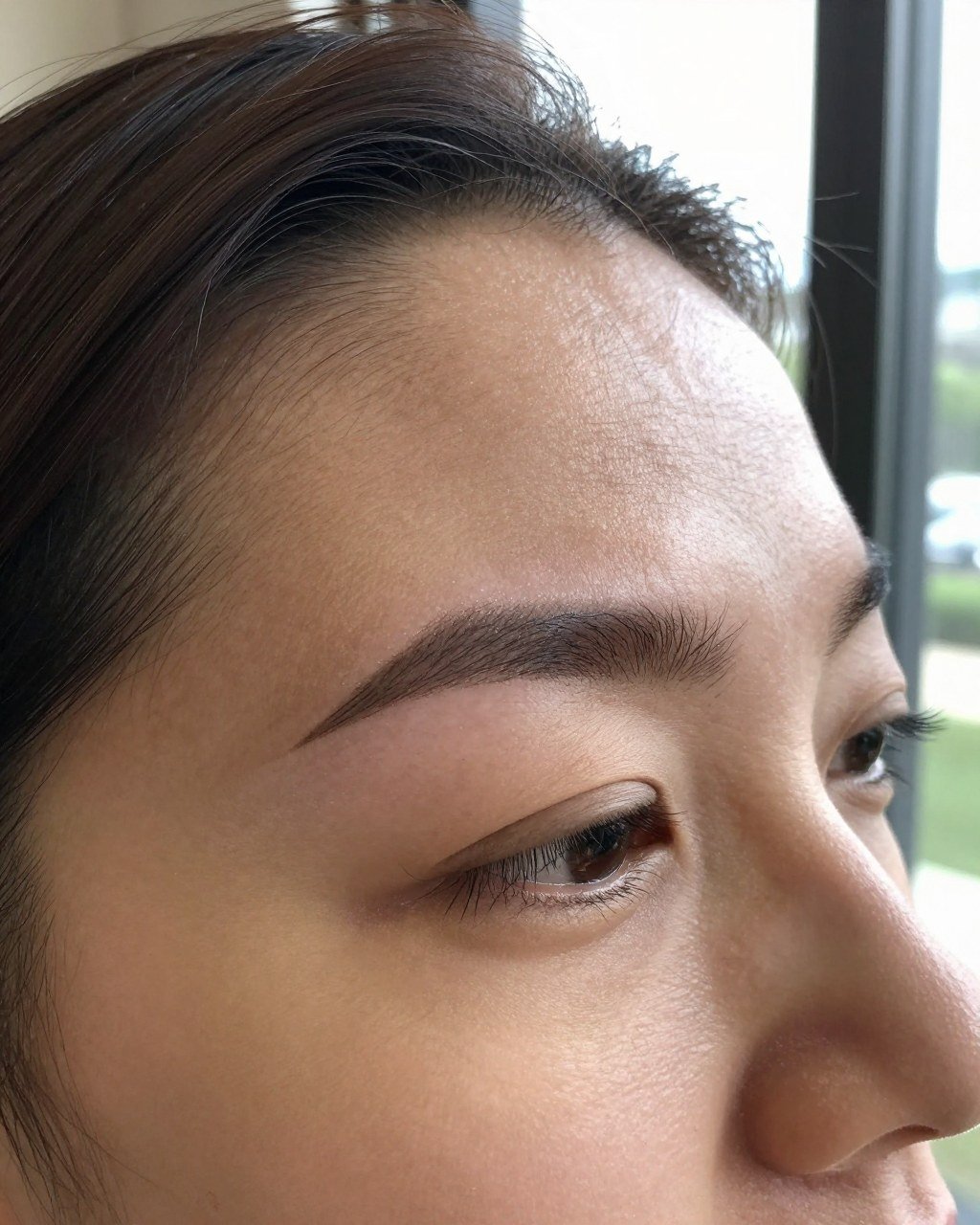
The nano brow healing process day by day follows a predictable arc: dark and swollen, then flaky, then faint, then settled. Here is what each stretch looks like.
Days 1-3: Swelling, Redness, and the Dark Phase
Your brows may look darker and bolder than the final result for the first few days. Mild swelling and redness around the brow area can occur.
Days 4-7: Flaking and Peeling Begin
Flaking and peeling usually start around day four and peak near day seven. The skin looks dry and may shed in small patches. Mild scabbing can appear on some skin types.
Avoid picking or scratching, as picking can pull pigment out early and create patchy results.
Days 8-14: The Ghosting Phase
The ghosting phase hits somewhere in the second week. Your brows suddenly look faint, almost like the pigment vanished. This is normal. New skin is covering the pigment while it settles deeper.
This is the moment most clients panic and assume the work failed. It didn't. Color returns as the skin finishes its recovery.
How Long Do Nano Brows Take to Heal With Proper Aftercare?
Proper aftercare shortens the rough part of healing but does not change the biology. Expect 7 to 14 days of visible surface healing and 4 to 6 weeks until the final result, with the outer settling range running to 6 to 8 weeks. Aftercare is what protects pigment retention during that window, and the reason each rule exists matters more than the rule itself.
Days 1-3: Protect the Open Micro-Channels
The skin is still open and the pigment is sitting near the surface. The goal is to keep the area clean, dry, and free of friction.
- Do: blot away any lymph fluid with a clean, dry tissue if your artist instructs it; sleep on your back; keep hair off the brow area.
- Avoid: makeup on the brows, sweating, steam, saunas, swimming, and direct sun.
- Why it matters: moisture and heat soften the skin and can pull pigment out before the epidermis closes. Friction from a pillowcase or a towel can do the same.
Days 4-7: Support the Flaking Phase Without Interfering
Flaking and peeling usually begin around day four and peak near day seven. The skin is shedding the damaged outer cells, and the pigment underneath is beginning to settle.
- Do: let flakes fall on their own; apply a thin layer of aftercare ointment only if your artist approves it; keep the area lightly moisturized rather than soaked.
- Avoid: picking, scratching, exfoliating, and rubbing with a washcloth.
- Why it matters: picking pulls pigment out of channels that are still healing and is one of the most common causes of patchy healed results.
Days 8-14: Guard the Ghosting Phase
The ghosting phase hits somewhere in the second week. Your brows suddenly look faint, almost like the pigment vanished. This is normal. New skin is covering the pigment while it settles deeper.
- Do: continue gentle cleansing, avoid harsh actives (retinoids, acids, vitamin C) directly on the brows, and keep the area out of direct sun.
- Avoid: facials, chemical peels, and brow tinting or waxing over the treated area.
- Why it matters: new skin is thinner and more permeable, so strong actives and sun exposure can irritate it and disrupt settling.
This is the moment most clients panic and assume the work failed. It didn't. Color returns as the skin finishes its recovery.
Weeks 3-6: Protect the Settling Pigment
Surface healing is done, but the internal clock is still running. This is when pigment encapsulation is finishing and the final color emerges.
- Do: apply sunscreen daily to the brow area, keep up gentle cleansing, and avoid prolonged direct sun.
- Avoid: facials, chemical peels, and laser treatments over the brows; heavy sweating without cleansing afterward.
- Why it matters: UV exposure is one of the most consistent drivers of premature pigment fading, and it acts on the settling pigment throughout this window.
Sleeping on your back for the first week helps too. Pressure and friction on a fresh brow can lift pigment before it settles.
A Quick Decision Rule for Aftercare Questions
When you are unsure whether something is allowed, ask three questions in order: Is the skin still open? Is the area being rubbed or picked? Is the area being exposed to heat, sun, or strong actives? If the answer to any is yes, wait.
For prep and aftercare guidance before your appointment, our guide on how to prepare for your PMU appointment walks through what to do in the days before and after.
Nano Brows Healing Process Pictures Week-by-Week
Nano brows healing process pictures week-by-week show a consistent pattern: bold in week one, patchy and faint in week two, more even by week four, and settled by week six.
Healing photos vary by skin type, pigment color, and aftercare. A photo from someone with oily skin will not match a photo from someone with dry skin at the same week.
What to look for in each week:
- Week 1: dark, slightly swollen, some flaking by the end
- Week 2: lightest point, uneven color, ghosting
- Weeks 3-4: color returning, shape more visible
Ask your artist whether they can share healed photos from clients with your skin type.
Normal Healing vs. Warning Signs You Shouldn't Ignore
Most healing variation is normal. Some of it is not. Knowing the difference protects your result and your skin.
Normal healing looks like:
- Flaking and mild peeling
- Uneven color during weeks two and three
- Slight redness in the first few days
Warning signs worth a call to your artist:
- Spreading redness, heat, or swelling after day three
- Yellow or green discharge
- Fever or increasing pain
If you see any of those, contact your artist and, if needed, a healthcare provider. Do not wait it out.
Factors That Change Your Healing Timeline
Your timeline is yours. Several factors move it forward or push it back, and none of them mean something went wrong.
- Skin type: oily skin tends to heal faster but hold pigment less evenly
- Skin recovery speed: younger and healthier skin often closes faster
- Aftercare consistency: skipping sun protection slows pigment settling
The American Academy of Dermatology's guidance on tattoo and pigment aftercare is a useful reference for general skin healing expectations.
What to Do If Healing Looks Uneven or Pigment Fades
Uneven healing is common and usually temporary. Pigment fades a little during the ghosting phase, and some patches may look lighter than others.
A follow-up session, often called a touch-up, is typically scheduled after the skin has settled. Your artist can discuss adjustments at that visit.
If fading looks heavier than expected, do not book a correction elsewhere before talking to your artist. For a deeper look at protecting your result long term, read our guide on how to prevent permanent makeup fading.
| What You See | Likely Cause | What to Do |
|---|---|---|
| Dark brows in week 1 | Pigment on top of skin | Wait, it will soften |
| Faint brows in week 2 | Ghosting phase | Wait for color to return |
| Patchy color in week 3 | Uneven pigment settling | Note it for your touch-up |
| Heavy fading after week 6 | Pigment retention issue | Discuss at your follow-up |
| Redness or discharge | Possible infection | Contact your artist and a provider |
Booking Your Nano Brow Consultation and Touch-Up
Booking starts with a consultation. Your artist can review your skin type, brow shape, and goals.
Sessions may include an initial visit and a touch-up.
At Tonni Petty PMU Artistry, every appointment starts with a personalized consultation. With over 22 years in permanent cosmetics and Master Technician certification through the American Institute of Intradermal Cosmetics,
Ready to see your options? Explore microblading, combo, and powder brows and book your consultation. If you want to know what the follow-up visit involves, our breakdown of permanent makeup touch-up pricing explains what to expect. You can also read client reviews for Tonni Petty PMU Artistry before you book.
Frequently Asked Questions
How long does it take for nano brows to look normal?
Nano brows typically look normal within 10 to 14 days as surface healing completes and flaking subsides. However, the final color and shape continue to settle for 4 to 6 weeks. During the first week, brows appear darker and bolder, then enter a ghosting phase around days 8 to 12 where pigment seems to fade. By week 4 to 6, the true healed result emerges, and a touch-up session can refine any uneven areas.
Why do nano brows look darker before they heal?
Freshly tattooed brows appear darker because pigment sits in the upper layers of skin and is surrounded by slight inflammation and lymph fluid. As the skin heals, it forms a thin layer of new cells over the pigment, making brows look softer and sometimes patchy. This dark appearance is normal and fades as flaking completes. Avoid panicking during the first week; the intensity drops significantly by day 10 to 14.
What should nano brows look like after one week?
After one week, nano brows often look patchy and may have flaking or peeling skin. The dark, bold look from days 1 to 3 has softened, and some areas might seem lighter or uneven. This is the transition into the ghosting phase. Keep the area moisturized with aftercare ointment and avoid picking. By week two, most flaking is done, and the brows will start to reveal their settled color.
How long do nano brows take to heal with proper aftercare?
With proper aftercare, surface healing takes 7 to 14 days, while complete pigment settling takes 4 to 6 weeks. Aftercare generally includes keeping the area clean, avoiding makeup and sun exposure, and not picking at flaking skin. Following these steps supports even pigment retention and reduces the risk of infection. A follow-up touch-up at 6 to 8 weeks ensures the best final result.
Healing is a waiting game, and the wait is worth it. If you want a brow plan built around your skin and your schedule, Tonni Petty PMU Artistry offers personalized consultations, custom brow mapping, and a two-step process that protects your result. Get started with Tonni Petty PMU Artistry and book a consultation to map out your nano brow timeline.