 how-to
Fix Uneven Microblading: Natural Correction Methods
Table of Contents
- Understanding Why Microblading Results Look Uneven
- The Healing Process and Patience
- When to Wait for Your Follow-Up Appointment
- The Microblading Correction Process Explained
- Emergency PMU Removal Options
- Managing Expectations and Risks During Correction
- At-Home Safety: What You Should Never Do
- Frequently Asked Questions
Last Updated: September 30, 2026
Understanding Why Microblading Results Look Uneven
Microblading asymmetry happens often, but the cause determines whether you wait, contact your artist, or pursue uneven microblading correction. Your brows may shift during healing as pigment settles unevenly and skin heals at different rates.
Most people confuse three types of asymmetry: natural facial asymmetry (your face is uneven), healing-phase asymmetry (temporary swelling or pigment settling), and artist error (permanent mistakes). Distinguishing them prevents unnecessary panic or delayed action.
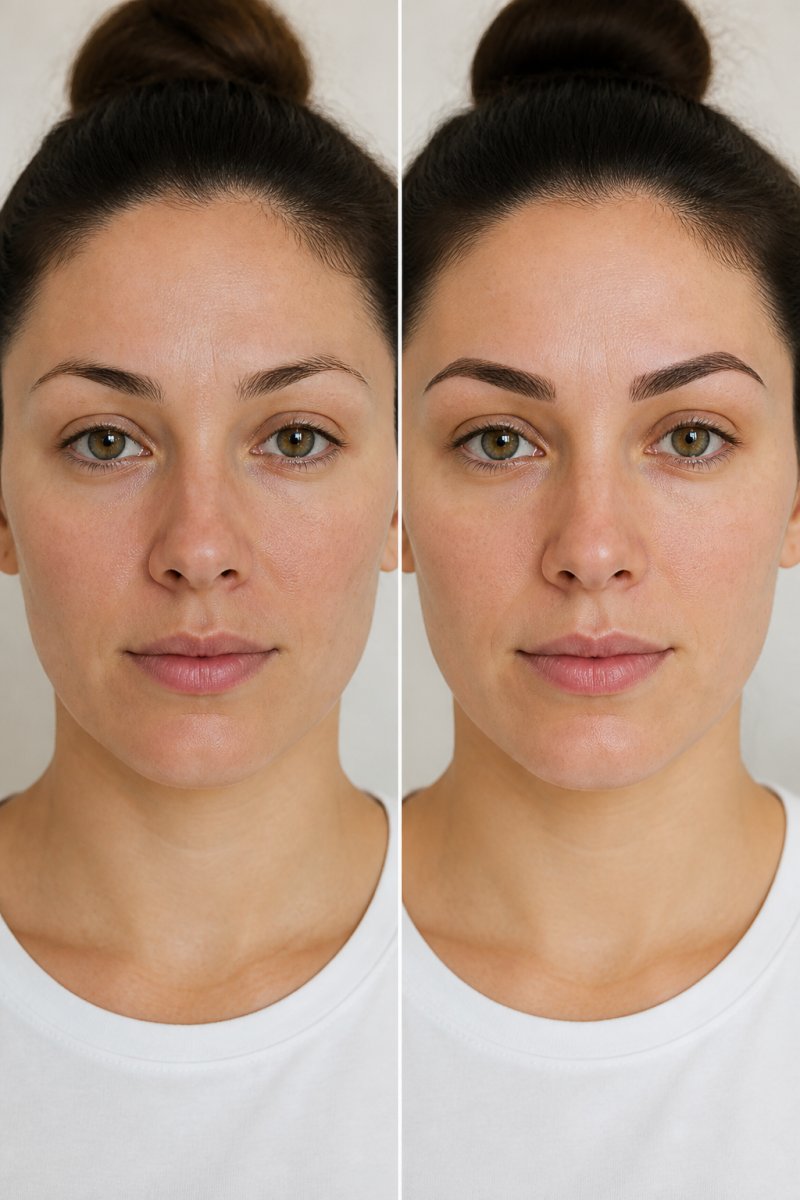
Natural Asymmetry vs. Healing-Phase Asymmetry vs. Artist Error
Natural asymmetry occurs when your face itself is uneven, different brow bone heights, eye sizes, or facial fullness. Artists cannot fix your skeleton; this is normal anatomy. To identify it, photograph bare brows before PMU and compare to results. If natural brows were uneven, microblading mirrors that, it's not failure, it's respecting your face.
Healing-phase asymmetry is temporary and resolves on its own. Swelling during days 1-7 masks true shape; one brow may look fuller if more swollen. Scabbing and peeling are uneven, making one side appear lighter temporarily. Pigment fading varies by side based on skin chemistry and aftercare. This asymmetry resolves by week 4-6 without intervention.
To distinguish healing asymmetry from permanent error, photograph your brows daily in consistent lighting. If asymmetry improves or disappears between week 2 and week 6, it was healing-phase. If it remains unchanged after week 6, it's likely permanent.
Artist error is permanent and correctable. It occurs when hairstrokes don't follow your natural brow line, color differs noticeably between sides, density is significantly uneven, arch height differs by more than a few millimeters, or tail length/angle is mismatched. Unlike healing asymmetry, artist error doesn't improve with time.
Wait until week 6 and compare microblading to your natural brow photo. Does the asymmetry match your natural face shape, or does microblading create new asymmetry? If microblading amplifies natural asymmetry in a bothersome way, that's a preference issue worth correcting. If microblading creates asymmetry your natural brows don't have (e.g., one arch dramatically higher), that's artist error.
How Healing Phase Affects Perceived Symmetry
Brows appear darker and bolder for the first week as pigment sits on top of skin. As skin heals and peels, pigment fades 20-30% by week 6. This fading is uneven: one side may shed more skin flakes due to differences in skin thickness, oil production, or sleep position.
Swelling during the first 48 hours masks true shape. If one brow swells more, it looks fuller and higher, swelling can be 2-3 millimeters thick. Once swelling subsides by day 5-7, the real shape emerges. This is why artists recommend waiting two weeks before judging results.
Pigment oxidation also contributes to perceived asymmetry. During the first 24-48 hours, pigment oxidizes as it contacts oxygen and skin pH, shifting color unevenly. By week 2, oxidation stabilizes and true color emerges.
The Healing Process and Patience
Microblading healing takes 10-14 days for surface healing, but true color settling takes 4-6 weeks. During the first two weeks, brows appear darker and harsher with scabbing or peeling, this is normal.
Most people request corrections during week one or two, before healing completes and true color emerges. This means requesting changes based on a temporary state.
Patience is essential. Rushing into correction before healing completes risks over-correcting: removing pigment that would fade naturally or adding pigment to areas that will lighten significantly.
The psychological impact of darker, bolder brows is real. Many experience regret in days 3-7, but feel differently by day 14 and often love results by week 6. Give brows time before deciding they need fixing.
When to Wait for Your Follow-Up Appointment
Your initial touch-up appointment is typically scheduled 4-6 weeks after your first session, when you can see true color and shape. This is the right time to request adjustments.
At this follow-up, your artist assesses what faded and where pigment settled, adding pigment to areas that lost color and refining shape if needed. This is standard microblading maintenance, not correction for failure.
If you have concerns about asymmetry before your scheduled touch-up, contact your artist with photos. Most will reassure you that healing explains what you're seeing. Some will move your appointment earlier if there's a real issue.
The Microblading Correction Process Explained
If asymmetry persists after 6 weeks of healing, uneven microblading correction is possible. Success depends on accurate diagnosis, realistic expectations, and choosing the right technique for your specific problem.
Correction starts with detailed consultation. Your artist analyzes shape, color, density, and pigment depth, asking what bothers you. They take reference photos, assess your skin type, and review aftercare compliance, since poor aftercare can cause uneven fading that mimics artist error.
Your artist recommends the best correction technique. Most corrections happen during a dedicated appointment (60-90 minutes), longer than standard touch-ups (30-45 minutes), to address the issue properly. Rushing leads to over-correction.
Nano Hairstrokes for Shape Improvement
Nano hairstrokes use a single needle or tight grouping, creating strokes as thin as 0.5 millimeters, thinner and more precise than traditional microblading. They create natural, hair-like appearance with extreme precision in shape refinement.
Nano hairstrokes refine arch or tail with millimeter-level control. Your artist can build up a flatter arch gradually or extend a shorter tail seamlessly. The technique also corrects density issues: adding fine strokes to match thinner brows.
Nano hairstrokes are ideal for shape or density problems, not color problems. If both brows are the same color but one is thinner or has a weaker arch, nano correction is best. One appointment typically suffices, though some artists recommend a follow-up touch-up at week 6.
Timeline: One correction appointment (60-90 minutes), with optional follow-up at week 6. Healing: 10-14 days surface, 4-6 weeks full color settling.
Cost: $200-$400, typically less than powder brow transition but more than standard touch-up.
Powder Brow Transition as a Correction Method
A powder brow (ombré or shading) creates softer, filled-in appearance using stippling to deposit pigment in gradient, darker at front and fading toward tail. For correction, transitioning to a powder brow hybrid solves multiple problems simultaneously.
Powder brow layers even out uneven color or density, filling gaps and creating uniform appearance. Your artist adjusts overall shape and darkness, targeting areas needing to be darker or fuller. Powder fills patchy pigment retention common in oily skin.
This technique works well if you want a different aesthetic. The correction becomes an upgrade. Many find hybrid brows (hairstrokes plus powder) look more balanced and forgiving of minor asymmetries than pure microblading.
Powder brow correction is best for color shift asymmetry. If one brow oxidized to a warmer tone, powder pigment neutralizes it and creates color harmony. Your artist applies pigment strategically to match the cooler brow.
Timeline: One correction appointment (90-120 minutes). Healing: 10-14 days surface, 4-6 weeks full settling. Powder fades 30-40%, so artist applies it slightly darker than target.
Cost: $300-$500, more than nano correction due to technique and application time.
Strategic Color Correction Techniques
Color asymmetry occurs when one brow fades, oxidizes, or was pigmented differently. Strategic color correction adds pigment only where needed to match the other side, without over-correcting.
If one brow is lighter, your artist adds pigment to darken it. If one shifted to orange or red while the other stayed cool brown, color correction neutralizes the warm tone. Your artist tests color on a small area first to confirm the match.
Color shifts happen naturally during healing due to skin chemistry and pH variations. Strategic color correction layers corrective pigment (typically cooler or more neutral) over shifted color to counteract warm tones.
Color correction also addresses pigment applied too dark or light initially. Over-pigmented brows can be lightened by layering lighter pigment (less effective than adding to light brows).
Cost: $150-$300, the least expensive correction option.
Emergency PMU Removal Options
If asymmetry is severe and you want to start fresh, PMU removal is available, though correction is usually preferable.
Managing Expectations and Risks During Correction
Correcting uneven microblading results naturally requires realistic expectations. Perfection isn't possible. Your goal should be balance and symmetry that looks natural, not mathematical precision.
At-Home Safety: What You Should Never Do
Don't try to fix asymmetrical microblading yourself. This is the most important safety rule.
Frequently Asked Questions
How long should I wait before correcting uneven microblading?
Wait at least 6-8 weeks before pursuing professional correction. During the healing phase, pigment settles and fading occurs naturally, which can improve apparent asymmetry. Many brows that look uneven immediately after the procedure appear more balanced once fully healed. Your artist will assess true asymmetry during your follow-up appointment and recommend whether correction is needed or if natural fading will resolve the issue.
Does the healing process naturally improve uneven microblading?
Yes, the healing phase significantly impacts how your brows appear. Immediately after microblading, swelling and redness can distort the shape and symmetry. As skin recovers over 6-8 weeks, pigment settles deeper into the dermis, fading by 20-40%, and swelling subsides. This natural process often corrects minor unevenness. However, if asymmetry persists after complete healing, professional correction through the microblading correction process becomes necessary.
What should I do if I hate my microbladed eyebrows?
First, complete the full healing phase before deciding. If genuine dissatisfaction remains, consult your original artist about correction options within the microblading correction process, such as adding nano hairstrokes for shape improvement or transitioning to powder brows. If the pigment color shifted to orange or the results are severely botched, Magnetic PMU Removal can lighten or remove the pigment, followed by a fresh application once skin recovers.
Can I fade microblading results at home safely?
No. At-home fading methods like glycolic acid, exfoliation, or other DIY removal techniques risk permanent scarring, infection, and skin damage. The skin on your brows is delicate and sensitive. If you need to fade results, only professional Magnetic PMU Removal is safe. Attempting home remedies can turn a correction problem into a medical one, requiring dermatological intervention and making future permanent makeup applications more difficult.