 how-to
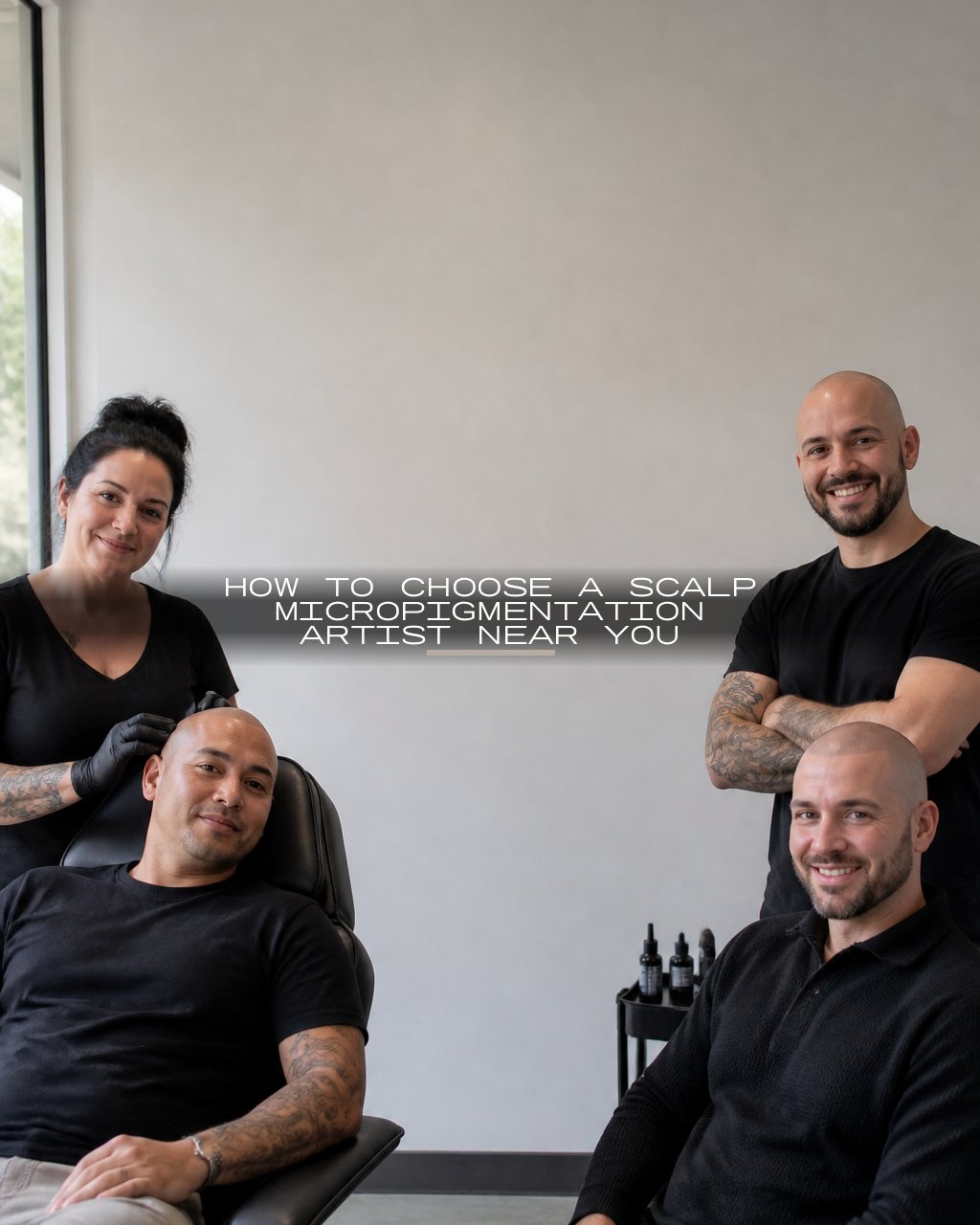
How to Choose a Scalp Micropigmentation Artist Near You
Last Updated: November 4, 2026
Quick Summary
To choose a scalp micropigmentation artist near you, check formal hands-on training and certification, review healed portfolio photos and reviews, and verify hygiene standards, licensing and liability insurance. Ask for written proof, not verbal assurances, before booking a consultation.
- Ask where and how the artist trained, and whether they still take continuing education.
- Request healed photos taken at least four to six weeks after the final session, not fresh ones.
- Look for consistent dot size and spacing, and a soft, irregular hairline rather than a straight line.
- Ask to see single-use, sterile needles opened in front of you, plus current bloodborne pathogens training.
- Verify the license number on your state or county database and request a certificate of insurance.
Table of Contents
- What Scalp Micropigmentation Is and Why Artist Choice Matters
- Step 1: Check Formal Training and Certification
- Step 2: Review the Portfolio and Scalp Micropigmentation Before and After Results
- Step 3: Read Scalp Micropigmentation Artist Reviews and Testimonials
- Step 4: Verify Hygiene, Safety Standards, Licensing and Insurance
- Scalp Micropigmentation Cost and What Affects the Price
- Finding a Scalp Micropigmentation Artist Near Me and Booking Your Consultation
- Frequently Asked Questions
What Scalp Micropigmentation Is and Why Artist Choice Matters
Scalp micropigmentation (SMP) is a cosmetic procedure that places tiny pigment dots into the scalp to create the look of a closely shaved head or fuller-looking hair. It is not a hair transplant, and it does not grow hair. The result depends almost entirely on the person doing the work. That is why learning how to choose a scalp micropigmentation artist near you matters more than choosing a clinic by its ads.
Good work can look natural from a short distance. Poor work can look patchy, too dark, or blue-toned within a year. Because the pigment sits in the skin, mistakes are hard to undo. Many people also end up paying for a correction after a first attempt goes wrong.
At Tonni Petty PMU Artistry in Olympia, WA, works with clients who want scalp micropigmentation. The steps below cover what to check before you book. If you are specifically looking for custom scalp micropigmentation in Olympia, WA for fuller-looking hair, defined hairlines or scar camouflage, you can explore custom scalp micropigmentation (SMP) options and book a consult.
Step 1: Check Formal Training and Certification
Start by asking where and how the artist learned the craft. Formal training shows the artist has learned technique, hygiene, and needle depth under supervision, not just from online videos.
Look for these details:
- Hands-on training with a named instructor
- Certification from a recognized permanent cosmetics organization
- Current bloodborne pathogens training
- Proof of ongoing education, such as advanced courses
A common mistake is assuming a short weekend course is enough. Ask how many hours of supervised practice the training included, and whether the artist still takes classes.
Tonni Petty is a Master Technician certified through the American Institute of Intradermal Cosmetics, a Master Instructor, and a member of the American Academy of Micropigmentation. You can learn about her training, experience and approach before you book.
Step 2: Review the Portfolio and Scalp Micropigmentation Before and After Results
A portfolio is the closest thing to a test drive you get before committing.
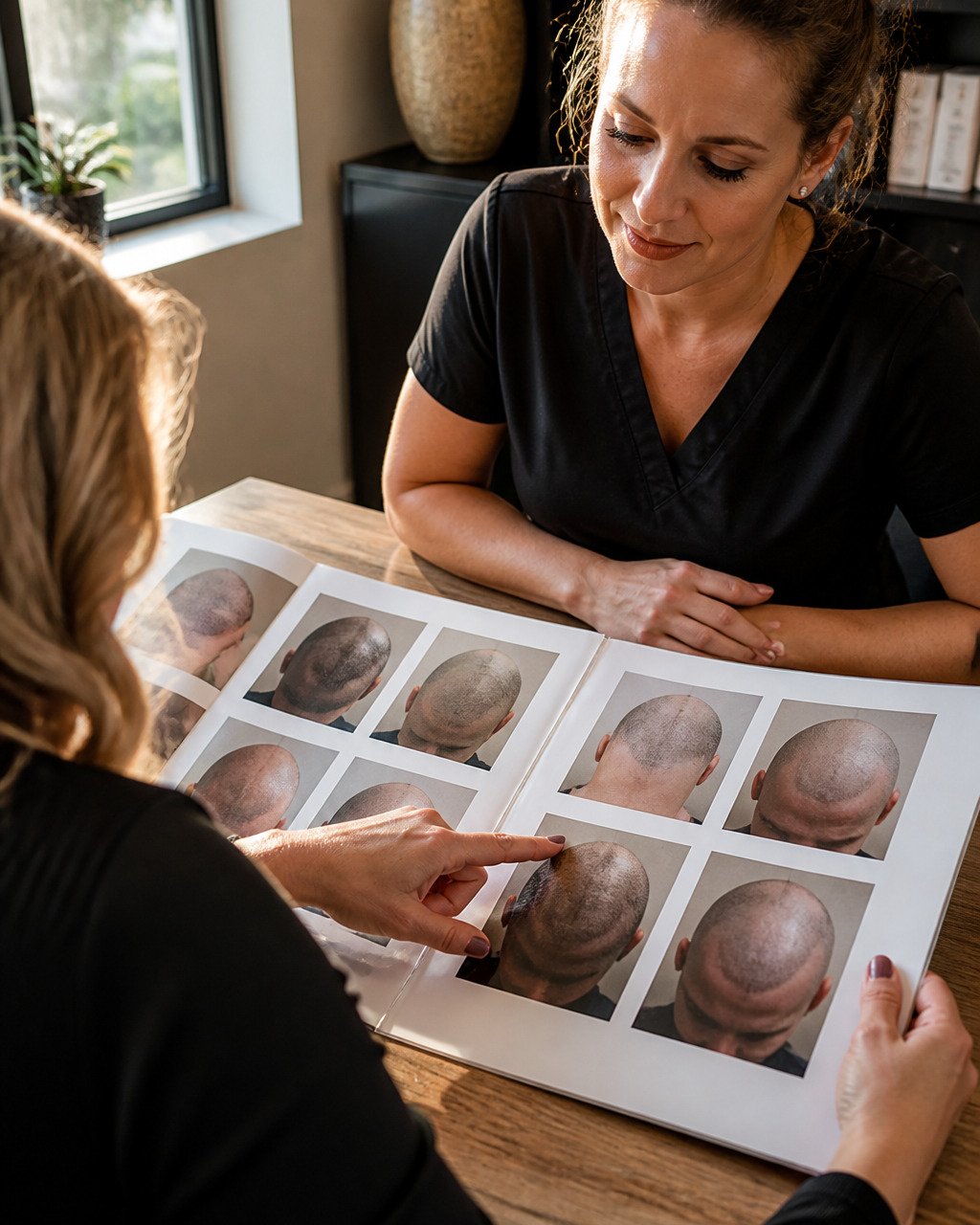
Healed results vs. fresh results
Pigment looks darkest and sharpest immediately after a session. Over the next few weeks the skin heals and the color settles. That is why a fresh photo can flatter work that will not hold up.
- Ask specifically for healed photos taken at least four to six weeks after the final session.
- Compare a fresh photo and a healed photo of the same client if the artist has both.
- Look for even dot density after healing, not patchiness or blurring.
- Check that the hairline still looks natural at the temple and crown, where light hits differently.
What good work looks like
- Dots are consistent in size and spacing, with no clumping.
- The hairline is irregular and soft, not a straight drawn line.
- Color matches the client's natural hair and skin tone in indoor and outdoor light.
- Density increases gradually from hairline to crown, mimicking real hair growth.
Skin type considerations
Most guides skip this, but skin type changes what a portfolio should show you. Ask to see results on clients with skin similar to yours.
- Oily skin: pigment can fade faster and blur, so ask how the artist adjusts depth and session count.
- Dry or sensitive skin: healing can be uneven, so ask about patch tests and aftercare.
- Scarred or previously treated scalp: ask for examples of correction work and how the artist handles existing pigment.
- Darker skin tones: ask for examples where the artist matched undertones without a blue or gray cast.
Red flags in a portfolio
Watch out: be cautious if every photo is taken in the same lighting, if hairlines look stamped or perfectly straight, or if the artist cannot show a single healed result. Those are signs the portfolio is curated for sales rather than proof.
Step 3: Read Scalp Micropigmentation Artist Reviews and Testimonials
Reviews help you see how an artist handles consultations, communication, and long-term results. Read reviews that mention specific details, such as fading, touch-up sessions, or how the artist handled a concern.
Use reviews to look for patterns:
- Do clients mention the artist listened to their goals?
- Do they describe the results as natural after healing?
- Do they mention touch-ups being handled fairly?
- Are the reviews recent and written by real clients?
Be cautious of reviews that only use generic praise. Real reviews usually describe a specific experience.
You can read client experiences with Tonni Petty PMU Artistry on the business's own review page.
Step 4: Verify Hygiene, Safety Standards, Licensing and Insurance
Scalp micropigmentation involves needles and broken skin, so hygiene and legal compliance are not optional.
Hygiene questions to ask
- Does the artist use single-use, sterile needles and cartridges, opened in front of you?
- Are disposable gloves and barriers used during every session and changed between steps?
- Is the workspace cleaned and disinfected between clients, and is there a visible sharps container?
- Does the artist hold current bloodborne pathogens training, which is a common state requirement for permanent cosmetics?
- Are pigment cups, mixing tools, and razors single-use?
How to verify licensing and permits
Cosmetic tattooing rules are set at the state and sometimes county level, so requirements vary. A common pattern is that the artist needs either a body-art or permanent-cosmetics license, a shop permit, or both. Do not rely on a verbal yes.
- Ask for the license or permit number, then look it up on your state's professional licensing board website or your county health department's establishment search.
- Confirm the name on the license matches the person doing the work, not just the business.
- Ask whether the studio has passed a recent health inspection and whether the inspection report is available.
- If the artist works in a home studio, ask which local rules apply to home-based body-art businesses in your jurisdiction.
How to verify liability insurance
Liability insurance protects you if something goes wrong and is a strong signal of professionalism. Ask the artist to show a certificate of insurance, not just say they are covered.
- The certificate should name the business and show current coverage dates.
- Ask whether the policy covers scalp micropigmentation specifically, not just general cosmetics.
- If you are treated in a rented suite, ask whether the suite or the individual artist carries the policy.
Watch out: a verbal "I'm licensed and insured" is not verification. If an artist hesitates to share a license number or certificate of insurance, treat that as a reason to keep looking.
Skin type and health screening
Skin type affects how pigment heals and how many sessions you may need. An artist should ask about skin sensitivity, oily or dry scalp, scarring or keloid history, and medications before treatment. If you are undergoing medical treatment or have a scalp condition, talk with your doctor before booking.
Before booking, check these hygiene and compliance points in the article's own terms.
| Check | What to verify | Why it matters |
|---|---|---|
| Needles and cartridges | Single-use, sterile, opened in front of you | Prevents cross-contamination |
| Gloves and barriers | Used every session and changed between steps | Protects client and artist |
| Bloodborne pathogens training | Current training | Common state requirement |
| License or permit | Number checked on state or county database | Confirms legal operation |
| Certificate of insurance | Business named, current dates shown | Protects you if something goes wrong |
| Verbal assurance | Not accepted as verification | Written proof is required |
Scalp Micropigmentation Cost and What Affects the Price
Pricing depends on quantity, dates, and delivery. For current pricing, visit the Tonni Petty PMU Artistry website or request a quote. If cost is a concern, you can see flexible payment plans for permanent makeup and SMP that let you spread the expense over time.
Ask whether the quote covers:
- The initial consultation
- All planned sessions, and how many are expected
- Touch-up appointments and what they cost
- Aftercare products or follow-up visits
For current pricing, contact Tonni Petty PMU Artistry directly.
Finding a Scalp Micropigmentation Artist Near Me and Booking Your Consultation
Searching "scalp micropigmentation artist near me" will bring up many options. Shortlist two or three artists whose training, portfolio, and reviews meet your standards, then book a consultation with each.
During the consultation, ask how the artist plans to match your hair color and hairline, how many sessions are typical, and how they handle touch-ups. A good artist will explain the process clearly and will not pressure you to book on the spot.
You can contact Tonni Petty PMU Artistry in Olympia, WA to ask about scalp micropigmentation or to schedule a consultation. Call, text, or book online.
Most of the choice comes down to trust. Take your time, ask direct questions, and choose the artist whose work and answers you believe.
Frequently Asked Questions
How much should I pay for scalp micropigmentation?
Pricing depends on the size of the area being treated, the artist's experience, and how many sessions the result needs. Exact figures vary by studio, so ask for a written quote that lists the initial session, the touch-up sessions, and any correction work. Be cautious of prices far below the local market, since they often reflect limited training or rushed work. Use the consultation to confirm what is included and how the artist handles touch-ups if the result needs refining.
How does scalp micropigmentation look after 5 years?
Scalp micropigmentation fades gradually over time, and pigment can soften or lighten as the skin renews. Ask an artist to show you healed results from clients several years out, not only fresh photos taken right after treatment.
What questions should I ask an SMP artist before booking?
Ask how many years they have practiced, what formal training and certification they completed, and whether they follow bloodborne pathogen standards in a sterile environment. Request a portfolio that includes healed results and clients with a similar hair loss pattern to yours. Ask about their touch-up policy, what aftercare instructions they provide, and whether they have experience with sensitive scalps. Clear, direct answers are a strong sign of a trustworthy artist.
How can I tell whether scalp micropigmentation before-and-after photos are genuine?
Look for photos that show the same client from the same angle before and after treatment, with consistent lighting and no heavy editing. Ask whether the photos show healed results and whether the artist can provide consent for the images. Reviews that mention specific clients and dates are more credible than generic praise. If an artist hesitates to share real client photos, treat that as a warning sign and continue your search.