 comparison
Saline Tattoo Removal vs Laser for Brows: Which to Choose
Last Updated: October 24, 2026
Quick Summary
Saline tattoo removal lifts brow pigment to the skin's surface with a hypertonic saline solution, while laser breaks pigment apart with light energy so the body can clear it. Saline is slower and gentler on skin structure, and laser is faster but less forgiving on color-shifted brow pigment.
- Faded or old brow pigment often responds in roughly two to four saline sessions, spaced four to eight weeks apart.
- Laser removal commonly follows a pattern of two to five sessions spaced six to eight weeks apart.
- Saline healing shows scabbing and flaking over roughly one to two weeks before pigment is revealed.
- Laser removal carries a higher risk of color shift on warm-toned brow pigment.
- Comparing one saline session to one laser session is the wrong math for total cost.
Table of Contents
- Saline Tattoo Removal vs Laser for Brows: The Core Differences
- How Saline Removal Works on Brow Pigment
- How Laser Removal Works and Where It Falls Short on Brows
- How Many Sessions for Eyebrow Tattoo Removal?
- The Eyebrow Tattoo Removal Healing Process, Method by Method
- Eyebrow Tattoo Removal Risks: Scarring, Color Shift, and Skin Tone
- Cost, Pain, and Total Treatment Burden Side by Side
- Booking a Removal Consultation for Your Brows
- Frequently Asked Questions
Saline Tattoo Removal vs Laser for Brows: The Core Differences
Saline tattoo removal is a non-laser method that lifts pigment out of the skin using a hypertonic saline solution, while laser removal breaks pigment apart with light energy so the body can clear it.
Here is the short version most guides bury: saline is slower and gentler on the skin's structure, and laser is faster but far less forgiving on brow pigment that has already shifted color.
| Factor | Saline Removal | Laser Removal |
|---|---|---|
| Mechanism | Solution lifts pigment to surface | Light energy breaks pigment apart |
| Sessions for brows | Often several, spaced weeks apart | Fewer sessions typical, varies by pigment |
| Best for | Faded, color-shifted, uneven pigment | Stubborn, saturated pigment |
| Skin impact | Surface wound, gradual healing | Deeper interaction, pigment-dependent |
| Color risk | Low risk of paradoxical shift | Higher risk on warm-toned brow pigment |
How Saline Removal Works on Brow Pigment
Saline removal works by implanting a hypertonic saline solution into the brow area, which draws pigment toward the surface as the skin heals. For the full step-by-step process, see Permanent Makeup Removal Process Explained.
The appeal is control. Because the method works at the surface, we can treat a brow in sections, target a specific zone that healed unevenly, and stop when the result looks right. It is not a one-and-done treatment, and anyone promising otherwise is overselling it.
How Laser Removal Works and Where It Falls Short on Brows
Laser removal works by directing light energy at the pigment, breaking it into particles small enough for the body to clear. On body tattoos, this is often the faster route. On brows, the margin for error narrows.
Brow pigment is frequently a warm-toned cosmetic ink, and warm pigments can react unpredictably to laser wavelengths. A laser tuned for dark ink may not target a faded orange or red-brown brow pigment well, and in some cases the color can shift further.
How Many Sessions for Eyebrow Tattoo Removal?
There is no fixed number, and any provider who quotes one before seeing your brows is guessing. The honest answer: it depends on pigment saturation, how deep it was implanted, how faded it already is, and how your skin responds.
Saline removal sessions for brows. Most practitioners find that faded or old brow pigment responds in roughly two to four saline sessions, while saturated or layered pigment (for example, microblading that was refreshed multiple times) often needs four to six or more. Sessions are typically spaced four to eight weeks apart to let the skin fully heal and to see how much pigment actually lifts before the next pass. Treating too soon risks overworking the skin and scarring.
Laser removal sessions for brows. Laser often needs fewer sessions than saline on body tattoos, but brow cosmetic pigment is a different problem.
What actually drives the number:
- Pigment saturation and layering: each additional pass of microblading or shading adds depth and density.
- Pigment color: dark, cool-toned pigment tends to respond to laser; warm, faded, or color-shifted pigment is where laser gets unpredictable and saline often gives more control.
- Depth of implantation: shallow, well-placed pigment lifts faster than pigment driven deep or blown out.
- Skin type and healing response: how quickly your skin sheds treated tissue affects how much pigment leaves with it.
- Prior removal attempts: previously lasered or salined brows behave differently and usually need a modified plan.
The Eyebrow Tattoo Removal Healing Process, Method by Method
The eyebrow tattoo removal healing process differs sharply between the two methods, and this is where client experience diverges most. Saline removal creates a surface wound: expect scabbing, flaking, and a gradual reveal over roughly one to two weeks as the treated skin sheds. Laser removal tends to produce immediate frosting and swelling, with pigment fading over subsequent weeks.
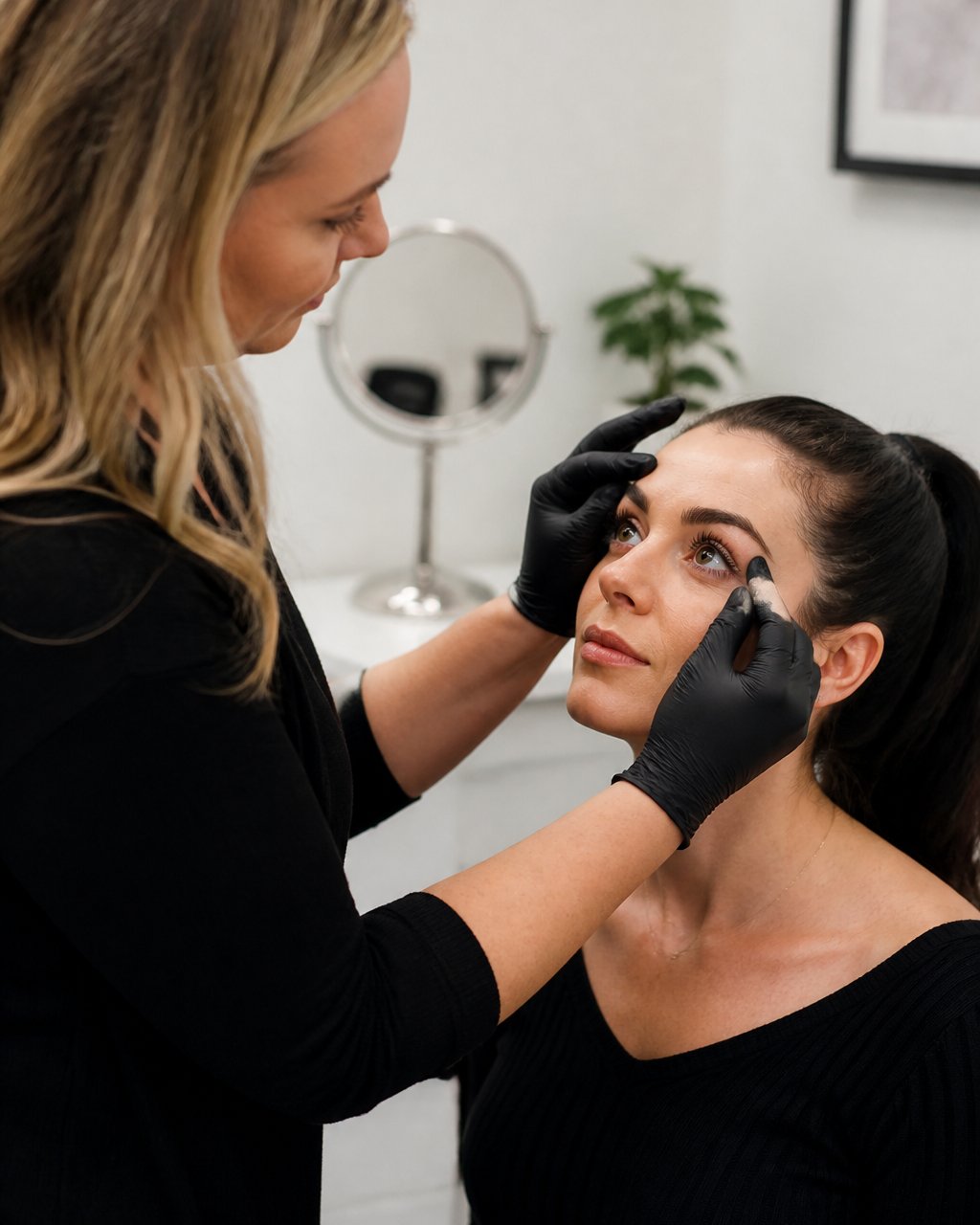
Here is the day-by-day picture most brief comparisons leave out.
Saline removal healing timeline (typical):
- Days 1-2: The treated brow looks red, slightly swollen, and may weep clear fluid. Pigment is still in the scab forming over the area. Keep it dry and clean; do not apply makeup.
- Days 3-7: A scab forms and begins to tighten. The brow may look darker than before treatment because pigment is trapped in the healing tissue, this is normal and not the final result. Do not pick, scratch, or exfoliate.
- Days 7-14: The scab flakes away gradually, often in patches, revealing lighter pigment underneath. Some areas may look uneven at this stage; that is expected and is why a follow-up assessment matters.
- Weeks 2-6: Skin continues to remodel. Final pigment level for that session is usually judged around four to six weeks, which is why sessions are spaced weeks apart.
Laser removal healing timeline (typical):
- Minutes to hours after: Immediate 'frosting' (whitening of the treated area) and mild swelling are common. Redness persists for a day or two.
- Days 1-3: The area may feel sunburned. Blistering can occur and should be left alone; do not pop blisters.
- Days 3-7: Any crusting resolves. Pigment may appear darker or patchy before it fades.
- Weeks 2-8: The body clears fragmented pigment gradually, so laser results reveal themselves over weeks rather than days. This is why laser sessions are spaced six to eight weeks apart.
Aftercare that actually drives the outcome (both methods):
- Keep the area clean and dry per your provider's instructions; avoid soaking, saunas, and swimming until cleared.
- Do not pick scabs or blisters, picking is the fastest route to scarring and uneven pigment loss.
- Avoid direct sun and use sun protection on the brow area during healing; UV exposure can darken healing pigment.
- Skip brow makeup, tinting, and any other cosmetic treatment on the area until your provider approves.
- Report signs of infection (spreading redness, pus, fever) promptly rather than waiting for your next appointment.
Who should pause before either method. Skin tone and skin type matter enormously here, and some clients need a medical assessment before any removal. A provider should assess your skin before recommending a method, not after. Be upfront about a history of keloids or hypertrophic scarring, active skin infections or eczema in the brow area, isotretinoin use, pregnancy, or immune conditions, any of these can change the recommendation or the timing. Darker skin tones warrant extra caution with laser because of melanin interaction, which is why wavelength selection and provider experience matter. If your brows have already faded to orange or shifted tone, our guide to fixing orange faded eyebrows explains how correction and removal fit together.
Eyebrow Tattoo Removal Risks: Scarring, Color Shift, and Skin Tone
Every removal method carries risk, and the honest comparison names them. Saline removal can cause scarring if aftercare slips or if the skin is worked too aggressively.
Skin tone and skin type matter enormously here. A provider should assess your skin before recommending a method, not after. If your brows have already faded to orange or shifted tone, our guide to fixing orange faded eyebrows explains how correction and removal fit together.
Cost, Pain, and Total Treatment Burden Side by Side
Cost is where the comparison gets misread. A single saline session often looks cheaper than a single laser session, but the total burden depends on how many sessions each method needs for your specific brows.
Pain differs too. Saline removal is often described as a scratching, stinging sensation during treatment, with soreness afterward. Laser removal feels like a sharp snap, and discomfort varies with pigment and settings. Neither is painless, and numbing helps in both cases.
Booking a Removal Consultation for Your Brows
The right method is a decision, not a default. If your pigment is faded, uneven, or color-shifted, saline removal often gives more control. If it is saturated and stubborn, laser may be worth discussing. The only way to know is an in-person assessment.
At Tonni Petty PMU Artistry, we bring over 22 years of permanent cosmetics experience to every consultation, backed by Master Technician certification through the American Institute of Intradermal Cosmetics and membership in the American Academy of Micropigmentation.
Frequently Asked Questions
Is laser or saline removal better for eyebrow tattoos?
It depends on the pigment and your goal. Saline tattoo removal lifts pigment gradually and suits brows that have shifted color or healed unevenly, and it is often used when a client wants partial lightening before a new brow procedure. Laser can clear stubborn, saturated pigment faster in some cases, but it carries a higher risk of color shift on cosmetic pigments. A consultation that reviews your pigment depth, color, and skin tone is the only reliable way to choose.
How many sessions does saline eyebrow tattoo removal take?
Most brows need multiple sessions, and the exact number for eyebrow tattoo removal depends on how saturated the pigment is, how deep it sits, and how your skin responds. Faded or older microblading often clears in fewer visits than dense, layered work. Sessions are spaced weeks apart so the skin can heal between treatments. Your provider should give you a realistic estimate after seeing the brows in person rather than quoting a fixed number upfront.
What do brows look like after saline removal?
Right after a session, the treated area typically looks red, slightly swollen, and frosted with a light crust as the solution draws pigment up through the skin. Over the following days the crusting flakes away and the brow can look lighter, sometimes patchy. Full results appear after the skin settles, which is why sessions are spaced out. Following aftercare instructions closely protects the brow shape and reduces the chance of irritation or scarring.
Can laser eyebrow tattoo removal change the color of the pigment?
Yes, this is one of the main eyebrow tattoo removal risks with laser. Cosmetic brow pigment often contains iron oxides, and laser energy can darken or shift those pigments rather than clear them, sometimes turning brows gray, green, or orange. That is why many PMU artists prefer saline or magnetic removal for cosmetic pigment and reserve laser for cases where the pigment and skin tone have been carefully assessed. Ask any provider how they handle color shift before booking.
Is saline removal safer than laser removal for brows?
Saline removal is often considered gentler for cosmetic brow pigment because it works at the surface rather than targeting pigment with light energy, which lowers the risk of color shift. Both methods carry risks, including irritation, scarring, and incomplete removal, and both depend heavily on provider skill. A certified technician with experience in permanent makeup removal will assess your skin, pigment, and history, then recommend the method that poses the fewest risks for your specific brows.
Removing brow pigment you regret is a decision worth getting right the first time, and the method matters as much as the provider. Tonni Petty PMU Artistry offers personalized consultations, expert pigment assessment, and magnetic PMU removal tailored to your skin and goals. Get started with Tonni Petty PMU Artistry and walk out with a clear, honest plan for your brows.