 comparison
Non-Laser Alternatives for Blue Eyebrow Tattoo Correction
Table of Contents
- Why Blue Eyebrow Tattoos Need Different Correction Approaches
- Saline Eyebrow Tattoo Removal: How It Works and What to Expect
- Blue Eyebrow Tattoo Color Correction Without Laser
- Eyebrow Tattoo Removal Healing Time and Recovery
- Eyebrow Tattoo Cover-Up Strategies
- Other Non-Laser Removal Methods: Dermabrasion and Chemical Options
- Choosing the Right Method for Your Situation
- Frequently Asked Questions
Last Updated: October 13, 2026
Why Blue Eyebrow Tattoos Need Different Correction Approaches
Blue eyebrow pigment presents unique challenges that standard laser removal protocols weren't designed to address. Unlike black or brown tattoo ink, blue particles respond unpredictably to heat-based treatments, and the delicate skin around your brows demands precision that goes beyond one-size-fits-all solutions.
The reason? Blue pigment sits at a different wavelength than darker inks. Laser technology developed primarily for black tattoos may scatter blue particles rather than break them down, sometimes darkening the pigment or turning it green or purple during treatment.
The good news: you have proven alternatives that work specifically for this problem. Saline removal, color correction with specialized pigments, strategic cover-ups, and other non-invasive methods can help people move past unsatisfactory permanent makeup results without the risks associated with aggressive laser sessions.
Saline Eyebrow Tattoo Removal: How It Works and What to Expect
The Saline Process and Pigment Response
Saline removal works by introducing a sterile saline solution into the dermis layer where tattoo pigment sits.
For blue eyebrow pigment specifically, this approach has a distinct advantage: it avoids the wavelength mismatch that complicates laser treatment. The saline doesn't interact with color; it simply mobilizes particles regardless of their hue.
The treatment itself involves multiple passes with a specialized tool to deposit saline at the correct depth.
Best Candidates for Saline Treatment
Saline removal isn't ideal for everyone. Your skin type, the depth of pigment, and how long ago your brow tattoo was placed all influence whether this method will deliver the results you want.
You're a strong candidate if you have:
- Defined, crisp eyebrow strokes (microblading, nano brows, or hairstrokes)
- Blue, green, or purple pigment that hasn't responded well to other attempts
- Skin that heals predictably without excessive scarring
- Realistic expectations about timeline (saline typically requires 4-8 sessions for significant fading)
You may want to explore other options if you have:
- Very deep pigment placement or heavily shaded brows
- A history of keloid or hypertrophic scarring
- Sensitive skin prone to prolonged inflammation
- Unrealistic timelines (expecting complete removal in 1-2 sessions)
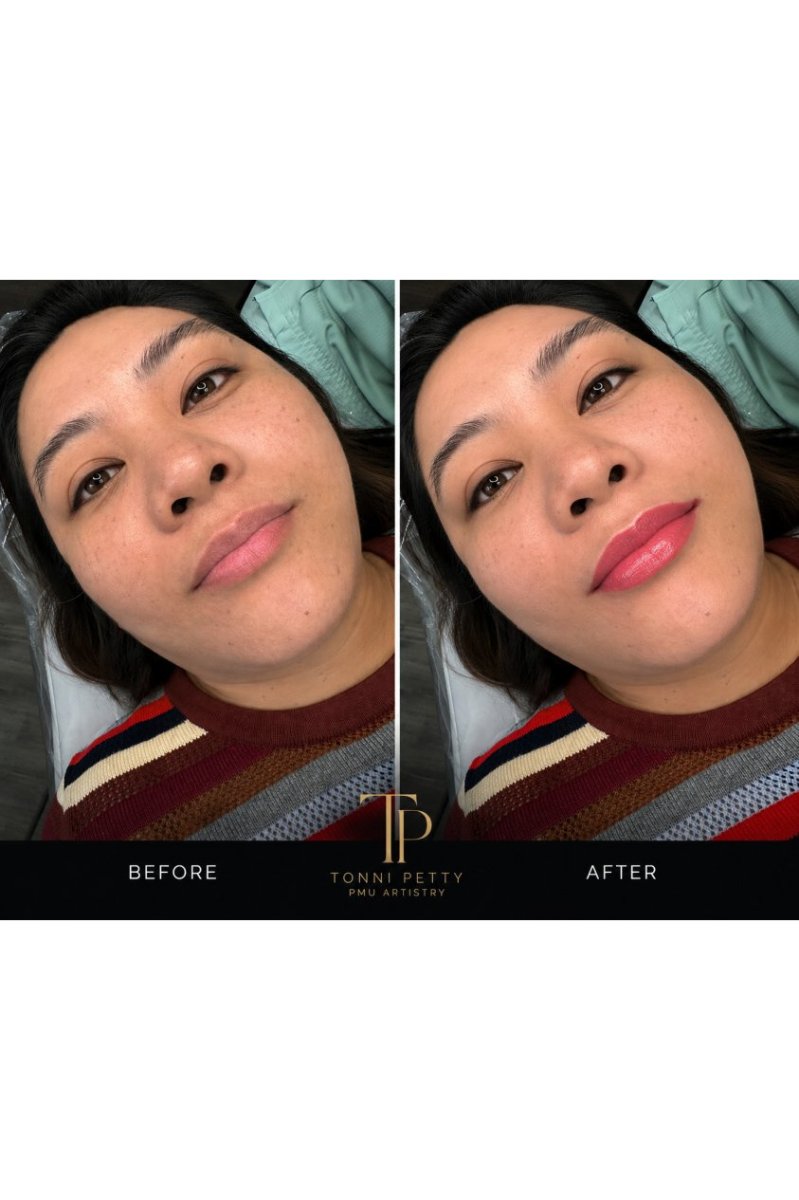
A consultation with a qualified practitioner can assess your specific situation. If you're interested in exploring saline removal or learning more about the process, Tonni Petty PMU Artistry offers advanced techniques for addressing unwanted pigment.
Blue Eyebrow Tattoo Color Correction Without Laser
Correction Pigments and Color Theory
Color correction for blue eyebrow pigment relies on a principle as old as art itself: layering complementary colors to neutralize unwanted tones.
This isn't the same as removal, the original blue pigment remains beneath the skin. Instead, color correction masks or transforms it.
The success of color correction depends heavily on the original pigment's depth and saturation. Lighter blue pigment is easier to correct than deeply saturated blue.
When Color Correction Works Best
Color correction is your best bet when you have:
- Moderately saturated blue pigment (not vivid or extremely dark)
- Brows that are structurally sound but just the wrong color
- A desire to keep the shape and definition of your existing brows
- Realistic expectations that the result will be a correction, not a complete transformation
Color correction typically requires 1-2 sessions and heals faster than removal methods. You'll see the final result within 4-6 weeks after your session.
Eyebrow Tattoo Removal Healing Time and Recovery
Typical Timeline for Non-Laser Methods
Healing timelines vary by method, but most non-laser removal approaches follow a predictable arc. Understanding what to expect helps you plan around work, social events, and other commitments.
Saline removal typically follows this healing pattern:
- Days 1-3: Immediate redness, slight swelling, and scabbing begins
- Days 4-7: Scabs darken and thicken; the area may look worse before it looks better
- Days 8-14: Scabs begin to lift and shed, taking pigment particles with them
- Weeks 2-6: Residual redness fades; the skin returns to normal appearance
- Full assessment: 6-8 weeks post-treatment (when you can accurately see how much pigment has lifted)
Color correction heals more quickly:
- Days 1-3: Mild redness and slight swelling
- Days 4-7: Pigment settles; the brow may appear darker than the final result
- Weeks 1-2: Color stabilizes and lightens slightly as inflammation resolves
- Weeks 3-6: Final color emerges as healing completes
Dermabrasion and chemical options vary more widely depending on the specific approach and depth of treatment. A practitioner will provide a personalized timeline based on your skin type and the intensity of the treatment.
Aftercare and What to Avoid
The first two weeks after treatment are critical. How you care for your brows during this window directly influences healing quality and final results.
Do:
- Keep the area clean with gentle, fragrance-free soap
- Apply recommended aftercare products (your practitioner will specify)
- Sleep with your head elevated to minimize swelling
- Wear sunscreen (SPF 30+) once any scabs have shed
- Stay hydrated and eat nutrient-dense foods to support skin healing
Avoid:
- Picking, scratching, or manually removing scabs (let them shed naturally)
- Excessive sweating or intense exercise for 7-10 days
- Hot water, saunas, steam rooms, or prolonged sun exposure
- Swimming or submerging the area in water
- Makeup or other products on the treated brows until fully healed
- Touching the area with unwashed hands
Poor aftercare is one of the most common reasons people see disappointing results. Infection, premature scab removal, or excessive irritation can reduce pigment lift and extend healing time. Follow your practitioner's specific instructions closely.
Eyebrow Tattoo Cover-Up Strategies
Cover-Up Design and Pigment Layering
A strategic cover-up transforms an unwanted blue brow by redesigning it entirely. Rather than trying to remove the pigment, a skilled artist works with it, using the existing color as a foundation for a new brow shape, color, or style.
The most effective cover-ups incorporate the old pigment into a new design. For blue brows, this might mean:
- Creating a darker, more defined brow shape that incorporates the blue as shadow or depth
- Shifting to a warmer color palette (warm browns, taupes, or warm grays) that makes blue less visible
- Redesigning the brow structure entirely, moving the arch or changing the tail angle to alter how light hits the pigment
Pigment layering requires precision. The artist must choose colors and placement that work with your skin undertone, eye color, and facial structure. A poorly executed cover-up can look just as problematic as the original brow.
When Cover-Up Is the Right Choice
A cover-up is your best option when you:
- Like the shape and structure of your existing brows but hate the color
- Want a faster solution than removal (one session versus multiple sessions)
- Have blue pigment that's moderately saturated (not extremely dark or vivid)
- Are willing to work with a highly skilled artist who specializes in PMU correction
Cover-ups can also be combined with other methods. Some practitioners recommend light saline removal first to reduce pigment saturation, followed by a color-correcting cover-up session.
The downside: if the cover-up pigment fades or shifts, you'll be managing two layers of color rather than one. This is why choosing an experienced practitioner matters.
Other Non-Laser Removal Methods: Dermabrasion and Chemical Options
Beyond saline, other non-invasive approaches exist for blue eyebrow tattoo correction. While less commonly used than saline or color correction, they merit consideration depending on your specific situation.
Dermabrasion mechanically removes the top layers of skin where pigment sits.
Chemical peels or TCA (trichloroacetic acid) work by chemically dissolving the top skin layers.
Both methods require significant expertise when applied to eyebrows. The margin for error is narrow, and the consequences of over-treatment (scarring, permanent skin damage) are serious.
Choosing the Right Method for Your Situation
Selecting a correction method depends on several factors: your pigment color and saturation, the depth of placement, your skin type, your timeline, and your goals. There's no universally "best" option, only the best option for your specific brows.
Start with these questions:
- How saturated is your blue pigment? (Light and faded → color correction may work; vivid and dark → removal is likely necessary)
- How long ago was your brow tattoo placed? (Older pigment often fades more easily than fresh)
- How much time can you invest? (Cover-up is fastest; removal requires multiple sessions over months)
- What's your skin type? (Sensitive skin may tolerate color correction better than saline; prone-to-scarring skin needs careful practitioner selection)
- Do you want to keep the brow shape, or redesign it? (Keep shape → color correction or cover-up; redesign → removal first, then new brows)
| Method | Timeline | Sessions | Best For | Healing |
|---|---|---|---|---|
| Saline Removal | 4-8 weeks per session | 4-8 typically | Defined strokes, moderate pigment | 2 weeks per session |
| Color Correction | 4-6 weeks | 1-2 | Wrong color, good shape | 2-3 weeks |
| Cover-Up | Immediate | 1 | Fast results, structural redesign | 2-3 weeks |
| Dermabrasion | 6-8 weeks | 2-4 | Specific cases, experienced practitioners only | 3-4 weeks |
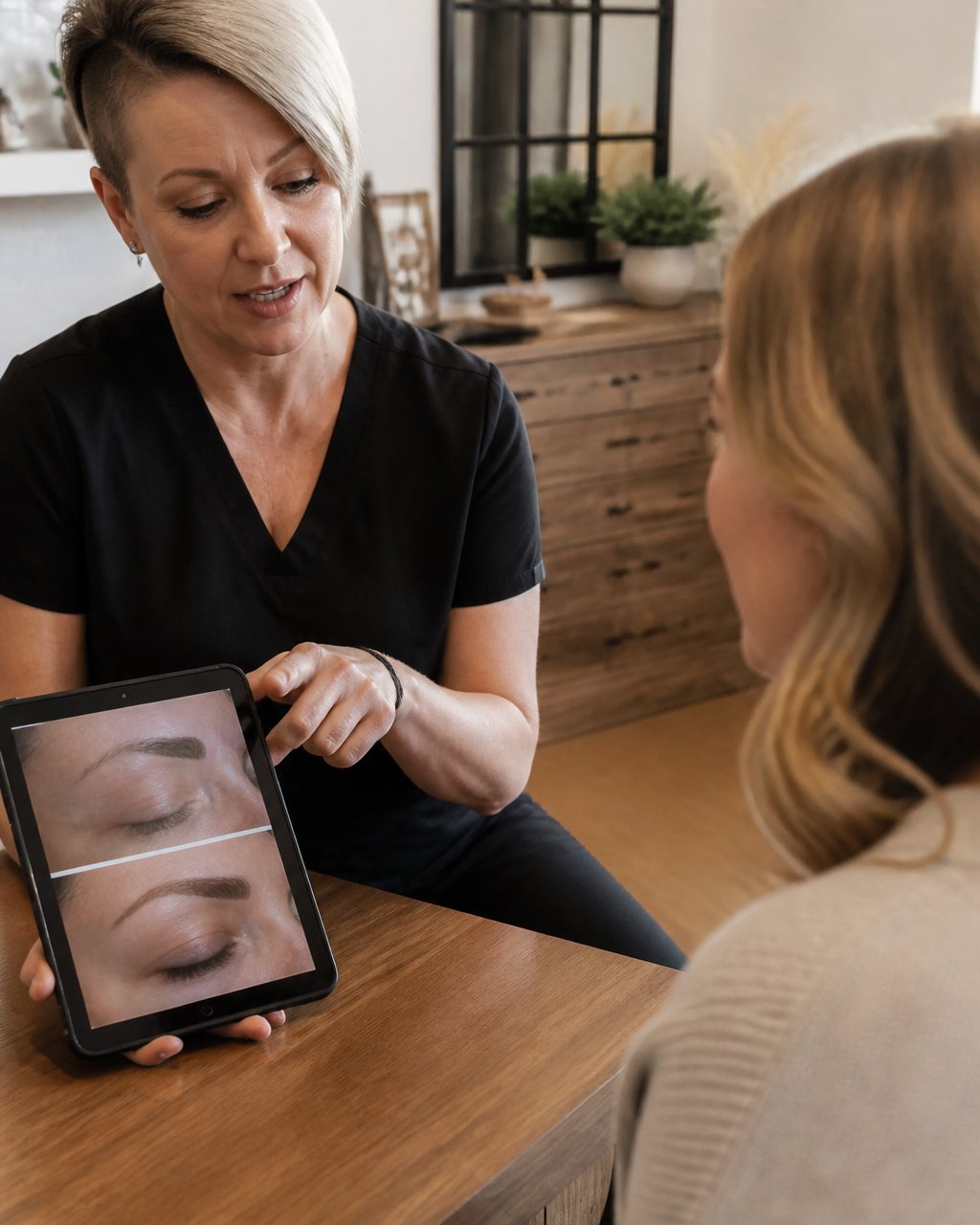
A skilled practitioner will assess your brows in person and recommend the approach most likely to succeed. Many recommend starting with a consultation before committing to treatment. This gives you a chance to ask questions, see examples of their work, and understand realistic outcomes for your situation.
If you're struggling with blue eyebrow pigment that didn't turn out as expected, you don't have to live with it. Our master-level expertise in pigment behavior and skin response means we can assess your specific situation and recommend the approach most likely to deliver the results you want. Book a consultation to explore your options and take the first step toward brows you'll love.
Frequently Asked Questions
Can a blue eyebrow tattoo be corrected without laser?
Yes. Saline removal, color correction with specialized pigments, and cover-up techniques can all address blue eyebrow tattoos without laser. Saline works by creating a controlled wound that flushes out pigment particles over multiple sessions. Color correction uses corrective pigments to neutralize or shift the blue tone. Cover-ups involve placing new, carefully selected pigment over the old brows. The best choice depends on pigment depth, skin type, and your desired outcome. A qualified permanent makeup technician can assess your specific situation during a consultation.
How many sessions does non-laser eyebrow tattoo removal take?
Non-laser removal typically requires 3 to 6 sessions, though some cases need more. Saline removal sessions are usually spaced 6 to 8 weeks apart to allow proper healing between treatments. Color correction may take 1 to 3 sessions depending on how well the corrective pigment neutralizes the blue. Cover-ups usually require just one session, though touch-ups may be needed. Your practitioner will outline a realistic timeline during your initial consultation based on pigment depth and skin characteristics.
How long does eyebrow tattoo removal take to heal?
Healing from non-laser eyebrow tattoo removal typically takes 7 to 14 days for the surface to close, but full healing continues for 4 to 6 weeks. During the first week, expect scabbing and some oozing. Avoid water, makeup, and direct sun exposure on the brows during this period. The area may feel tender and appear darker or more raised than normal. Complete pigment flushing and color settling can take several weeks. Following aftercare instructions carefully speeds healing and improves results.
What should I ask a permanent makeup artist before correcting blue brows?
Ask about their experience with blue pigment correction specifically, not just general PMU removal. Request before-and-after photos from clients with similar blue brow situations. Confirm which removal or correction method they recommend for your pigment depth and skin type, and why. Ask about the total number of sessions, spacing between appointments, and realistic outcomes. Discuss pricing, aftercare requirements, and what happens if you're unhappy with results. Verify their certifications and ask about their training in color theory and pigment chemistry. A qualified technician should give you honest answers about limitations and risks.