 ultimate-guide
PMU Training Course Curriculum: A 2026 Guide
Table of Contents
- What Is Covered in PMU Training Course Curriculum
- Permanent Makeup Course for Beginners: Foundation Skills
- PMU Training Duration and Time Commitment
- Permanent Makeup Hands-On Training and Practice Requirements
- PMU Sanitation and Safety Training Essentials
- Advanced Techniques and Specialized Modules
- Client Consultation, Preparation, and Aftercare
- Certification, Licensing, and Career Readiness
- Frequently Asked Questions
Last Updated: October 17, 2026
What Is Covered in PMU Training Course Curriculum
Permanent makeup training combines artistry, anatomy, safety protocols, and technical skill. A comprehensive PMU training course curriculum covers far more than holding a machine and applying pigment: it demands understanding skin structure, mastering multiple techniques, navigating health and safety regulations, and developing business acumen.
A legitimate PMU training course curriculum demands mastery across foundational knowledge, hands-on technical training, safety and sanitation, advanced techniques, and client management.
A quality program reflects the complexity of the work: assessing skin types, designing brows for individual facial structure, understanding pigment behavior in different skin conditions, managing client expectations, and operating within legal and safety frameworks.
Permanent Makeup Course for Beginners: Foundation Skills
Core PMU Fundamentals
A beginner PMU training course curriculum must establish a solid foundation in the principles that govern all permanent makeup work. This section covers the essential knowledge every artist needs before touching a machine or a client.
The fundamentals begin with PMU machines: how machine types function, the mechanics of needle depth and frequency, adjusting settings for different skin types, and the relationship between machine speed and pigment deposit. This practical knowledge determines whether your work looks professional or amateur.
Pigment chemistry matters equally. Beginners must understand why certain pigments shift color in oily skin, how depth affects longevity, and what happens when pigment is deposited too shallow versus too deep.
Needle selection is another foundation piece. The PMU training course curriculum covers single needles, groupings, and specialty needles and when each is appropriate: a 1-needle creates fine lines for microblading effects, while a 3- or 5-needle creates broader strokes for powder techniques.
Color Theory and Skin Analysis
Color theory in permanent makeup differs significantly from cosmetic color theory because you're working with pigment that will remain under the skin for years. The PMU training course curriculum dedicates substantial time to understanding how color behaves in different skin types and tones.
Skin analysis determines everything about the service. The curriculum teaches you to assess skin type (oily, dry, combination, sensitive), tone (fair, medium, olive, deep), and condition (scarring, texture, previous PMU work), each of which changes color selection, needle depth, and technique.
Color theory covers undertone assessment, where many new artists struggle: a client with warm undertones needs different pigments than one with cool undertones, even when surface skin tone appears similar.
Training also covers pigment mixing and customization. Knowing how to warm, cool, or adjust saturation for individual clients separates competent artists from exceptional ones.
PMU Training Duration and Time Commitment
A PMU training course curriculum typically requires 100 to 300 training hours depending on depth and techniques covered, reflecting the actual time needed to develop competency.
A basic beginner course focused on one technique might span 100-150 hours. A comprehensive program covering various techniques typically requires 200-300 hours. Some advanced certification programs extend beyond 300 hours when they include business training, advanced corrections, and mentorship components.
The commitment extends beyond class hours: most quality programs include homework, study time for anatomy and safety protocols, and independent practice on synthetic skin between sessions.
Scheduling varies: some programs run 2-4 intensive weeks, others span 3-6 months part-time. Intensity matters less than total hours and instruction quality.
Permanent Makeup Hands-On Training and Practice Requirements
Live Model Practice and Technique Application
No PMU training course curriculum is complete without extensive hands-on practice on real skin.
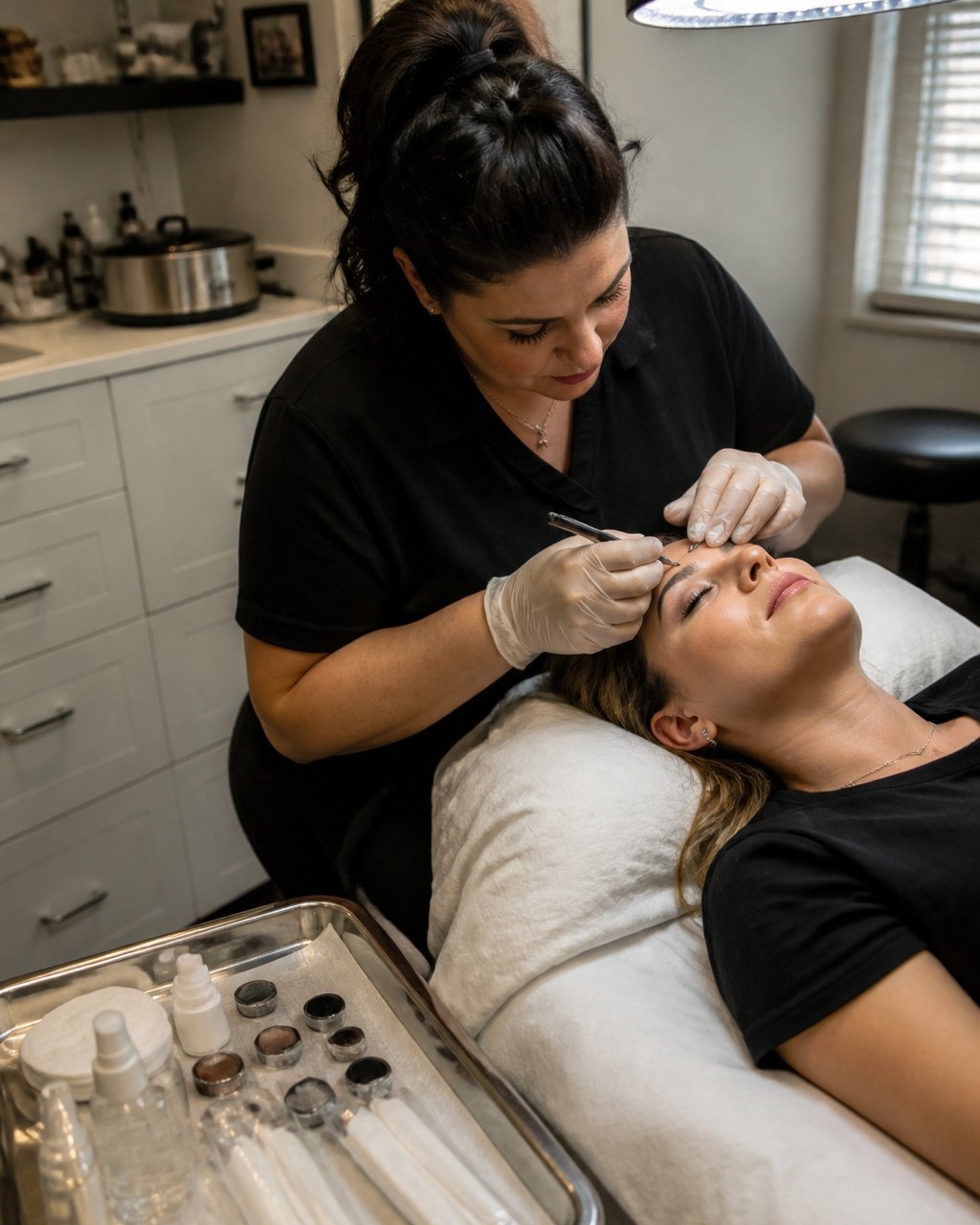
Quality programs require students to perform a minimum number of procedures under supervision before graduating. These aren't casual practice sessions, they're closely supervised work where instructors evaluate every step.
Live model practice teaches what synthetic skin cannot: client communication, comfort management, responding to unexpected bleeding, adjusting technique from real-time feedback, and recognizing complications like infection or allergic reactions early.
Students photograph their work before, immediately after, and during healing. This builds a portfolio, teaches objective self-evaluation, and documents normal versus problematic healing.
Training Kits and Equipment
A comprehensive PMU training course curriculum includes or requires specific equipment and supplies. Understanding what you need and why is part of professional training.
The training kit typically includes PMU machines, needle assortments covering different configurations, pigment samples in multiple color families, practice skins for technique development, and sanitation supplies.
The kit also includes brow mapping tools, measuring devices, and design templates. Learning established mapping methods first provides a foundation you can later customize, including why certain proportions flatter and how to adapt for different face shapes.
PMU Sanitation and Safety Training Essentials
Infection Prevention and Exposure Control
Health and safety training forms a non-negotiable component of any legitimate PMU training course curriculum. This section covers exposure control, bloodborne pathogen protocols, and infection prevention practices that protect both you and your clients.
The curriculum begins with how infections occur in PMU work: you're creating controlled wounds, and any breach in sanitation protocol creates risk. Training covers pathogens of concern, hepatitis B and C, HIV, and bacterial infections, and how they're transmitted.
Exposure control covers proper personal protective equipment (PPE), hand hygiene, and managing accidental exposures, including when gloves or double-gloving are required and how to change gloves without contamination.
Client screening for contraindications is also covered: active infections, certain medications, autoimmune disorders, and pregnancy affect eligibility, and professional training teaches you to identify these and refer appropriately.
Sterilization and Disinfection Protocols
A quality PMU training course curriculum teaches the difference between cleaning, disinfection, and sterilization, and why each step matters.
Cleaning removes visible debris, disinfection kills surface pathogens chemically, and sterilization eliminates all microorganisms including spores. Some items can be disinfected; others must be sterilized.
The curriculum covers sterilization and chemical disinfection protocols for items that cannot be autoclaved, including dilution, contact time, and safety precautions.
Single-use versus reusable decisions are part of the curriculum: needles and pigment cups must be single-use, while some tools can be reused if properly sterilized, protecting clients.
Advanced Techniques and Specialized Modules
Microblading, Powder Brows, and Combo Brows
Once foundational skills are established, the PMU training course curriculum branches into specialized techniques. These aren't just variations, they're distinct approaches requiring different skills, tools, and artistic sensibilities.
Microblading creates hair-like strokes with a handheld tool and fine needles. The curriculum covers blade selection, angle and pressure, and mimicking natural hair growth.
Powder brows use a machine to create a soft, powdered appearance similar to eyeshadow or filled-in brows. The technique requires different needle configurations, different pressure and speed, and a different artistic approach.
Combination brows (combo brows) blend microblading and powder techniques in a single application. This requires mastery of both techniques and the artistic judgment to know when to use each.
Lip Techniques and Corrections
Lip work presents unique challenges because lip tissue behaves differently than facial skin. The PMU training course curriculum dedicates specific modules to lip techniques and the complications that can arise.
Lip blushing creates a tinted, stained appearance. The curriculum covers pigment selection for lips, needle depth considerations for lip tissue, and how to manage bleeding. It teaches the specific strokes and techniques that create natural-looking results.
Lip color correction addresses previous work that shifted color, faded unevenly, or was applied poorly. The curriculum covers color correction theory, understanding how to neutralize unwanted tones and how to layer pigments to achieve desired results.
The curriculum also covers complications specific to lip work: allergic reactions to lip pigments, healing irregularities, and the challenge of maintaining color symmetry on lips that move constantly.
Client Consultation, Preparation, and Aftercare
Professional PMU work depends on thorough client consultation and clear communication about expectations, healing, and maintenance. The PMU training course curriculum teaches these soft skills alongside technical ones.
Consultation protocols covered in the curriculum include comprehensive health screening, medication review, and discussion of previous PMU experiences. You'll learn to ask about medications that affect bleeding or healing, autoimmune conditions, and previous allergic reactions.
Design consultation is a distinct skill. The curriculum teaches you to assess facial structure, identify flattering proportions, and translate client preferences into designs that suit their features. This requires learning about facial geometry, symmetry, and how different brow shapes complement different face shapes.
Preparation instructions teach clients how to prepare for their appointment, what medications to avoid, when to stop certain supplements, and how to arrive with clean skin. These instructions are part of the curriculum because proper preparation affects results significantly.
Aftercare education is equally important. The curriculum covers what clients can expect during healing, how to care for their new permanent makeup, what to avoid, and when complications warrant medical attention. Clear aftercare instructions reduce complications and client dissatisfaction.
Certification, Licensing, and Career Readiness
A comprehensive PMU training course curriculum concludes with information about professional credentialing, legal requirements, and business preparation. These elements transform trained technicians into professional practitioners.
Certification through recognized organizations like the American Institute of Intradermal Cosmetics signals that you've met established standards. The curriculum prepares you for certification exams by ensuring you've covered required knowledge areas and demonstrated technical competency.
Licensing requirements vary by location. Some states regulate permanent makeup practitioners; others don't. The curriculum covers the specific requirements for your jurisdiction, whether licensing, permits, or specific training hours are mandated.
Business preparation modules cover pricing strategies, client management systems, marketing basics, and financial management. Quality PMU training course curriculum addresses this gap by teaching you to operate as a professional business, not just a skilled technician.
The curriculum may also cover continuing education requirements, industry standards, and professional development. Professional training instills the mindset that learning continues throughout your career.
A quality PMU training course curriculum prepares you for professional practice by covering technical skills, safety protocols, client management, and business fundamentals.
Frequently Asked Questions
What topics are covered in a permanent makeup training course?
PMU training courses cover permanent makeup fundamentals, color theory, skin structure and types, brow mapping and design, microblading and advanced techniques, machine operation, pigment selection, client consultation skills, health and safety protocols, sanitation and sterilization, infection prevention, and business essentials. Most programs include both theoretical instruction and hands-on practice on live models to ensure students master each technique before certification.
How long does it take to complete PMU training?
PMU training duration varies depending on the program level and intensity. Beginner courses typically range from 100 to 300 hours, while advanced or master-level programs can extend beyond that. Some programs run full-time over weeks, while others are part-time over several months. The curriculum structure, hands-on practice requirements, and certification standards determine the total time commitment needed for professional readiness.
Does PMU training include hands-on practice?
Yes, hands-on training is essential in every reputable PMU course. Students practice on practice skins, synthetic models, and live models under direct supervision. This permanent makeup hands-on training component ensures you develop proper technique, machine control, and client handling skills. Most programs require a minimum number of practice hours and completed procedures before certification, preparing you for real-world client work.
What safety and sanitation skills are taught in PMU courses?
PMU sanitation and safety training covers bloodborne pathogen exposure control, proper disinfection and sterilization protocols, infection prevention techniques, personal protective equipment (PPE) usage, and compliance with OSHA standards. Students learn how to maintain a sterile work environment, handle sharps safely, manage client health history and contraindications, and recognize complications. This training is critical for protecting both the artist and clients from infections and cross-contamination.
Does completing a PMU course qualify you to work as an artist?
Completing a PMU course provides the foundational knowledge and skills needed to work professionally, but licensing and legal requirements vary by location. Some states or counties may require additional licensing, permits, or continuing education. Certification through recognized organizations like the American Institute of Intradermal Cosmetics or the American Academy of Micropigmentation strengthens your credentials. After certification, many artists continue with mentorship or advanced training.
What tools and supplies are included in PMU training?
Most comprehensive PMU training programs include or require a training kit containing a PMU machine, pigments in various colors, needles and cartridges, practice skins, and safety supplies. The specific equipment depends on the techniques covered (microblading, powder brows, lip blushing) and the program's curriculum structure.
What is the difference between beginner and advanced PMU training?
Beginner permanent makeup course for beginners focuses on foundational techniques, basic brow mapping, and essential safety protocols. Advanced training builds on these skills, introducing additional techniques like powder brows, combo brows, lip techniques, and color correction. Master-level programs add business skills, mentoring techniques, and specialized applications for deeper expertise.