 how-to
How to Choose a PMU Training Academy: 2026 Guide
Table of Contents
- What to Look for in a PMU Training Academy
- Understanding PMU Course Curriculum
- Online Permanent Makeup Training Versus In-Person Learning
- Permanent Makeup Training Cost and Financial Considerations
- Evaluating Beginner Suitability and Prerequisites
- Licensing, Regulations, and Scope of Practice
- Making Your Final Decision
- Frequently Asked Questions
Last Updated: October 14, 2026
What to Look for in a PMU Training Academy
Learning how to choose a pmu training academy is one of the most important decisions you'll make as an aspiring PMU technician. The quality of your training directly impacts your career, your client safety, and your earning potential.
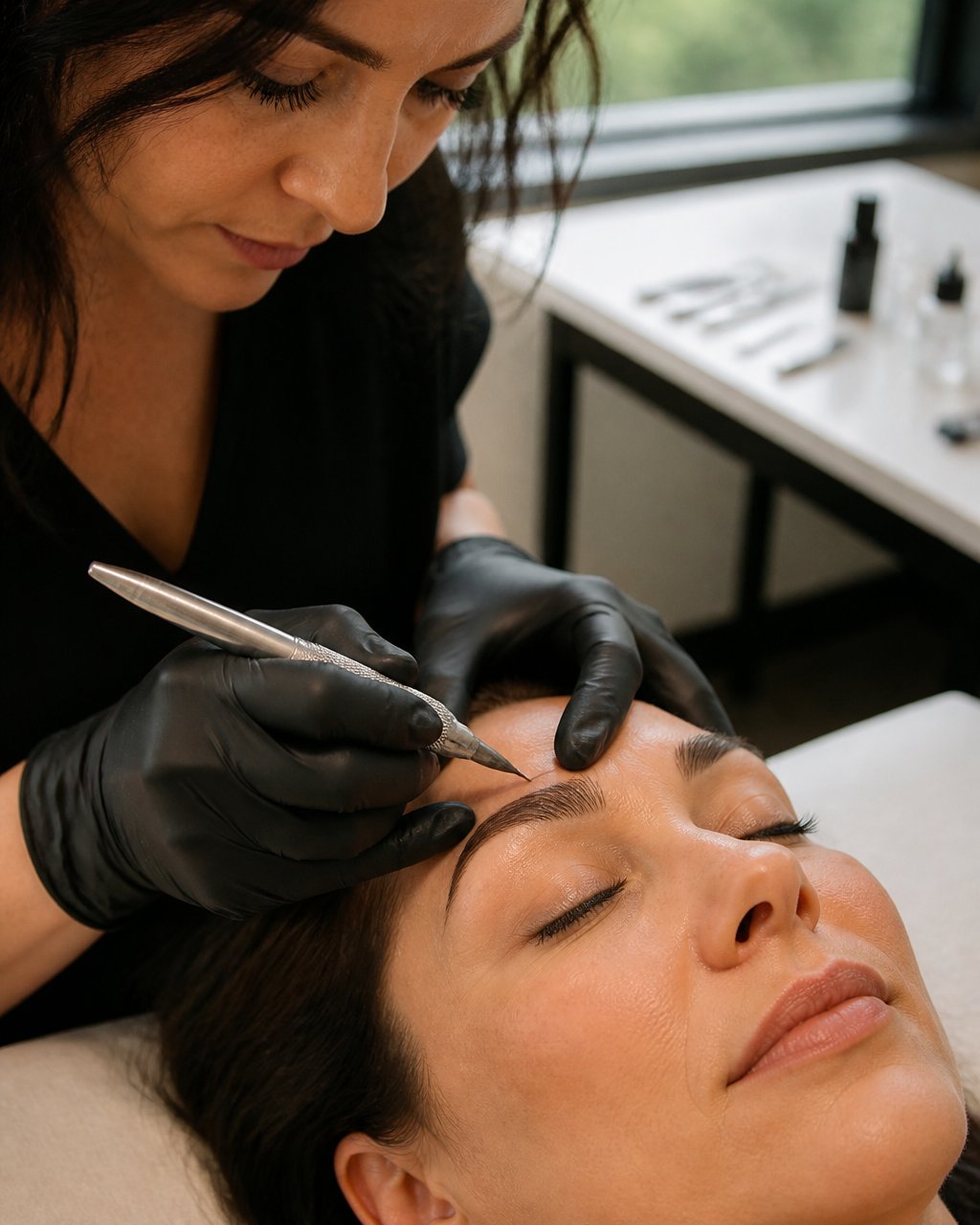
The best PMU training academies share a few core qualities. They invest in instructor experience. They provide hands-on practice with real models. They teach both safety and artistry. They offer support after you graduate.
Most beginner students don't know what separates a solid academy from a mediocre one. Here's what actually matters.
Instructor Experience and Credentials
Your instructor's experience is everything. A master-level instructor with years of real-world practice will teach you differently than someone who just completed a certification course themselves.
Look for instructors who hold recognized credentials. The American Institute of Intradermal Cosmetics and the American Academy of Micropigmentation are respected organizations in the field.
Ask about years of experience specifically. How long has the instructor been performing PMU procedures? Have they worked with diverse skin types and facial structures?
Experience matters because PMU is both art and science. An experienced instructor has troubleshot hundreds of complications. They've learned what works on different skin types. They know how to adjust techniques when something isn't working.
Hands-On Practice and Live-Model Sessions
Theory alone won't make you a PMU technician. You need hours of hands-on practice with real models.
The best academies require live-model training as a core part of the curriculum. This means you practice on actual human skin, not synthetic practice skins or mannequins. Real skin behaves differently. It bleeds. It holds pigment differently.
When evaluating an academy, ask how many live-model sessions are included. More is better, but quality matters too.
Ask whether the academy provides the models or whether you need to find them yourself. Some academies have a roster of trained models. Others require students to recruit clients. This affects your learning experience significantly.
Certification and Professional Recognition
Certification matters, but not all certificates carry the same weight. Some are issued by the academy itself with minimal standards. Others come from recognized professional organizations.
When you graduate, ask what certification you'll receive. Will it be recognized by professional organizations? Will it help you get hired or build your own client base? Does it carry continuing education requirements that keep you current?
The strongest certifications come from established professional bodies. These typically require demonstrated competency, not just course completion. They signal to clients and employers that you've met industry standards.
Understanding PMU Course Curriculum
The curriculum determines what skills you'll actually learn. A comprehensive curriculum covers foundational techniques, safety protocols, and specialty procedures. A thin curriculum might leave you unprepared for real-world clients.
Foundational Skills and Techniques
Every solid PMU training academy teaches the fundamentals: color theory, skin anatomy, pigment behavior, and basic techniques like microblading, powder brows, and combo brows.
But foundational skills go deeper than just technique. You need to understand how pigment sits in different skin layers. You need to know how to assess skin type and adjust your approach accordingly. You need to learn how to design brows that suit each client's face shape and features.
The best academies teach you to think like an artist, not just follow steps. They help you develop an eye for proportion and symmetry. They teach you how to consult with clients so you understand their goals.
Manual Versus Machine Methods
Most PMU training academies teach both manual and machine techniques. Manual microblading uses hand-held tools. Machine methods use electric devices. Each has advantages and limitations.
Manual techniques give you more control and a lighter touch. They're ideal for clients with sensitive skin or previous PMU that needs correction. Machine methods are faster and more consistent for certain applications, especially powder brows and larger coverage areas.
A good academy teaches you both methods so you can choose based on what each client needs. Some clients will be better served by manual work. Others will benefit from machine methods. You need competency in both.
Safety, Sanitation, and Infection Control
This is non-negotiable. Poor sanitation practices can cause serious client harm. Infections, allergic reactions, and cross-contamination are real risks if you don't follow proper protocols.
The academy should dedicate significant time to safety and sanitation. You need to understand bloodborne pathogens, proper sterilization of equipment, and infection prevention. You need to know what to do if a complication occurs during a procedure.
Ask the academy about their sanitation protocols. Do they teach proper autoclave use? Do they cover single-use versus reusable equipment? Do they train you on recognizing contraindications, situations where a client shouldn't receive PMU because of health conditions or medications?
Online Permanent Makeup Training Versus In-Person Learning
The format you choose affects how you learn and what you're able to practice. Each format has real tradeoffs.
Online Learning: Flexibility and Video Lessons
Online PMU training offers flexibility. You can watch HD video lessons on your own schedule. You can review techniques repeatedly. You can fit training around your existing job or responsibilities.
But online learning has significant limitations for PMU. You can't get hands-on feedback from an instructor watching your technique in real time. You can't practice on live models under supervision. You can't ask questions and get immediate clarification when you're confused about a procedure.
Many online courses focus on theory and video instruction. They assume you'll find your own models to practice on. That's risky. Practicing on unpaid friends or family members without proper supervision can create problems, bad results that damage your reputation before you even start your career.
In-Person PMU Training: Hands-On Immersion
In-person training puts you in a room with an instructor and live models. You learn by doing. The instructor watches your technique, corrects your form, and guides you through procedures in real time.
This immersive approach accelerates your learning. You get immediate feedback. You see how the instructor handles complications. You practice under controlled conditions where mistakes are learning opportunities, not client disasters.
In-person training requires time commitment. You might need to travel or take time off work. The upfront cost is typically higher than online options. But the learning depth is substantially greater.
Hybrid Models: Combining Both Approaches
Some academies blend online and in-person training. You might watch video lessons online, then come in for intensive hands-on practice sessions. This approach can work well if it's designed thoughtfully.
The key is ensuring that the hands-on component is substantial and supervised. A hybrid model that's mostly online with minimal in-person time still leaves you unprepared for real client work.
Permanent Makeup Training Cost and Financial Considerations
Cost varies widely depending on what's included. The cheapest option isn't always the best value, and the most expensive isn't always worth it.
What Affects Training Prices
Several factors influence academy pricing. The instructor's experience and credentials affect cost. Comprehensive curriculum with many hours of instruction costs more than basic training. Live-model sessions increase costs. Post-course support and mentorship add value but increase price.
Location matters too. Academies in major metropolitan areas typically charge more than rural locations. Online-only programs often cost less than in-person training because they don't have facility overhead.
When comparing prices, look at what's actually included. Does the cost cover all materials and pigments? Are live-model sessions included or do you pay extra? Is certification included? What happens if you need additional practice sessions after graduation?
Post-Course Support and Remediation
The best academies don't disappear after you graduate. They offer ongoing support. This might include access to the instructor for questions, group mentorship sessions, or additional practice sessions if you need them.
Ask what happens if you struggle with a particular technique after graduation. Can you come back for extra training? Is there a cost for remediation? Can you contact your instructor with questions?
Post-course support is worth paying for. It reduces your risk. If you get stuck on something, you have resources to help you get unstuck before you start taking paying clients.
Evaluating Beginner Suitability and Prerequisites
Some academies cater to complete beginners. Others expect you to have art or medical background. Know which category an academy falls into before you enroll.
A beginner-friendly academy teaches foundational concepts from scratch. It doesn't assume you understand anatomy or color theory. It builds your knowledge step by step.
Ask about prerequisites. Does the academy require any prior experience? Do they expect you to have certain skills before starting? If they do, make sure you actually have those skills or you'll struggle from day one.
The best beginner academies are honest about what you need to know. They don't oversell how quickly you can become competent.
Licensing, Regulations, and Scope of Practice
Regulations vary by state and sometimes by city. Before you invest in training, understand what you're legally allowed to do after graduation.
Some states regulate PMU strictly. Others have minimal oversight. Some states require a cosmetology license before you can perform PMU. Others allow PMU technicians to work without a cosmetology license if they meet specific training requirements.
The academy should be clear about local regulations. They should tell you what licensing or permits you'll need in your state. They should explain scope of practice, what procedures you can legally perform and what requires additional credentials.
Don't assume an academy's training will qualify you to work anywhere. The credentials that work in one state might not be recognized in another.
Making Your Final Decision
When learning how to choose a pmu training academy, start by listing your non-negotiable requirements. Do you need flexibility or can you commit to in-person training?
Next, research 3-5 academies that meet your basic requirements. Look at their instructor credentials. Review their curriculum. Check whether they offer live-model training.
Ask each academy specific questions. Request before-and-after photos from their instructors' clients. Ask about graduate outcomes. Find out what support they offer after graduation.
Visit in person if possible. Meet the instructor. See the training space. Talk to current students if they're available.
Trust your instincts. If an academy feels rushed or dismissive of your questions, that's a red flag.
Choosing the right PMU training academy sets the foundation for your entire career. When you're ready to invest in professional permanent makeup training, work with instructors who've been in the field long enough to teach you what actually works.
Frequently Asked Questions
What should I look for in a PMU training academy?
Prioritize instructor qualifications and years of experience in permanent makeup. Verify the academy offers comprehensive hands-on practice with live models, not just video lessons. Check whether the curriculum covers multiple PMU techniques (microblading, powder brows, lip procedures, eyeliner), safety protocols, and sanitation standards. Confirm the training leads to recognized certification and includes post-course mentorship or remediation support. Ask about the balance between online learning and in-person training, and whether the academy addresses local licensing requirements in your state.
How much does permanent makeup training cost?
Permanent makeup training costs vary based on program length, format (online, in-person, or hybrid), curriculum depth, and instructor credentials. Pricing depends on whether the course includes live-model practice, certification, and post-training support. Contact training academies directly for current pricing and financing options. Many academies offer payment plans to make training more accessible. When comparing costs, factor in what's included: course materials, video access, live sessions, practice supplies, and any remediation or advanced modules.
Is online permanent makeup training enough to become a PMU artist?
Online learning alone is insufficient for professional PMU practice. While online modules teach theory, techniques, and safety protocols, hands-on practice with live models is essential to develop the precision and confidence needed for client work. Most professional academies combine online lessons with in-person or hybrid sessions. Look for programs that provide structured live-model practice, real-time instructor feedback, and opportunities to practice manual and machine techniques before working on paying clients.
What certification do you need for permanent makeup?
Certification requirements vary by state and local jurisdiction. Many states do not require specific PMU licensing, but reputable training academies offer certification through professional organizations like the American Institute of Intradermal Cosmetics or the American Academy of Micropigmentation. These credentials demonstrate competency and build client trust. Check your state's cosmetology or esthetics board for scope-of-practice rules and any mandatory training hours. Some areas require general cosmetology or esthetics licensing before offering PMU services; verify local requirements before enrolling in training.