 comparison
Is Lip Blushing Worth It for Thin Lips? An Honest Review
Last Updated: November 7, 2026
Quick Summary
Lip blushing is worth it for thin lips only if your goal is color, border definition, and better symmetry, because it adds zero physical volume and cannot plump tissue or create projection. If you want a measurably larger lip, filler is the only one of the two that delivers volume, and combining both gives the strongest results.
- Lip blushing places pigment into lip tissue to add color, define the border, and create the visual impression of fuller lips.
- One published comparison estimates lip blush at roughly $1,850 over five years versus $6,000 or more for regular filler maintenance.
- Very thin lips with little natural pigment see only a modest visual gain, and fillers may serve those clients better.
- Most clients need a touch-up session at four to eight weeks to perfect retention.
- The most common disappointment comes from clients who expected filler-level volume from a color treatment.
Table of Contents
- What Lip Blushing Can and Cannot Do for Thin Lips
- Lip Blushing vs. Lip Fillers for Thin Lips
- Lip Blushing Pros and Cons You Should Weigh
- Realistic Outcomes by Degree of Lip Thinness
- Lip Blushing Before and After: What Results to Expect
- The Lip Blushing Healing Stages, Week by Week
- How Long Does Lip Blushing Last?
- Safety, Candidacy, and Choosing a Qualified Practitioner
- Frequently Asked Questions
What Lip Blushing Can and Cannot Do for Thin Lips
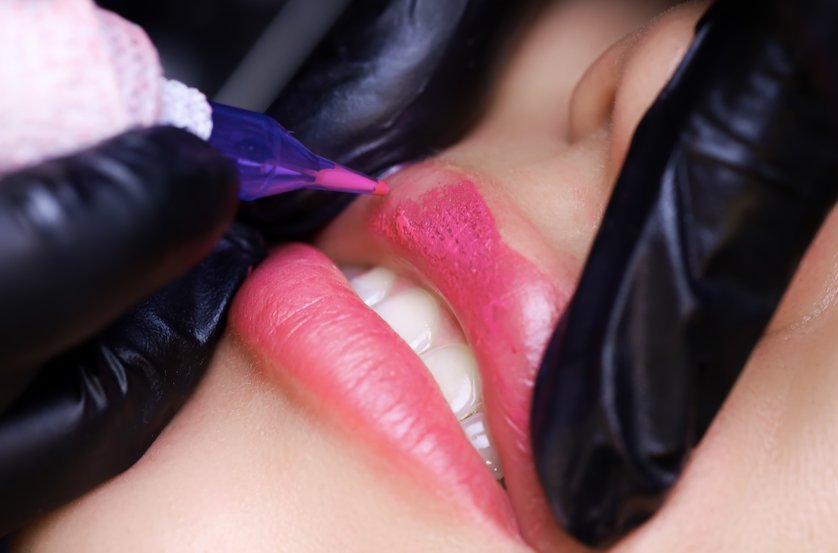
Lip blushing is a cosmetic tattoo that places pigment into the lip tissue to add color, define the border, and create the visual impression of fuller lips. The question thin-lipped clients ask most often is simple: will it actually make my lips look bigger? The honest answer is yes and no, and understanding which is which decides whether the treatment is worth your money.
How Color Creates the Look of Fuller Lips
Color is the mechanism. A well-placed pigment that sits slightly outside the natural vermillion border redraws the lip's outline, and a soft gradient from a deeper border to a lighter center makes the lip read as rounder and more projected. This is an optical effect, not a structural one. As Gundersen Health's overview of lip blushing explains, the treatment brightens or deepens lip color and the result does not come off when you eat.
Where the Physical Volume Stops
Lip blushing adds zero physical volume. It cannot plump tissue, push the lip forward, or fill out a flattened upper lip. If your definition of "worth it" means a measurable increase in lip size, no pigment artist can deliver that, and any practitioner who promises it is overselling. What you get is better shape, stronger contrast, and a more defined border, which many clients find sufficient on its own.
Lip Blushing vs. Lip Fillers for Thin Lips
The two treatments solve different problems, and for thin lips the distinction matters more than anywhere else. Fillers add physical volume through hyaluronic acid injected into the lip body. Lip blushing adds color and definition to the lip you already have. One changes the structure; the other changes how the structure reads.
A useful way to frame the choice is to name your goal before you name a treatment. If your goal is more color, a sharper border, or better symmetry, lip blushing addresses it directly. If your goal is projection, a lip that physically pushes forward or a flattened upper lip that needs to be filled out, filler is the only one of the two that can deliver it. If your goal is both, the strongest results usually come from combining them, in whichever order your provider recommends. Color alone can make a small mouth look more balanced, but it will not create projection. Volume alone can look undefined without color at the border.
Appearance, Risks, and Maintenance Side by Side
| Factor | Lip Blushing | Lip Fillers |
|---|---|---|
| What it changes | Color, border, definition | Physical volume |
| Results build | Gradually over healing | Immediately |
| Longevity | Years with touch-ups | Months per session |
| Maintenance | Occasional refreshers | Repeat appointments |
| Typical risk profile | Infection, pigment reaction, cold sore reactivation, uneven healing | Bruising, swelling, lumps, vascular complications in rare cases |
| Best for | Thin lips needing shape and color | Thin lips needing projection |
Filler risks are medical and immediate; blushing risks are procedural and pigment-related. Neither is risk-free, and the right choice depends on which risk profile and which result you are willing to accept.
Cost and Long-Term Maintenance Compared
Filler is a recurring cost because the body absorbs it over months, so a five-year plan means repeat appointments. Lip blushing is a larger upfront investment followed by occasional touch-ups. One published comparison from Inked Elegantly's lip blush vs. filler breakdown estimates lip blush at roughly $1,850 over five years versus $6,000 or more for regular filler maintenance, though those are the author's estimates rather than quoted prices. A common pattern in the industry is that a single filler session runs several hundred dollars and must be repeated to maintain volume, while a lip blushing series is priced as an initial session plus a touch-up. At Tonni Petty PMU Artistry, pricing depends on your consultation and treatment plan, so we quote after we see your lips rather than publishing a flat rate.
When you compare total cost, count the number of appointments over five years, not the price of one visit. That is where the two treatments diverge most.
Lip Blushing Pros and Cons You Should Weigh
Here is the honest ledger, and we would rather you read it before booking than after.
Pros:
- Adds color and border definition that makes thin lips look fuller
- Corrects asymmetry and softens an uneven lip line
- Low daily maintenance compared with lipstick or gloss
- Results can last years with touch-ups
Cons:
- No physical volume, so it will not satisfy a plumping goal
- Healing involves swelling, peeling, and a fading phase
- Pigment can shift over time and needs touch-ups
- Results vary with skin tone, natural lip color, and aftercare
Watch out: the most common disappointment comes from clients who expected filler-level volume from a color treatment. Set that expectation correctly at consultation and satisfaction rises sharply.
Realistic Outcomes by Degree of Lip Thinness
Results scale with what you start with, and the most useful thing a practitioner can do is tell you which category you fall into before you book. The categories below are a practical framework, not a medical classification, and a consultation is where your own lips get placed.
Mildly thin lips with decent natural color. These respond beautifully to a soft wash and a slightly extended border. The visual gain is noticeable because the lip already has enough pigment to build on, and the border work reads as definition rather than as drawn-on color.
Moderately thin lips. These need more careful border work and a gradient to avoid a flat, painted look. A deeper border fading to a lighter center creates the impression of roundness, but the extension has to stay close to the natural line or it looks artificial.
Very thin lips with little natural pigment. This is the hardest case. Color helps, but the visual gain is modest, and we tell clients plainly when fillers would serve them better. Pigment cannot create projection, so a very thin lip with little natural color will look more defined but not meaningfully larger.
Lip shape matters as much as size. A narrow mouth with a defined cupid's bow takes color well and can look more balanced with a soft border. A wide, flat lip needs a softer border so the extension does not look drawn on. An asymmetrical lip line benefits from border correction, which is one of the clearest wins for blushing because it changes shape rather than size.
A Decision Framework Based on Your Desired Outcome
Before you choose a treatment, name the outcome you actually want. The table below maps common goals to the option most likely to meet them.
| Your desired outcome | Lip blushing | Lip fillers |
|---|---|---|
| More color | Yes | No |
| Sharper, more defined border | Yes | Limited |
| Better symmetry | Yes | Sometimes |
| Actual volume or projection | No | Yes |
| A natural, no-makeup look | Yes | Sometimes |
If your goal sits in the first three rows, blushing is worth considering on its own. If it sits in the volume row, blushing alone will not meet it, and a combination is the honest recommendation. If you want a natural look without volume, blushing is the closer fit.
Watch out: clients who book blushing expecting filler-level volume are the most common source of disappointment, so set that expectation correctly at consultation and satisfaction rises sharply.
Lip Blushing Before and After: What Results to Expect
Before-and-after photos are the best preparation tool, but look for clients whose natural lip color, skin tone, and lip shape resemble yours. A gallery of dramatic transformations on full lips tells you little about what your thin lips will do.
The Lip Blushing Healing Stages, Week by Week
Most clients need a touch-up session at four to eight weeks to perfect retention, and our guide on how many sessions lip blushing requires walks through that schedule in detail.
How Long Does Lip Blushing Last?
Lip blushing retention depends on skin type, lifestyle, sun exposure, and aftercare. Clients who follow their aftercare and protect their lips from sun tend to hold color longer. For the full breakdown, read our complete guide on how long lip blushing lasts, and if long-term value is your concern, our article on maintaining lip blushing color for years covers the habits that protect your investment.
Safety, Candidacy, and Choosing a Qualified Practitioner
Safety comes down to the practitioner. Lip blushing is a cosmetic tattoo, so it carries real risks: infection, allergic reaction to pigment, cold sore reactivation, and uneven healing. Ask about hygiene protocols, pigment ingredients, and patch testing. If you get cold sores, tell your provider so they can coordinate prevention with your doctor.
Candidacy matters too. Active skin infections, certain autoimmune conditions, and pregnancy usually mean waiting. A thorough consultation should screen for these before any needle touches your lips.
Choosing an artist is where most people underinvest. Our step-by-step guide on how to choose a PMU artist gives you the questions to ask. When you are ready to see the service itself, you can review lip blushing and lip neutralization and book a consultation.
Thin lips are one of the most common reasons clients walk through our door, and the right answer depends entirely on whether you want color and definition or actual volume. At Tonni Petty PMU Artistry, we build every treatment around a personalized consultation, and draw on more than two decades in permanent cosmetics and membership in the American Academy of Micropigmentation. If you are weighing your options, get started with Tonni Petty PMU Artistry and find out what your lips can realistically achieve.
Frequently Asked Questions
Is lip blushing good for thin lips?
Lip blushing suits thin lips when the goal is color, border definition, and the appearance of fullness. It cannot add physical volume the way filler does, so the change is visual rather than structural. Clients with very thin lips usually see the clearest improvement in lip border definition and symmetry. A consultation helps confirm whether your lip shape and skin tone will respond well to pigment.
Can lip blushing make thin lips look fuller?
It can create a fuller appearance by placing pigment along the lip border and blending color inward, which sharpens the lip shape and reduces the contrast that makes thin lips look smaller. The effect is often described as visual volume, not physical volume. Results vary with natural lip shape, skin tone, and pigment selection, so expect enhancement rather than a size change.
How long does lip blushing last?
Lip blushing fades gradually, and how long color lasts depends on skin type, lifestyle, sun exposure, and how well you follow aftercare.
What are the downsides of lip blushing?
The main downsides include healing time with swelling and peeling, the need for a touch-up, and gradual fading that requires maintenance. There is also a risk of infection, allergic reaction, or pigment shifting if the practitioner is inexperienced. Cost adds up over time. For thin lips, the biggest caveat is expecting volume the treatment cannot deliver.
Can lip blushing correct uneven or asymmetrical lips?
A skilled practitioner can use pigment placement to visually balance uneven lips, building color where the border is faint and adjusting the shape of the lip line. It works best on mild to moderate asymmetry. Significant structural asymmetry may need filler or another approach. Reviewing before-and-after photos of clients with similar lip shapes is the best way to judge what is realistic.