 ultimate-guide
How to Choose a PMU Artist: 7 Steps to Find the Right Professional
Table of Contents
- Review Portfolios and Healed Results
- Verify Licensing, Certifications, and Professional Memberships
- Evaluate Permanent Makeup Safety Standards
- Ask the Right PMU Artist Consultation Questions
- Assess Experience Level and Procedure Volume
- Evaluate Communication Style and Comfort
- Understand Touch-Ups, Corrections, and Long-Term Maintenance
- Frequently Asked Questions
Last Updated: September 26, 2026
Review Portfolios and Healed Results
When you choose PMU artist, the portfolio is your single most important screening tool: healed results, not fresh work. Permanent makeup changes dramatically as it heals, what looks crisp on day one will lighten, soften, and settle into its true color within two to four weeks. Many artists showcase only fresh work, masking problems that emerge during healing.
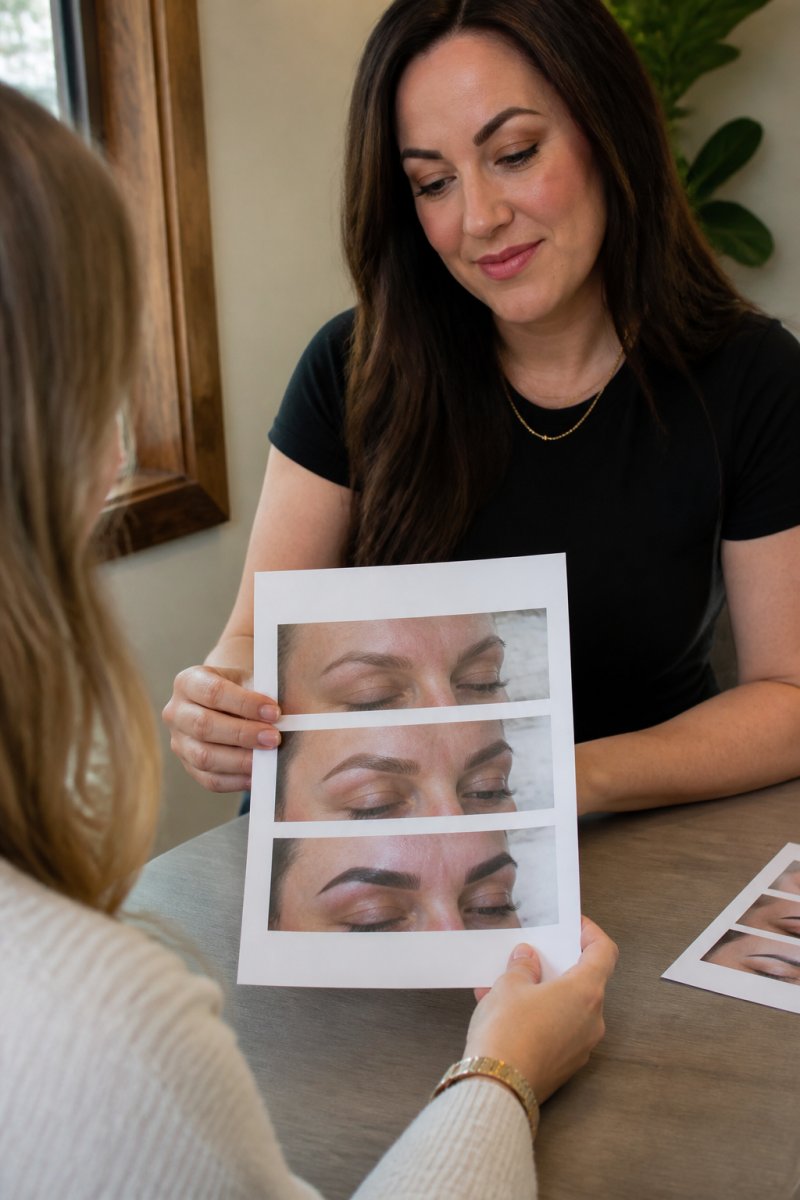
Request healed portfolio photos and ask when each was taken. Consistent, natural-looking healed results across diverse clients signal technical mastery and proper pigment selection. Look for symmetrical design, appropriate color for skin undertones, and results that enhance facial features. Heavy filters, studio lighting, or primarily fresh work are red flags, real healed results in natural daylight matter.
Pay special attention to clients with similar skin tones to yours, pigment behaves differently across undertones. An artist who demonstrates consistent results across diverse skin types has mastered color theory and technique, which is essential when you choose PMU artist.
Verify Licensing, Certifications, and Professional Memberships
Permanent makeup is regulated in most states. Verify your chosen PMU artist holds current licensure appropriate to your state, some require cosmetology licenses, others mandate specific permanent cosmetics certification. Ask directly and request documentation. This is your legal protection.
Look for credentials from recognized organizations like the American Institute of Intradermal Cosmetics or American Academy of Micropigmentation. These memberships require ongoing education, adherence to safety standards, and ethical conduct, signals of professionalism and current best practices.
Ask about continuing education. An artist who attended training five years ago without returning is working with outdated knowledge. The best PMU artists invest continuously in their craft, attending masterclasses and staying informed about emerging safety research.
Verify Professional Liability Insurance
Ask directly: "Do you carry professional liability insurance?" A legitimate PMU artist should carry coverage protecting both parties in case of complications, infection, allergic reaction, or dissatisfaction. Request proof of active coverage, this signals professionalism and financial accountability.
Ask what their policy covers: infection-related claims, pigment reactions, scarring, color correction disputes. Some policies have exclusions or caps. A thorough artist explains coverage limits. If they're evasive or claim they don't carry insurance, that's a serious red flag.
Know Your Legal Recourse Options
If complications occur, know your options. Most states allow complaints to the state cosmetology board or health department. Before booking, research your state's complaint process and whether it includes mediation, arbitration, or civil litigation options.
Ask if the artist provides a written service agreement outlining the procedure, expected results, aftercare, touch-up policies, and dispute resolution. A clear contract protects both parties and establishes expectations upfront. Refusal is a warning sign.
Some artists include a satisfaction guarantee or correction clause. Understanding these terms prevents disputes and demonstrates confidence in their work.
Evaluate Permanent Makeup Safety Standards
Safety protocols separate professionals from amateurs. During consultation, observe the clinic environment: Is it clean? Do surfaces appear sanitized? Does the artist use single-use needles and sterile equipment? Cross-contamination and bloodborne pathogen exposure are real risks if protocols aren't followed.
Ask specific sanitation questions: How are instruments sterilized? What happens to needles after use? Does the artist wear fresh gloves per client? Is the work area cleaned between appointments? A confident professional answers directly. Vague answers are warning signs.
Sterile environment standards aren't negotiable. The artist must use single-use, sterile needles for every procedure, with equipment autoclaved or disinfected per state standards. If they can't articulate their sanitation process clearly, find someone else.
Ask the Right PMU Artist Consultation Questions
The consultation reveals whether an artist listens and understands your vision. Ask about their brow mapping approach: How do they determine placement based on bone structure and facial proportions? Do they use measurements and symmetry tools, or rely on intuition?
Discuss pigment selection. How do they choose colors for different skin undertones? A skilled artist references your skin undertones, natural hair color, and desired aesthetic, showing color samples and explaining how pigment behaves as it heals on your skin type.
Ask about touch-ups and corrections: What's included initially? When should you return? What if you're unhappy? Understanding their correction policy and maintenance expectations prevents surprises. Clarify whether touch-ups are complimentary or charged.
Assess Experience Level and Procedure Volume
Experience matters. An artist who has performed hundreds of procedures has encountered diverse face shapes, skin types, and complications, refining technique through repetition. Ask: How many PMU procedures have you completed? How long have you worked in permanent cosmetics?
Procedure volume indicates whether an artist stays sharp. Someone performing 20 procedures monthly maintains skills and stays current. An artist performing one or two monthly may struggle with consistency. High volume plus strong healed portfolios indicate skill and demand.
Ask about experience with your specific procedure. If seeking microblading, ask how many they've completed. If seeking scalp micropigmentation, confirm substantial experience. Specialization matters, an artist excelling at brows may not deliver the same results for lips or scalp work.
Evaluate Communication Style and Comfort
Your comfort during the procedure matters profoundly. Permanent makeup application typically takes two to three hours. You're sitting still while someone works on your face with precision instruments. You need to trust them, feel heard, and experience genuine psychological safety. This isn't a luxury, it's foundational to a successful outcome.
During the consultation, notice whether the artist listens actively or dismisses your concerns. Do they ask detailed questions about your lifestyle, preferences, past cosmetic experiences, and expectations? Do they explain their process step-by-step, or do they rush through the appointment? A skilled artist asks clarifying questions: "What's your daily routine? Do you wear makeup? How much time do you want to spend on maintenance? What's your pain tolerance?" These questions signal that they're tailoring their approach to you, not applying a one-size-fits-all technique.
Assess How They Handle Anxiety and Pain Management
Permanent makeup involves needles and sensation. Some clients experience anxiety. A professional artist acknowledges this openly and has strategies to manage it. Ask: "How do you work with clients who are nervous?" Listen for concrete answers. Do they offer a pre-procedure consultation to walk you through sensations? Do they use topical numbing agents? Can you take breaks? Do they explain what you'll feel at each stage?
A good artist normalizes discomfort without minimizing it. They might say: "You'll feel pressure and a scratching sensation during microblading. It's not painful, but it's not comfortable either. Most clients describe it as a 4 out of 10 on the discomfort scale. We'll use numbing cream, and you can signal me if you need a break." This honesty builds trust. Artists who promise "no pain" or "completely painless" are either overselling or using inadequate numbing protocols.
Ask about their numbing approach. Do they use topical anesthetics? What brand? How long do they allow it to set? Some artists use higher-quality numbing products that work more effectively. Others rush the numbing process to save time. The difference in your comfort level is significant.
Evaluate Bedside Manner and Emotional Intelligence
Notice how the artist speaks to you. Are they condescending or respectful? Do they explain technical decisions in accessible language, or do they use jargon without clarification? Do they make eye contact and seem genuinely interested in your vision, or do they seem distracted?
Pay attention to how they handle your questions and concerns. If you express hesitation about a design choice, does the artist listen and adjust, or do they insist their way is better?
Verify They Respect Your Autonomy and Boundaries
Understand Touch-Ups, Corrections, and Long-Term Maintenance
Permanent makeup isn't truly permanent. It fades over time, typically over two to three years, depending on skin type, sun exposure, and lifestyle. Touch-ups refresh color and definition. Understanding the touch-up schedule prevents disappointment later.
| Evaluation Criterion | What to Look For | Red Flags |
|---|---|---|
| Portfolio | Healed results across diverse skin tones | Fresh work only; heavy filters; limited diversity |
| Licensing | Current state licensure + professional certifications | No credentials; vague about requirements |
| Safety | Single-use needles; clean environment; clear protocols | Dirty workspace; reused equipment; evasive answers |
| Experience | High procedure volume; strong healed portfolio | Low volume; limited portfolio; no specialization |
| Communication | Listens actively; explains process; manages expectations | Dismissive; rushes consultation; makes unrealistic promises |
| Corrections | Demonstrates correction experience; clear policy | No correction experience; unclear policies |
Frequently Asked Questions
What certifications should a reputable PMU artist hold?
A credible permanent makeup artist should hold certification from recognized organizations such as the American Institute of Intradermal Cosmetics or membership in the American Academy of Micropigmentation. These credentials demonstrate formal training in technique, safety protocols, bloodborne pathogen transmission prevention, and sterile environment maintenance. Ask to see proof of current certification and verify membership status directly with the issuing organization. Certifications typically require ongoing education to maintain, so confirm the artist's credentials are current, not expired.
How can I tell if a PMU artist's portfolio photos are edited or filtered?
Authentic healed results show natural skin texture, minor imperfections, and realistic color saturation. Red flags include overly smooth skin, heavily filtered images, extreme brightness or contrast adjustments, and photos that all look identically polished. Request to see healed results at 2-4 weeks post-procedure, not just fresh work, since pigment appearance changes as the skin heals. Ask the artist for unfiltered photos or client testimonials from people with similar skin tone and hair color to yours. Real portfolios include a mix of before-and-afters with consistent lighting and no heavy editing.
What should I ask a PMU artist during the consultation?
Key consultation questions include: How many procedures of this type have you completed? What is your approach to color theory and skin undertones? How do you handle symmetrical design and brow mapping? What aftercare instructions do you provide? How do you manage complications or color shift? What is your touch-up policy and cost? How do you customize technique based on individual aesthetic style? Ask about their sanitation standards, single-use needle protocols, and how they prevent cross-contamination. A thorough consultation shows the artist takes client safety and satisfaction seriously.
What red flags should I watch for when choosing a PMU artist?
Avoid artists who cannot provide verifiable healed results, lack professional certification, rush through the consultation process, or use non-sterile equipment. Red flags include refusal to discuss safety protocols, vague answers about technique mastery, no clear aftercare instructions, or pressure to book immediately. Be cautious of extremely low pricing, which may indicate corner-cutting on sanitation standards or equipment quality. Avoid artists who dismiss your medical history questions or contraindications. Trust your instinct if communication feels dismissive or if the studio environment appears unsanitary. Professional artists welcome questions and provide transparent answers.