 comparison
Are Powder Brows a Better Option for Oily Skin?
Last Updated: November 9, 2026
Quick Summary
Powder brows are often a better option for oily skin than microblading. Microblading's fine hair strokes can blur as oil pushes pigment out, while powder brows use a shaded area that holds a softer look for longer. Skin type should still guide the final choice.
- Oily skin produces more sebum, which can push pigment out of thin microblading strokes over time.
- Powder brows apply shaded color rather than individual lines, leaving less visible edge to break down.
- Nano brows offer a middle ground, with finer hair strokes often recommended for oilier skin.
- For oily skin, the article suggests touch-ups every 12 to 18 months, versus 18 to 24 months for dry skin.
- Book a consultation with Tonni Petty PMU Artistry to compare techniques for your own skin.
Table of Contents
- Why Microblading Fails on Oily Skin
- What Are Powder Brows and How Do They Work on Oily Skin?
- Nano Brows for Oily Skin: Hair Strokes Without the Blur
- Powder Brows vs. Microblading: Which Holds Up Better?
- How Long Do Powder Brows Last, and How Often Do You Need Touch-Ups?
- Skincare Routine, Aftercare and Healing on Oily Skin
- Booking Your Consultation to Choose the Right Brow Technique
- Frequently Asked Questions
Why Microblading Fails on Oily Skin
If you have oily skin and microblading has faded, blurred or turned patchy within a few months, you are not alone, and the problem is usually biology rather than bad technique. Tonni Petty PMU Artistry, which has over 22 years of experience in permanent cosmetics, can explain why this happens. Understanding why it happens is the first step to choosing an alternative to microblading for oily skin that will actually hold up.
Microblading places fine, hair-like strokes into the upper layers of the skin. Those strokes depend on the pigment staying put while the skin heals and settles. On oily skin, that pigment has a harder time staying where it was placed.
How sebum production pushes pigment out of the strokes
Oily skin produces more sebum, the natural oil made by the skin's glands. Excess sebum can push pigment out of the thin strokes over time, so crisp lines soften, spread and lose their shape. This is pigment migration, and it is the main reason strokes that looked sharp at the first visit can blur within months.
Oily skin often heals with less definition than dry skin, which is why technique choice matters. A thinner, more diffuse pigment layer gives the skin less visible line to lose.
What Are Powder Brows and How Do They Work on Oily Skin?
Powder brows are a semi-permanent cosmetic tattoo technique that fills the brow with soft shading instead of individual hair strokes. For a deeper look at this exact question, read whether natural eyebrow tattoos are possible for oily skin. The result looks closer to brow makeup, with an even, powdered color across the brow area. Because the pigment is applied as a shaded area rather than as lines, there is less visible edge for oil and movement to break down.
Powder brows are a semi-permanent technique, so the color fades over time rather than lasting forever. For oily skin, the shaded finish tends to hold a softer look for longer than hair strokes do. Results still vary from person to person, so a consultation is the best way to check your skin type before you commit.
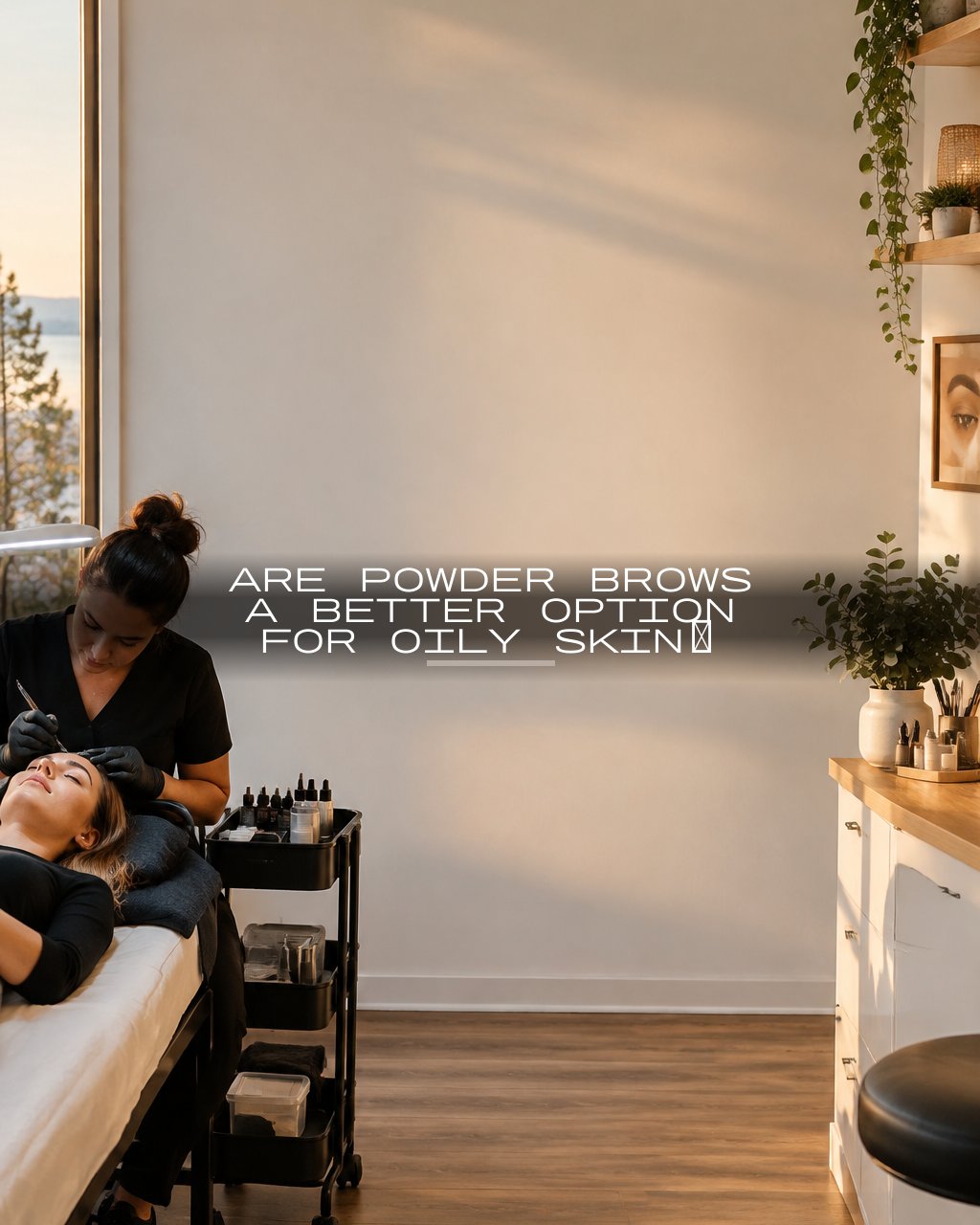
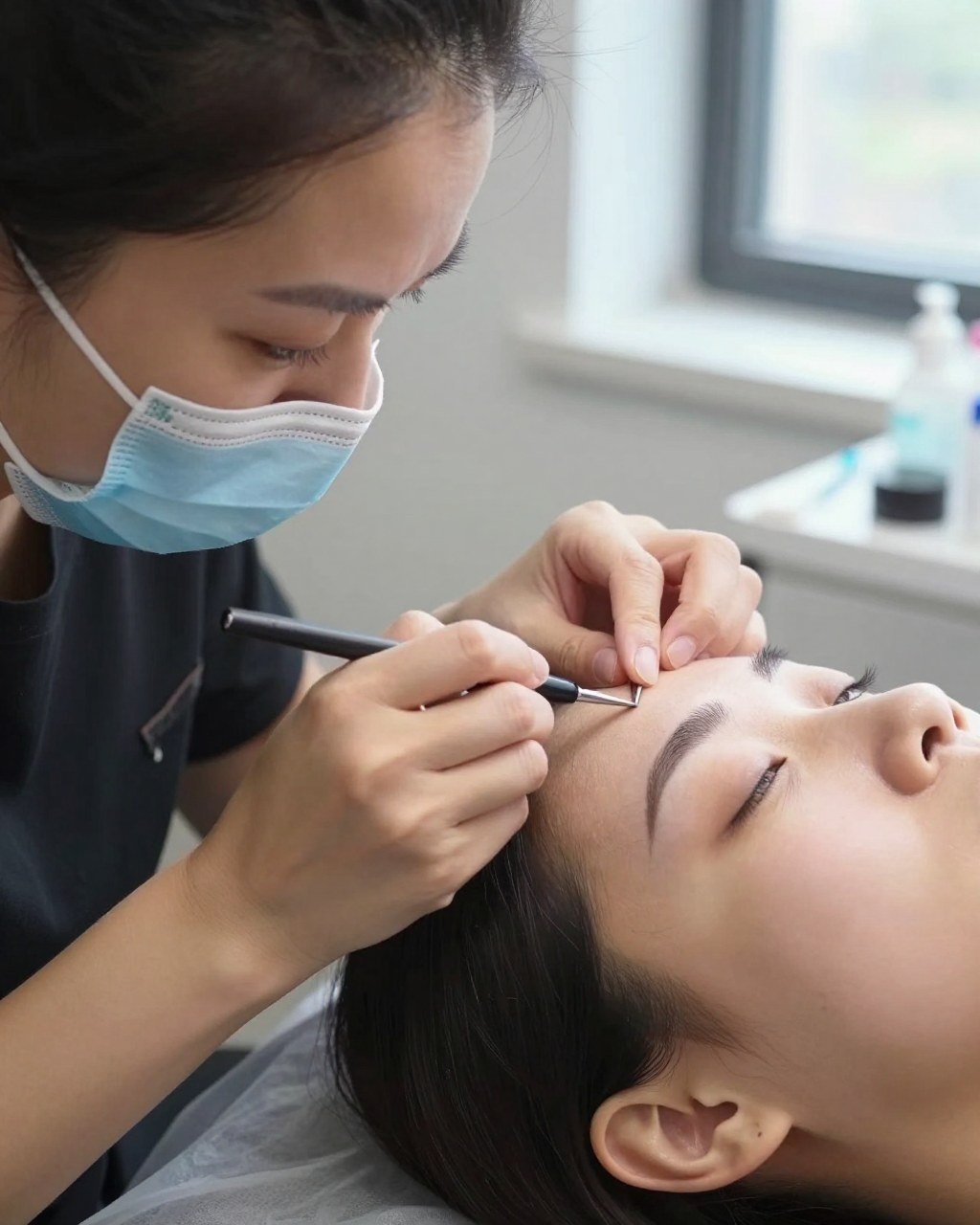
A technician works in a bright studio with a fine manual tool and sterile supplies nearby, which is the setting where careful shading is done.
Nano Brows for Oily Skin: Hair Strokes Without the Blur
If you like the look of hair strokes but have oily skin, nano brows are worth a close look. Nano brows use very fine hair-stroke work, placed with a smaller needle configuration than many microblading tools. That finer approach is meant to give a natural hair look while holding its shape better than traditional microblading on oily skin.
Nano brows are a common middle ground between microblading and powder brows. They keep the detailed stroke appearance many clients want, yet they are often recommended for oilier skin because the finer lines are less prone to spreading. Ask your artist how they would adjust stroke depth and spacing for your skin before the session.
Healing and retention still depend on your skin, aftercare and how closely you follow your technician's instructions.
Powder Brows vs. Microblading: Which Holds Up Better?
For many people with oily skin, shaded techniques such as powder brows may hold up better than microblading. Microblading relies on delicate lines that can blur as oil moves pigment, while powder brows rely on a shaded area that tolerates oil more gracefully. That said, microblading can still suit dry or normal skin well, so skin type should decide the choice.
Here is a simple comparison to help you weigh the options:
| Feature | Microblading | Powder Brows |
|---|---|---|
| Look | Individual hair strokes | Soft, shaded, makeup-like |
| Oily skin performance | Lines can blur sooner | Shaded finish tends to hold softer |
| Best for | Dry or normal skin | Oily or combination skin |
| Maintenance | Regular touch-ups | Regular touch-ups |
The honest trade-off is that powder brows look less like individual hairs up close. If your priority is realistic strokes and your skin is oily, nano brows can be a compromise worth discussing.
How Long Do Powder Brows Last, and How Often Do You Need Touch-Ups?
Powder brows are semi-permanent, which means the pigment is designed to fade gradually rather than stay forever. If you are weighing hybrid options, see our guide to how long combination brows last. On oily skin, that fade tends to run faster than the marketing copy suggests, and the reason is mechanical: sebum, cell turnover and the inflammatory response to the initial trauma all work against pigment retention. Powder brow longevity varies with oil level, aftercare, sun exposure and how your skin heals, so your artist can give you a realistic expectation at your consultation.
Touch-up timing depends on your skin and how the pigment heals. Your artist can outline the expected schedule for your skin at your consultation.
- Initial healing touch-up: 6 to 8 weeks after the first session, once the skin has finished its surface healing and the true healed color is visible. This is where the artist corrects uneven saturation and fills any patchy spots.
- First color refresh: 9 to 15 months after the initial session, when the shade has softened and the edges have diffused.
- Ongoing refreshes: every 12 to 18 months for oily skin, versus every 18 to 24 months for dry skin, based on how the pigment is holding.
Everyday factors such as sun exposure, exfoliating acids, retinoids and picking at healing skin can affect how long pigment lasts. Your artist can advise on aftercare for your skin.
Ask your artist to write down the expected touch-up interval for your skin at the consultation so you can compare it against what actually happens.
Skincare Routine, Aftercare and Healing on Oily Skin
Most guides tell you to 'avoid harsh products' and stop there. That is not useful if you are standing in your bathroom holding a bottle of retinol serum. The specific ingredients in your routine determine how fast your pigment fades, and oily skin usually means you are already using several of them. Here is what each one does to semi-permanent brow pigment and how to sequence it around your appointment.
Booking Your Consultation to Choose the Right Brow Technique
The right technique depends on your skin type, your lifestyle and the look you want. A consultation with Tonni Petty PMU Artistry is a good way to discuss microblading, nano brows, powder brows and combo brows for your own face. Your artist can assess your skin and discuss expected healing.
You can book a consultation with Tonni Petty PMU Artistry to find the technique that suits your skin. Choosing the right option early saves time, money and frustration later.
Tonni Petty PMU Artistry has built its practice around careful assessment and natural-looking results. Book a consultation to discuss which brow technique suits your skin and lifestyle.
Frequently Asked Questions
What is the new technique instead of microblading?
Powder brows and nano brows are the two techniques most often offered as alternatives to microblading. Powder brows use shading to create a soft, makeup-like brow rather than individual hair strokes, which makes them a common recommendation for oily skin. Nano brows use very fine hair strokes. Combo brows blend both approaches. A consultation helps determine which technique suits your skin type, brow shape and the look you want.
Are powder brows better than microblading for oily skin?
Powder brows are often considered a better fit for oily skin because shaded pigment tends to hold its color more evenly than fine hair strokes, which can blur as sebum pushes pigment out of the skin. Results still depend on the individual, including skin type, aftercare and the technician's method. Ask your technician to assess your skin during a consultation before choosing a method.
How long do powder brows last on oily skin?
Powder brow longevity varies with skin type, lifestyle, sun exposure and aftercare, so there is no single timeline that applies to everyone. Powder brows usually need touch-up sessions to keep color and definition. Your technician can give a more specific expectation after assessing your skin type. Following aftercare instructions closely supports better retention.
Can oily skin affect how permanent brow pigment heals?
Yes. Oily skin produces more sebum, which can push pigment out of fine strokes and cause blurring during healing. This is one reason many people with oily skin consider powder or nano techniques. Proper skincare before and after the procedure, including gentle cleansing and avoiding products that irritate the treated area, can support a cleaner healed result. Discuss your skin type with your technician before the appointment.