
 how-to
How to Prepare for Your PMU Appointment
Table of Contents
- What You'll Need Before Your PMU Appointment
- Permanent Makeup Contraindications: What to Disclose
- Two Weeks Before: Medications and Supplements to Pause
- One Week Out: Skincare and Sun Exposure Guidelines
- 48 Hours Before Your Appointment: Final Preparation Steps
- What to Expect During a PMU Session
- Mental Preparation and Managing Expectations
- Day-of Logistics: What to Wear and Bring
- Frequently Asked Questions
Last Updated: September 19, 2026
What You'll Need Before Your PMU Appointment
To prepare for pmu appointment effectively, you need to start weeks in advance, not the night before. Your skin needs time to be in its best condition. Think of it like prepping for a major event, small steps compound into better results.
The key is understanding what your body needs to do its job well during the PMU session.
Start by gathering the essentials you'll need to prepare:
- A list of all medications and supplements you currently take
- Your skincare routine products (to review what to pause)
- Sunscreen with SPF 30 or higher
- A gentle cleanser without active ingredients
- Plain moisturizer (fragrance-free)
- Comfortable, loose clothing for appointment day
- A small bag with water, snacks, and your phone
This isn't about buying new products. It's about knowing what you already use and which ones need a break before your appointment.
Permanent Makeup Contraindications: What to Disclose
Permanent makeup contraindications are medical conditions or circumstances that make PMU unsafe or likely to cause problems. Your artist needs to know about them before the procedure starts.
Be completely honest during your consultation. This isn't judgment, it's safety. Holding back information puts you at risk of poor results or complications. The artist has seen everything and heard everything. They're not there to judge; they're there to protect your health.
Common contraindications include:
- Pregnancy or breastfeeding
- Active skin infections or conditions like eczema or psoriasis on the treatment area
- Keloid scarring tendency
- Uncontrolled diabetes or blood sugar issues
- Immune system disorders or medications that suppress immunity
- Recent Botox or dermal fillers (usually needs 2-4 weeks of gap time)
- Photosensitivity or certain medications that increase sun sensitivity
- History of severe allergic reactions to pigments or numbing agents
If you have any of these, tell your artist upfront. They may recommend waiting, adjusting timing, or taking extra precautions. Some contraindications are temporary. Others need different approaches. Either way, transparency prevents regret.
Two Weeks Before: Medications and Supplements to Pause
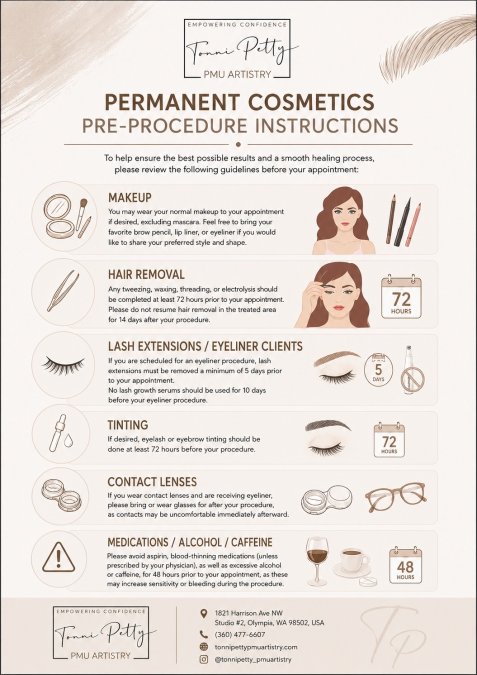
Two weeks out is when you start adjusting what you put in your body. Blood thinners and stimulants interfere with how your skin handles the PMU process.
Avoid these medications and supplements for at least 7-10 days before your appointment:
Blood thinners and anticoagulants:
- Aspirin (including low-dose daily aspirin)
- Ibuprofen and other NSAIDs
- Warfarin or other prescription blood thinners
- Fish oil supplements
- Vitamin E supplements (high doses)
Stimulants that increase bleeding:
- Caffeine (reduce significantly or eliminate)
- Alcohol (avoid completely for 48 hours before)
- Energy drinks or pre-workout supplements
- Certain herbal stimulants
Skin-sensitizing medications and supplements:
- Retinol or retinoids (prescription or over-the-counter)
- Vitamin A supplements
- AHA and BHA exfoliants
- Hydroquinone or other depigmenting agents
If you take prescription blood thinners for a medical condition, do not stop them without talking to your doctor first. Work with both your doctor and your PMU artist to find a safe approach. Some procedures can proceed with modified protocols.
The reason is straightforward: blood thinners make you bleed more during the procedure. More bleeding means the pigment washes out faster and doesn't set as well. Your results suffer. By pausing these substances, you give your body a chance to return to normal clotting and healing.
One Week Out: Skincare and Sun Exposure Guidelines
One week before you prepare for pmu appointment, shift your skincare routine entirely. Your skin needs to be calm and unirritiated.
Pause all active skincare ingredients:
- No retinol or retinoids
- No AHA or BHA exfoliants
- No vitamin C serums or other brightening actives
- No chemical peels or professional treatments
- No waxing, threading, or tinting in the treatment area
Switch to a minimal routine:
- Gentle cleanser (no sulfates)
- Plain moisturizer
- Sunscreen during the day
Active ingredients sensitize your skin. They make the treatment area more prone to irritation, swelling, and uneven pigment uptake. A calm skin surface accepts pigment better and heals more predictably.
Sun exposure matters too. Tanned or sunburned skin is irritated skin. Avoid direct sun on the treatment area for at least one week before your appointment. If you can't avoid sun, wear a wide-brimmed hat or use SPF 50+ sunscreen. Tanning beds are off-limits entirely.
Why? UV exposure damages the outer layer of skin. It causes inflammation, redness, and sensitivity. When your artist works on already-irritated skin, the results are less precise and the healing is messier.
If you've had sun exposure and notice redness or peeling, wait. Reschedule your appointment if you can. A few extra days of healing time is worth it.
48 Hours Before Your Appointment: Final Preparation Steps
The final 48 hours are about locking in your preparation. Think of this window as the home stretch.
What to do 48 hours before:
- Stop caffeine entirely (or reduce to minimal amounts)
- Avoid alcohol completely
- Stay hydrated, drink plenty of water
- Get good sleep (aim for 7-8 hours)
- Eat balanced meals with protein and nutrients
- Avoid strenuous exercise or heavy sweating
- Do not apply makeup, lotion, or skincare products to the treatment area
Hydration and sleep matter more than most people realize. When you're well-rested and hydrated, your skin heals faster and more predictably. When you're dehydrated or exhausted, your body prioritizes survival over healing. Your skin becomes less responsive, and the procedure takes longer.
Avoid strenuous exercise because sweating introduces bacteria to your skin and can irritate the treatment area. Light walking is fine. Intense workouts, hot yoga, or cardio should wait until after your appointment.
The night before:
- Cleanse gently with your mild cleanser
- Apply light moisturizer only
- No other products on the treatment area
- Go to bed early
- Avoid alcohol
- Don't overeat or eat heavy foods
Your skin should be clean, calm, and ready. Nothing fancy. Nothing extra.
What to Expect During a PMU Session
Knowing what happens during the procedure reduces anxiety and helps you stay calm. A calm client is easier to work with and heals better.
Your PMU session typically follows this flow:
Consultation and design (15-30 minutes): You and your artist discuss your goals, skin type, and lifestyle. They show you design options and take measurements. This is when you ask questions and voice concerns. A good artist takes time here.
Numbing (10-15 minutes): Your artist applies a topical numbing agent to the treatment area. This takes time to work. You'll feel pressure and vibration, but not sharp pain. The numbing wears off as the procedure progresses, which is normal.
Pigment application (30-90 minutes depending on the service): Your artist uses specialized equipment to deposit pigment into the dermal layer. You'll hear a buzzing sound and feel vibration. Some areas are more sensitive than others. Whether you're getting Microblading Brows, Powder Brows, Combo Brows, or Lip Blushing, your artist will work at a pace that keeps you comfortable.
Blotting and adjustments (throughout): Your artist periodically blots away excess pigment and blood to see the color and shape clearly.
Mental Preparation and Managing Expectations
Common anxiety triggers:
- Fear of pain or discomfort
- Worry that the result won't look natural
- Concern about the healing process
- Uncertainty about whether you'll like the final result
Address each one:
For pain concerns: Numbing agents work well. Most clients say the experience is uncomfortable but not painful. It's more pressure and vibration than sharp pain. If you're extremely pain-sensitive, talk to your artist about additional numbing options.
Day-of Logistics: What to Wear and Bring
The day of your appointment, dress for comfort and practicality. You'll be lying still for 2-3 hours. Your clothing shouldn't add to your discomfort.
What to wear:
- Loose, comfortable clothing (nothing tight around your neck or face)
- Neutral colors that won't show pigment stains if there are any
- Nothing you'd be upset about getting a small mark on
- Comfortable shoes (you'll be walking in and out)
- A light layer or sweater (treatment rooms are often cool)
What to bring:
- Your ID and insurance information
- A list of your current medications and supplements
- Your phone (for music, distraction, or comfort)
- Headphones if you have them
- A small snack (crackers, nuts, fruit)
- A water bottle
- Any aftercare products your artist recommended
Frequently Asked Questions
What should I avoid before a permanent makeup appointment?
Stop blood thinners like aspirin and ibuprofen at least two weeks before your appointment. Avoid alcohol, caffeine, and stimulants for 24 hours before. Skip retinol, chemical peels, and exfoliating treatments one week prior. Don't get waxing, threading, or tinting done on the treatment area within a week. These steps reduce bleeding, swelling, and skin sensitivity during the PMU procedure.
What are permanent makeup contraindications I need to know about?
Certain medical conditions and medications affect PMU safety. Contraindications include active skin infections, severe allergies to pigments, uncontrolled diabetes, bleeding disorders, and immunosuppression. Medications like anticoagulants and some antidepressants may also require discussion. Always disclose your full medical history, current medications, and supplements during your consultation so your artist can assess whether PMU is appropriate for you.
How long does a PMU appointment typically take?
PMU appointments vary in length, depending on the service. Your initial appointment includes a detailed consultation, design mapping, and numbing time. Plan for the full duration and arrange childcare or time off work accordingly. Touch-up sessions are usually shorter.
What should I eat or drink before my PMU appointment?
Eat a light, balanced meal one to two hours before your appointment to maintain stable blood sugar and energy levels. Avoid heavy, greasy foods that may cause nausea during the procedure. Skip caffeine and alcohol for at least 24 hours before, as they thin blood and increase bleeding during the PMU session. Stay hydrated with water, but don't overdo it, you don't want to need a bathroom break mid-procedure.