 how-to
Can You Get Scar Camouflage on Old Scars?
Table of Contents
- Yes, Old Scars Can Be Camouflaged, Here's What You Need to Know
- What Makes a Scar Ready: Age, Maturity, and Stability
- How to Cover Up an Old Scar With Paramedical Tattooing
- Tattooing Over Scar Tissue: What the Process Involves
- Skin Tone, Pigment Selection, and Color Matching
- Scar Camouflage Healing Time and What to Expect Between Sessions
- Scar Camouflage Before and After: Results and Limitations
- Who Is a Good Candidate and When to Avoid Treatment
- Frequently Asked Questions
Last Updated: October 7, 2026
Yes, Old Scars Can Be Camouflaged, Here's What You Need to Know
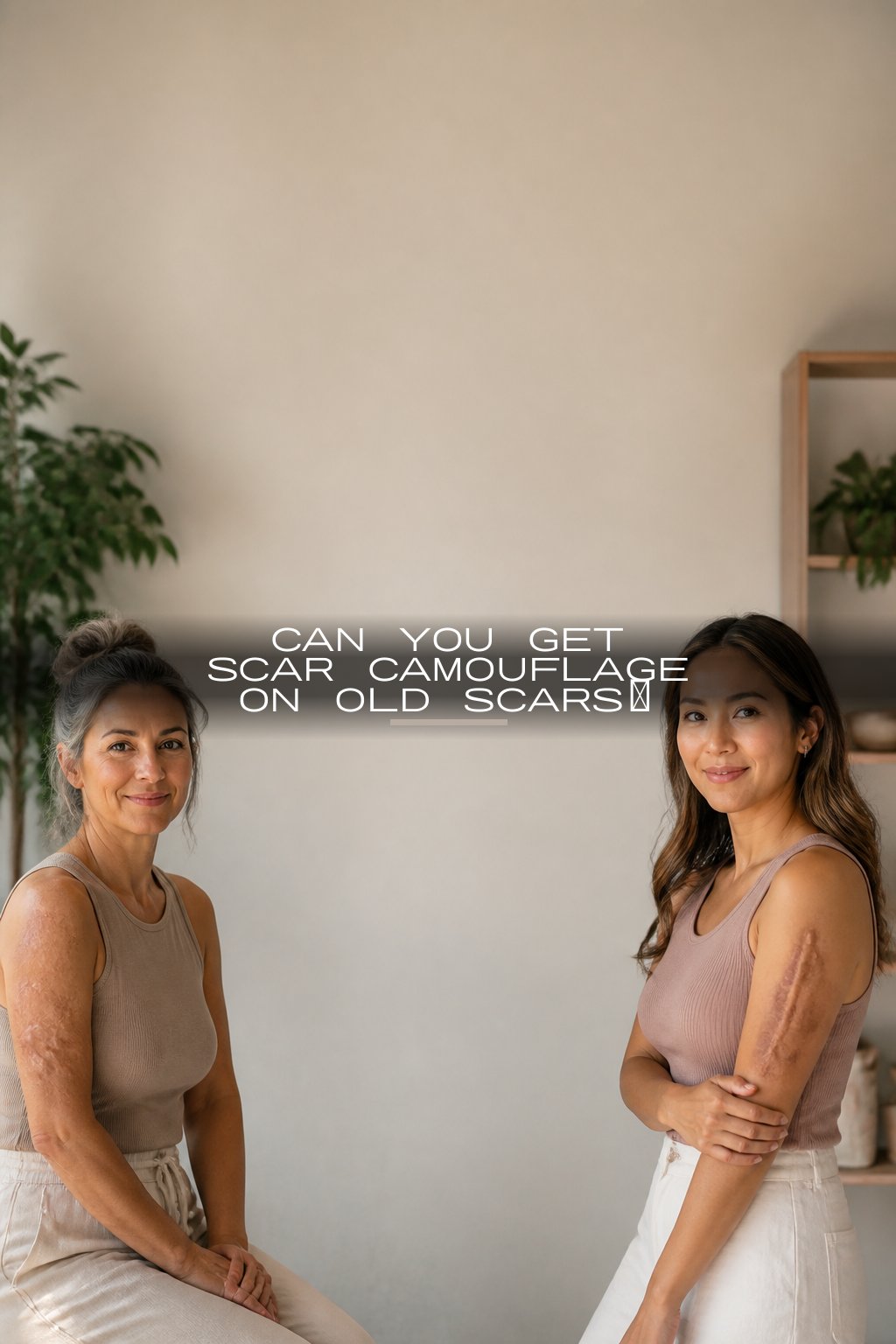
The short answer is yes, can you get scar camouflage on old scars? Yes. Old scars can be camouflaged with paramedical tattooing, which uses pigment to blend scar tissue with surrounding skin.
The key word is "maturity." A scar that's been there for years might still be too active or unstable. Understanding scar age, texture, color, and how your skin responds to pigment separates success from disappointment.
What Makes a Scar Ready: Age, Maturity, and Stability
An old scar is not automatically treatable, so the question of whether can you get scar camouflage on old scars depends on stability. What matters is whether it has finished remodeling and is stable enough for pigment to sit predictably. Age is a useful proxy, but stability is the real gate.
The remodeling timeline
After an injury or surgery, the body lays down collagen in stages. The remodeling phase, where collagen is reorganized and the scar matures, typically runs 12 to 24 months.
Most practitioners consider a scar a candidate once it has been stable, with no visible change in color, height, or width, for at least 6 to 12 months. Some prefer a full 12 to 24 months from the original wound.
Stability, not age, is the deciding factor
A 10-year-old scar that is still pink and raised is a poorer candidate than a 14-month-old scar that is flat, white, and unchanged. The test: has it looked and felt the same for several months?
At-home check: photograph the scar in the same lighting once a month for three months. If the photos are indistinguishable, it is likely stable. If any shows a shift in color, height, or border, give it more time.
Color contrast vs. texture: two different problems
Scar camouflage addresses color contrast, not texture, the most important expectation to set before treatment.
- Color contrast: A pale or white scar on darker skin, or a dark or pigmented scar on lighter skin, is the ideal target. Pigment matched to the surrounding skin can reduce that contrast substantially.
- Texture: A raised, hypertrophic, keloid, or indented (atrophic) scar will still be raised or indented after camouflage. Pigment changes color, not topography. If texture is the main concern, camouflage alone will not resolve it.
- Actively changing scars: A scar that is still red, thickening, painful, or itchy may need medical evaluation first. A dermatologist or plastic surgeon may recommend corticosteroid injections, silicone sheeting, laser therapy, or surgical revision.
When a scar is too old to matter
There is no upper age limit. A fully mature scar from decades ago can still be camouflaged if it is stable and has color contrast. What changes with age is the surrounding skin: sun damage, thinning, and loss of elasticity can affect pigment retention and blending, so a technician should assess the surrounding skin, not just the scar.
How to Cover Up an Old Scar With Paramedical Tattooing
Paramedical tattooing, also called medical tattooing or scar camouflage, is a permanent cosmetic procedure designed to reduce scar visibility. Unlike decorative tattooing, the goal is restoration, not art.
Here's the basic flow:
- Consultation: You meet with a specialist who evaluates your scar, skin tone, and suitability for treatment.
- Pigment selection: The technician identifies the exact color match for your skin and scar.
- Treatment session: Pigment is applied to the scar tissue using specialized equipment.
- Healing: The treated area heals over 7-10 days. The pigment settles over the next 4-6 weeks.
- Follow-up sessions: Most scars need 2-4 sessions spaced 6-8 weeks apart for optimal blending.
The result isn't invisibility. The scar becomes significantly less visible because the color contrast disappears: a dark scar on light skin, or a pale scar on dark skin, is much harder to spot once pigment fills the gap.
Tattooing Over Scar Tissue: What the Process Involves
Scar tissue has fewer blood vessels, less elasticity, and a different texture than normal skin, so tattooing over it requires specialized technique and equipment:
- Pigment retention: Scar tissue doesn't hold pigment as reliably as normal skin. This is why multiple sessions are standard.
- Needle depth: The technician must adjust needle depth and pressure to account for the scar's density and structure.
- Color settling: Pigment in scar tissue can appear darker initially, then lighten as it settles. This is normal.
Healing is similar to a normal tattoo (7-10 days), but pigment can take 4-6 weeks to settle into its final color.
Does tattooing make the scar worse? No. A qualified technician works within the existing scar boundaries to fill and blend, not create new trauma. However, treating an unstable scar can temporarily make it more noticeable as swelling occurs. A fully mature scar responds predictably; an unstable one can surprise you.
Skin Tone, Pigment Selection, and Color Matching
Getting the pigment color right is everything. A mismatch of even one or two shades can make the treated scar stand out more than before.
Here's where individual assessment becomes critical:
- Skin-tone pigment selection: The technician tests multiple pigment shades against your skin in natural and artificial light.
- Scar color evaluation: Is the scar darker, lighter, or reddish compared to surrounding skin? The pigment must account for this.
- Blending strategy: Sometimes a single pigment shade works. Other times, layering two shades creates a more natural blend.
Pigment can fade, shift toward warmer or cooler tones, or develop an orange or purple cast as it oxidizes and your body gradually absorbs it. Quality pigment minimizes this, but some shift over several years is normal.
Scar Camouflage Healing Time and What to Expect Between Sessions
Healing is straightforward but requires patience.
Immediate (Days 1-3): The area will be swollen and tender, with a dark crust forming. Avoid touching, picking, or scratching.
Week 1: Swelling decreases and the crust begins to flake. Let it shed naturally.
Weeks 2-6: Pigment settles into its final color, which may be lighter or slightly different than it appeared immediately after treatment.
Between Sessions: Most clients wait 6-8 weeks between sessions so pigment can settle and skin can recover.
Here's what to avoid during healing:
- Direct sunlight on the treated area
- Swimming or soaking in water
- Intense exercise or sweating
Scar Camouflage Before and After: Results and Limitations
Results depend on your starting point. A scar with high color contrast typically shows dramatic improvement; one already close to your skin tone shows subtle change.
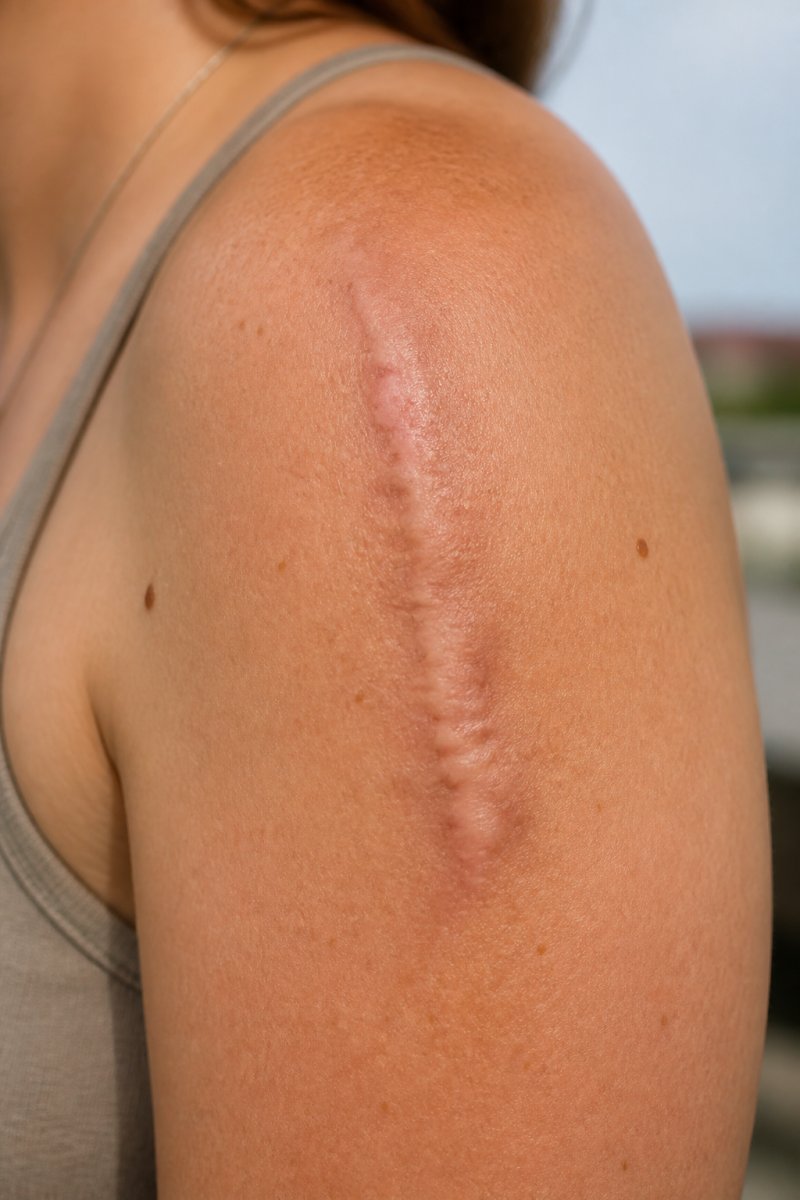
What scar camouflage can do:
- Reduce color contrast significantly
- Blend pale or dark scars into surrounding skin
- Make scars far less noticeable from a distance
What scar camouflage cannot do:
- Erase the scar completely or make it invisible
- Flatten raised scars or fill deep indentations
- Change the scar's texture
If you want complete invisibility, you'll be disappointed. If you want a dramatic reduction in visibility, scar camouflage delivers. Results also depend on skin type and how your body responds to pigment: some clients see near-perfect blending after two sessions, while others need four and still see a faint outline.
Who Is a Good Candidate and When to Avoid Treatment
Candidacy combines scar characteristics, skin health, medical history, and expectations. A qualified technician screens for all four before booking.
Strong candidates
- The scar is fully mature and has been stable for at least 6 to 12 months.
- The scar has noticeable color contrast with the surrounding skin (pale on dark, dark on light, or red/pink on a different tone).
- The scar is flat or only mildly textured, so the main issue is color rather than topography.
Relative and absolute contraindications
Some conditions make camouflage unsafe or unpredictable. A responsible provider screens for these and may refer you to a physician first.
- Keloid or hypertrophic scar tendency. If you form raised, spreading scars, tattooing the area can trigger another keloid. This is one of the most common reasons a provider declines treatment.
- Active skin conditions in the area. Eczema, psoriasis, active acne, dermatitis, or open lesions in or around the scar should be resolved before treatment.
- Active infection or recent surgery. Wait until the site is fully healed and cleared by your surgeon.
Risks to understand before you book
Scar camouflage is a tattoo, and tattoos carry risks. The most relevant for scar work:
- Infection at the treatment site if aftercare is not followed.
- Allergic reaction to pigment, which can appear days to weeks after treatment and may require medical care.
- Pigment migration or spread, especially in unstable or highly textured scar tissue.
Alternatives to consider
Camouflage is one option among several. The right choice depends on whether your main concern is color, texture, or both.
- Medical or surgical scar revision. A dermatologist or plastic surgeon can revise a scar surgically, use laser therapy to reduce redness or resurface texture, or inject corticosteroids to flatten a hypertrophic or keloid scar. These address texture and height, which camouflage cannot.
- Silicone sheeting or gel. Often recommended during the remodeling phase to improve scar appearance. Best started early, not on a fully mature scar.
- Laser treatment. Vascular lasers can reduce redness; fractional lasers can improve texture. Results vary and usually require multiple sessions.
- Scalp Micropigmentation and other micropigmentation services. Related permanent cosmetic techniques for specific reconstructive and aesthetic needs. Scalp Micropigmentation is a specialized application of medical tattooing for hair loss and scalp concerns.
How to choose a provider
Ask about experience with your scar type and skin tone, request healed (not just fresh) photos, confirm the pigments used and whether a patch test is offered, and ask what happens if the result needs correction. A provider who screens carefully and sets realistic expectations is a better sign than one who promises invisibility.
A consultation is the right first step. At Tonni Petty PMU Artistry, we evaluate each scar individually, discuss whether camouflage, medical treatment, or a combination is best, and explain realistic results for your skin and scar. We also offer Permanent Cosmetics Education for those interested in learning the techniques behind paramedical tattooing and scar camouflage.
Frequently Asked Questions
How old does a scar need to be before scar camouflage tattooing?
A scar should typically be at least 12-18 months old and fully mature before undergoing scar camouflage. A mature scar has stabilized in color, texture, and size, making it easier to match with pigment and predict results. Scars that are still red, raised, or changing are not ready. Your technician will assess your scar during a consultation to confirm it is a suitable candidate for treatment.
Can scar camouflage cover raised or textured scars?
Raised, indented, and textured scars can be camouflaged, but results depend on the depth and type of scar tissue. Paramedical tattooing works best on scars with stable texture that has not changed for several months. Very thick or actively changing scars may require additional assessment or alternative approaches. A skilled technician will evaluate the scar's characteristics and set realistic expectations based on what pigment and shading can achieve.
How many scar camouflage sessions are usually needed?
Most scars require 2-4 treatment sessions spaced 6-8 weeks apart to allow proper healing between appointments. The exact number depends on scar size, color contrast, skin tone, and how well the pigment blends with your natural skin. During your initial consultation, your technician can estimate the sessions needed based on your specific scar and desired results.
Does scar camouflage last forever?
Scar camouflage is a permanent cosmetic procedure, but pigment can fade over time due to sun exposure, skin cell turnover, and individual metabolism. Touch-ups may be needed to refresh the pigment color and maintain the camouflage effect. Your technician will discuss maintenance expectations during your consultation.