
 how-to
Can You Tell If Someone Has Scalp Micropigmentation?
Table of Contents
- What Scalp Micropigmentation Is and How It Creates Hair Appearance
- Does Scalp Micropigmentation Look Fake or Realistic?
- Factors That Make Natural-Looking Scalp Micropigmentation
- How Long Does Scalp Micropigmentation Last and How It Ages
- Scalp Micropigmentation on Gray Hair: What to Expect
- How to Spot SMP: Visual Clues and Limitations of Detection
- Who Benefits Most from Scalp Micropigmentation
- Frequently Asked Questions
Last Updated: October 5, 2026
What Scalp Micropigmentation Is and How It Creates Hair Appearance
Scalp micropigmentation is a cosmetic tattooing technique that creates the appearance of hair on the scalp. A trained technician uses specialized equipment to deposit pigment dots into the upper layers of skin. These dots mimic the look of natural hair follicles.
The process works by layering thousands of tiny pigment deposits across thinning or bald areas. Each dot is carefully placed to match the density, angle, and color of existing hair.
SMP differs from traditional tattoos because the pigment sits shallower in the skin and uses different equipment and techniques. The dots are smaller and more precisely placed than typical tattoo work. This precision is what allows skilled practitioners to create a realistic hair-like appearance.
At Tonni Petty PMU Artistry, we've spent over 22 years perfecting this technique. The difference between a natural-looking result and an obvious treatment comes down to practitioner skill, pigment selection, and design precision. We'll walk you through what makes SMP look realistic, and what can make it obvious.
Does Scalp Micropigmentation Look Fake or Realistic?
Scalp micropigmentation can look remarkably realistic when executed well. The key is whether the treatment matches your natural hair characteristics and blends with your existing scalp.
Well-done SMP creates a natural-looking appearance that most people won't notice in normal conversation. From arm's length away, quality work looks like a closely shaved head with natural hair density.
However, poorly executed SMP can look obviously fake. Uneven pigmentation, incorrect dot sizing, or poor color matching creates an artificial appearance. The treatment becomes noticeable rather than natural.
Several factors determine whether your scalp micropigmentation will look realistic or artificial:
- Dot placement and density, Even spacing and correct density mimic natural hair growth
- Pigment color, Matching your skin tone and natural hair color prevents a blue-grey or orange cast
- Hairline design, A soft, gradual hairline blends better than a hard, defined edge
- Blending with existing hair, Proper integration with your remaining hair creates cohesion
- Technician experience, Skill in understanding scalp anatomy and hair patterns is crucial
The honest answer is this: realistic-looking scalp micropigmentation is possible, but it requires a skilled practitioner who understands the nuances of your specific hair loss pattern and skin tone.
Factors That Make Natural-Looking Scalp Micropigmentation
Practitioner Skill and Treatment Quality
The single biggest factor in whether your SMP looks natural is the skill of the person performing it. A master technician understands how to create results that blend with your existing hair and match your scalp's natural appearance.
Experienced practitioners have trained extensively in scalp anatomy, pigment science, and design principles. They understand how different pigment colors interact with various skin tones.
Treatment quality also depends on the equipment and pigments used. Professional-grade equipment allows for precise dot placement. High-quality pigments hold color better and fade more predictably over time.
When choosing a practitioner, look for credentials like Master Technician certification through recognized organizations such as the American Institute of Intradermal Cosmetics.
Hairline Design and Blending with Existing Hair
A natural hairline design is critical to realistic-looking scalp micropigmentation. The hairline should transition gradually from dense pigmentation to lighter coverage, mimicking how natural hair thins.
A soft hairline blends smoothly with any existing hair you have. This gradual transition is far more convincing than a hard, defined edge. The pigment dots should follow your natural hair's angle and direction.
Blending with existing hair requires the technician to understand how your remaining hair interacts with the pigmented areas. The pigment dots should enhance your natural hair rather than compete with it.
Good hairline design also considers your facial features and proportions. The hairline should suit your face shape and look natural for your age.
Pigment Color Matching and Tone
Correct pigment color is essential for natural-looking results. The pigment should match your natural hair color and skin tone perfectly.
Pigment selection depends on your hair color, skin tone, and natural undertones. A technician should custom-blend pigments to match your specific coloring.
The pigment should also account for how color appears through the skin. Pigment placed in the dermis appears slightly different than it looks in the container. Experienced technicians understand this shift and select accordingly.
Color matching becomes more complex with gray hair, darker skin tones, or unusual hair colors. A skilled practitioner adjusts their approach based on these factors.
How Long Does Scalp Micropigmentation Last and How It Ages
Scalp micropigmentation is designed to last for years, but it doesn't last forever. Most treatments remain visible and effective for 4-6 years before fading noticeably.
The pigment gradually fades over time due to natural skin cell turnover and sun exposure. This fading is usually gradual rather than sudden. Many clients schedule touch-up appointments every 2-3 years to maintain the appearance.
How SMP ages depends on several factors:
- Sun exposure, UV rays fade pigment faster, so sun protection helps longevity
- Skin type, Oily skin may fade pigment faster than dry skin
- Pigment quality, Professional-grade pigments fade more predictably and evenly
- Aftercare, Proper healing and maintenance extend the treatment's lifespan
- Lifestyle, Chlorine exposure, frequent sweating, and certain activities can affect fading
As SMP ages, it typically fades evenly. This means the appearance gradually becomes lighter rather than patchy or uneven. Touch-ups can restore the original appearance.
Poorly executed SMP often ages poorly. Uneven pigment placement can create obvious patches as it fades. Color shifts that weren't apparent initially may become more noticeable over time.
Scalp Micropigmentation on Gray Hair: What to Expect
Gray hair presents unique challenges for scalp micropigmentation. The pigment must work alongside gray strands rather than replace them.
With gray hair, the SMP pigment should complement your natural gray color rather than trying to match dark hair you no longer have.
The result with gray hair can look very natural if done well. The pigment dots blend with gray strands to create the appearance of hair density.
However, gray hair can make poorly executed SMP more noticeable. If the pigment color doesn't match your gray tone, the mismatch becomes obvious.
Many clients with gray hair appreciate that SMP allows them to maintain their natural gray appearance while addressing thinning.
How to Spot SMP: Visual Clues and Limitations of Detection
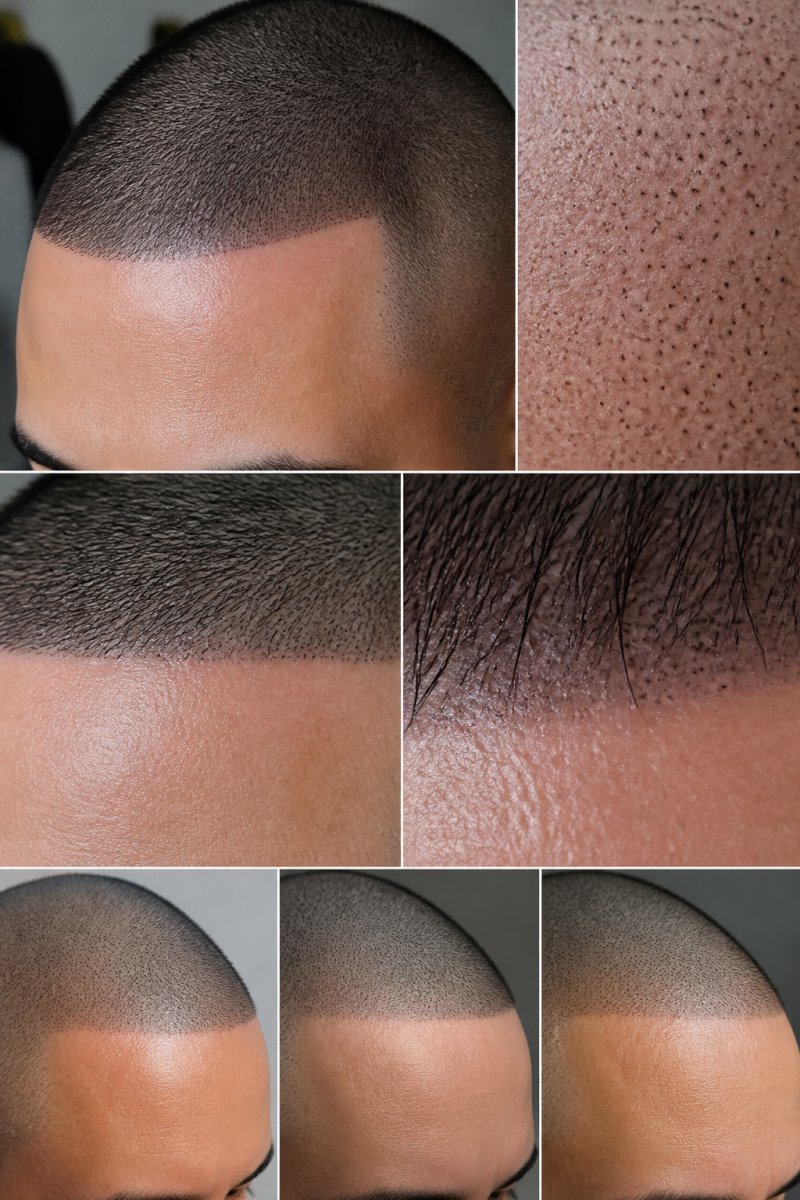
Can you tell if someone has scalp micropigmentation? The honest answer is: sometimes, but not always. Visual detection depends on viewing distance, lighting, the quality of the treatment, and how familiar you are with what to look for.
From normal conversation distance, quality SMP is nearly impossible to detect. You'd need to be looking closely at someone's scalp to notice anything unusual. Most people won't examine someone's hairline that carefully in everyday situations.
Close-Up Inspection and Dot Visibility
Up close, scalp micropigmentation becomes more visible. You can see the individual pigment dots if you look carefully at the scalp. These dots appear as tiny marks that mimic hair follicles.
The dots are most visible when looking directly at the scalp under bright light. In natural outdoor lighting or normal indoor light, they're much less obvious. Harsh overhead lighting or direct sunlight makes the dots more apparent.
The visibility of dots depends on:
- Dot size, Smaller, more refined dots are less visible than larger ones
- Pigment color, Lighter pigment is less noticeable than darker pigment
- Skin tone, High contrast between pigment and skin tone makes dots more visible
- Distance, The closer you look, the more visible the dots become
- Lighting angle, Direct overhead light shows dots more clearly than angled light
Signs of Poorly Executed or Aged SMP
Poorly done scalp micropigmentation has telltale signs that make it obvious. These include:
- Uneven dot placement, Visible gaps or clusters of pigment dots
- Inconsistent dot size, Dots vary noticeably in diameter
- Poor color matching, Pigment appears blue-grey, orange, or obviously mismatched to hair color
- Hard hairline, A distinct, unnatural line where pigmentation starts
- Pigment bleeding, Dots that appear blurred or fuzzy rather than crisp
- Visible scarring, Marks from the treatment process are apparent
As SMP ages, it may develop:
- Uneven fading, Some areas fade faster than others, creating patchy appearance
- Color shift, Pigment may shift toward blue or orange tones as it ages
- Raised or textured appearance, Some pigment may appear slightly raised on the skin surface
These signs become more obvious with close inspection. From normal viewing distance, even some poorly executed work can look acceptable.
Why Visual Identification Isn't Reliable
The biggest limitation of visual identification is that you can't see someone's scalp under magnification in normal social situations. You're not going to examine someone's head closely enough to spot SMP unless you're specifically looking for it.
Additionally, quality SMP is designed to look natural. A skilled technician creates results that genuinely resemble a shaved head with natural hair density.
Different lighting conditions dramatically change how visible SMP is. Pigment that's obvious under harsh overhead light might be invisible in natural daylight. This variability makes consistent detection nearly impossible.
Finally, SMP varies widely in quality. What's obvious in poorly executed work might be completely undetectable in excellent work.
Who Benefits Most from Scalp Micropigmentation
Scalp micropigmentation works well for several groups of people:
People with male or female pattern baldness, SMP creates the appearance of hair density for those experiencing androgenetic alopecia. It works whether you're completely bald or have some remaining hair.
People with alopecia or medical hair loss, Those experiencing hair loss from medical conditions or treatments like chemotherapy can benefit from SMP.
Individuals with scalp scars, SMP can camouflage scars from surgery, injury, or other causes. The pigment helps blend scarred areas with surrounding scalp.
Those seeking low-maintenance solutions, Unlike hair transplants or ongoing medications, SMP requires minimal daily maintenance.
People wanting natural-looking results, If you prefer a subtle enhancement that looks natural, quality SMP delivers that.
SMP is less ideal for people who want the appearance of longer hair or specific hairstyles.
Determining whether someone has scalp micropigmentation is harder than it seems. If you're considering scalp micropigmentation to address hair loss or thinning, book an appointment with us for a personalized consultation.
Frequently Asked Questions
Can you really tell if someone has scalp micropigmentation just by looking at them?
In most cases, no. Well-executed scalp micropigmentation blends seamlessly with existing hair and skin tone, making it nearly impossible to detect from normal conversational distance. Close inspection or specific lighting may reveal pigment dots, but even then, distinguishing SMP from natural shaved hair requires intimate knowledge of the person's hair history. Many people with SMP go unnoticed by coworkers and family members.
What makes natural-looking scalp micropigmentation different from fake-looking results?
Natural-looking SMP depends on practitioner skill, precise dot size and depth, careful color matching to skin tone and existing hair, and soft hairline design that blends with natural hairs. Poor results show uneven pigmentation, dots that are too large or shallow, color cast (blue-grey appearance), or hard hairlines. Treatment quality and experience matter significantly, a master technician creates results that appear authentic, while inexperienced practitioners often produce obvious, artificial-looking coverage.
How long does scalp micropigmentation actually last?
Scalp micropigmentation typically lasts 4-6 years before fading noticeably, though results vary based on skin type, sun exposure, and aftercare. The pigment gradually lightens over time rather than disappearing suddenly. Many clients schedule touch-up sessions after 3-5 years to refresh color and maintain density. Proper aftercare and sun protection extend the lifespan of results significantly.
Does scalp micropigmentation work well on gray hair?
Yes, scalp micropigmentation works effectively on gray hair when the technician carefully matches pigment color to both the gray and remaining darker hairs. The key is selecting the right pigment tone to blend seamlessly across mixed hair colors. Gray hair actually provides good contrast for SMP dots, making the appearance of density more visible. A skilled practitioner adjusts color selection specifically for clients with gray or white hair to ensure natural-looking results.