
 ultimate-guide
Scalp Micropigmentation for Thinning Hair: What to Know
Table of Contents
- What Is Scalp Micropigmentation for Thinning Hair?
- SMP Density Fill: How It Creates the Look of Fuller Hair
- Who Is a Good Candidate for SMP?
- What to Expect During Your SMP Sessions
- Scalp Micropigmentation Recovery Time and Aftercare
- Cost of Scalp Micropigmentation: What Factors Matter
- SMP vs. Hair Transplant: Which Approach Fits Your Goals?
- Long-Term Care: Pigment Fading and Touch-Ups
- Frequently Asked Questions
Last Updated: September 9, 2026
What Is Scalp Micropigmentation for Thinning Hair?
Scalp micropigmentation for thinning hair is a non-surgical cosmetic procedure that deposits pigment into the dermal layer of the scalp to replicate the appearance of natural hair follicles. Instead of restoring actual growth, it creates the visual illusion of density, whether that means a refined hairline, a fuller crown, or a closely cropped look across the entire scalp.
Many people assume this is the same as a traditional scalp tattoo. It is not. The equipment, pigment formulation, and application depth are entirely different, and the aesthetic goal is to look like a fresh buzz cut, not like ink on skin.
The procedure suits both men and women, and it has become a practical answer for those who want the look of density without surgery.
SMP Density Fill: How It Creates the Look of Fuller Hair
The SMP density fill technique is the core of treating diffuse thinning and balding crown patterns. Rather than drawing individual hairs, the practitioner applies thousands of tiny pigment deposits between existing follicles, darkening the scalp contrast so the remaining hair appears denser than it is.
This approach works best when the pigment shade is matched carefully to your natural hair color and skin undertone. A common mistake is choosing a tone too dark, which creates a hard, unnatural outline. The layering happens across multiple sessions so the practitioner can build the density gradually and assess pigment retention between visits.
Who Is a Good Candidate for SMP?
Good candidates for scalp micropigmentation include those with thinning hair, receding hairlines, or scar concealment needs from previous procedures. The treatment also supports people managing hair loss from medical conditions, including chemotherapy-related thinning, though scalp sensitivity must be assessed first.
Candidacy goes beyond the simple presence of hair loss. The most important factor a practitioner evaluates is the condition of your scalp and skin, because these determine how well the pigment will hold and how natural the final result will look.
Skin Type and Pigment Retention
Your skin's oil production and texture directly affect pigment retention. Clients with oily skin experience faster pigment breakdown because excess sebum pushes pigment out of the dermal layer as the skin regenerates. This does not disqualify you, but it means you should expect to need touch-ups sooner than someone with dry or normal skin.
Dry or mature skin tends to hold pigment well but may show more visible flaking during the healing phase, which can pull pigment out if you pick at it. Your practitioner should adjust the aftercare protocol accordingly.
Skin Tone and Pigment Matching
The Fitzpatrick scale, which classifies skin by its reaction to sun exposure, is the standard reference for pigment selection. For very fair skin (Fitzpatrick types I and II), the pigment must be blended with warmer undertones to avoid the blue or gray cast that can appear when carbon-based pigments sit too close to the surface. For deeper skin tones (types IV through VI), the pigment must be matched carefully against the natural contrast of the hair follicle, and the practitioner must avoid going too dark, which can create a harsh, artificial outline.
A skilled practitioner will also assess the undertone of your scalp, not just your face. Sun-damaged or chronically inflamed skin can have a reddish or yellowish cast that changes how the pigment reads once it settles.
Scalp Conditions That Affect Candidacy
Certain scalp conditions require special consideration. Psoriasis and eczema can make the skin too sensitive or too flaky for pigment to adhere evenly, and active flare-ups are generally a reason to postpone treatment. If you have a history of these conditions, a practitioner should evaluate whether your scalp is currently in remission before proceeding.
Scarring from previous hair transplants or injuries presents a different challenge. Scar tissue is often less vascular and has a different texture than surrounding skin, which means pigment can behave unpredictably. A practitioner experienced in scar camouflage will test a small area first to see how the tissue responds before committing to a full session.
Hair Loss Stability
Candidacy also depends on whether your hair loss has stabilized. SMP creates the illusion of density, but it does not stop further shedding. If you are in the early stages of androgenetic alopecia and your hairline is still receding, the pigment pattern may look unnatural as your remaining hair continues to thin around it.
If you are unsure whether your scalp condition or skin type makes you a good candidate, the safest step is to request a patch test. A small pigment deposit in an inconspicuous area will show how your skin reacts and how the color settles before you commit to a full treatment plan.
What to Expect During Your SMP Sessions
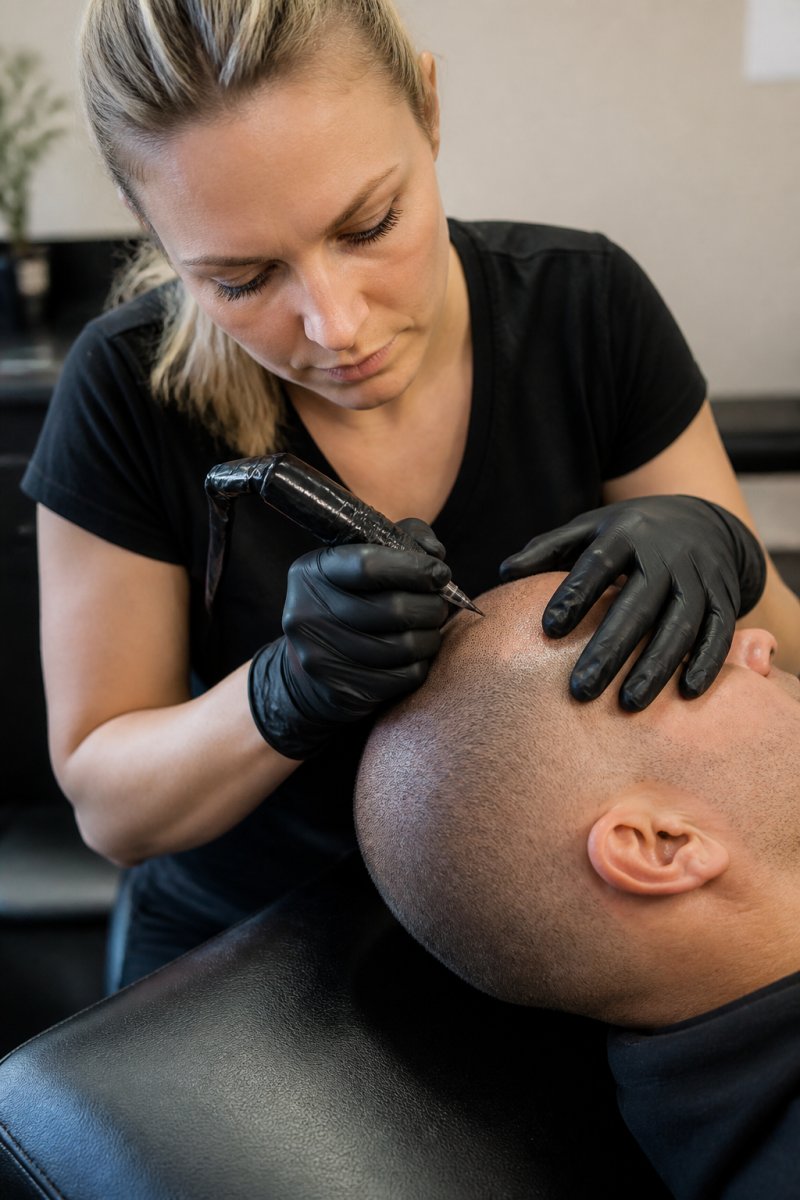
Most treatment plans require two to three sessions spaced several weeks apart. Each session typically lasts two to four hours depending on the area being covered, and the procedure is generally anesthesia-free, though numbing agents are available for sensitive scalps.
During the first visit, the practitioner maps the hairline design and performs the initial pigment deposition. Subsequent sessions build density and correct any uneven areas. You should see the final aesthetic outcome only after the scalp fully heals, since pigment appears darker initially and softens as it settles.
The intervals between sessions give your scalp time to recover, and most clients return to normal activities within a few days.
Scalp Micropigmentation Recovery Time and Aftercare
Scalp micropigmentation recovery time is minimal for most people, but the aftercare rules are strict. For the first few days, you should avoid washing the scalp with heavy pressure, direct water flow, or any shampoo that contains exfoliants. Sweating that drips across the treated area should also be avoided during the first week.
Common side effects include mild scalp irritation, redness, and slight tenderness, which typically subside within a few days. You may notice light flaking as the skin heals, and you must not pick at it, as this can pull pigment from the dermal layer.
Post-procedure care generally includes applying a thin layer of the provided ointment and keeping the area out of direct sun. Most clients can return to exercise within a week, but you should confirm the timeline with your practitioner based on how your skin responds.
Cost of Scalp Micropigmentation: What Factors Matter
The cost of scalp micropigmentation varies widely because several factors influence the total price. The size of the treatment area, the density required, the number of sessions, and the practitioner's experience all play a role in the final quote.
Pricing also depends on whether you need scar camouflage, a full density fill, or just a hairline refinement. Because these factors are unique to each client, the most accurate approach is to request a personalized quote after a consultation.
SMP vs. Hair Transplant: Which Approach Fits Your Goals?
SMP and hair transplant solve different problems. A hair transplant moves follicular units from a donor area to thinning regions, which adds real density but requires surgery, recovery time, and sufficient donor hair. SMP is a cosmetic pigmentation procedure that creates the optical effect of density without surgery.
For many men, the two are complementary rather than competing. SMP is frequently used after a transplant to conceal the linear scar from the donor strip or to add density where the transplant did not achieve full coverage.
The choice comes down to your goals. If you want actual regrowth and have good donor hair, a transplant may fit. If you want a defined hairline and the look of a close buzz cut without an operation, SMP is the stronger candidate.
Long-Term Care: Pigment Fading and Touch-Ups
All scalp micropigmentation fades over time. The pigment sits in the dermal layer, and factors like sun exposure, skin cell turnover, and your skin's natural chemistry gradually break it down. Most clients see noticeable lightening within three to five years, which is why periodic touch-up sessions are part of long-term maintenance.
Color correction is another consideration. If you have had previous permanent makeup that shifted to an undesirable tone, or if an earlier SMP treatment was applied too dark, a skilled practitioner can assess whether lightening or re-pigmentation is the right path.
What Fading Actually Looks Like Over Time
The fading process is not uniform. Individual deposits break down at different rates depending on their depth and the local skin activity. A common pattern is that the hairline fades faster than the crown because the forehead area has thinner skin and receives more sun exposure.
Sun exposure is the single largest accelerator of pigment breakdown. Ultraviolet light breaks down the pigment particles at a chemical level, which is why practitioners consistently recommend a high-SPF sunscreen on the scalp as part of daily maintenance.
Combining SMP with Other Hair Loss Treatments
SMP can be combined with medical hair loss treatments such as Minoxidil (Rogaine), Finasteride (Propecia), or platelet-rich plasma (PRP) therapy, but the sequencing matters.
Minoxidil, applied topically as a foam or liquid, is generally safe to use alongside SMP. However, you should not apply it to a freshly treated area during the healing phase, typically the first seven to ten days after a session, because the alcohol content can irritate the skin and potentially disturb pigment settling. Once the scalp has healed, Minoxidil can be resumed.
Finasteride, taken orally, does not interact with the pigment at all. The more relevant consideration is timing: if you start Finasteride after SMP and it stimulates new hair growth, the new follicles can grow through the pigmented area and slightly alter the appearance of the density fill.
PRP therapy, which involves injecting concentrated platelets from your own blood into the scalp to stimulate follicle activity, requires more careful coordination. PRP injections create micro-trauma in the scalp, and doing PRP too soon after an SMP session can disrupt the pigment layer. Most practitioners recommend waiting at least four to six weeks after SMP before undergoing PRP.
Building a Maintenance Schedule
A realistic long-term plan includes a touch-up session every two to four years, depending on your skin type, sun exposure habits, and the original pigment depth. Oily skin and heavy sun exposure will push you toward the shorter end of that range.
Beyond touch-ups, the most important long-term habit is protecting the treated area from the sun. A scalp-specific sunscreen with SPF 30 or higher, applied daily, is the single most effective way to extend the life of your SMP.
Frequently Asked Questions
Is scalp micropigmentation a permanent solution for hair loss?
Scalp micropigmentation is a long-lasting cosmetic procedure, but it is not truly permanent. The pigment sits in the dermal layer and will fade over time. Most clients see noticeable lightening after several years. Touch-up sessions every 4 to 8 years help maintain the original density and color. The goal is to create a hair loss illusion that looks natural, not to restore growth. Treat SMP as a long-term maintenance commitment, not a one-time fix.
Does scalp micropigmentation interfere with natural hair growth?
No, scalp micropigmentation does not interfere with natural hair growth. The micro-needles deposit pigment only into the upper dermal layer of the scalp. This process does not damage hair follicles or alter the growth cycle. In fact, SMP works well alongside treatments like minoxidil or finasteride. You can continue your regular hair loss regimen after the scalp heals. The pigment simply adds the appearance of density while your natural hair continues its usual pattern.
How long does a scalp micropigmentation procedure typically last?
A full scalp micropigmentation treatment for thinning hair usually requires 2 to 3 sessions. Each session lasts between 2 and 4 hours, depending on the area being treated. You will need about 2 to 4 weeks between sessions for the pigment to settle and for your scalp to heal. This spacing lets the artist assess the result and build density gradually. The total process from first appointment to final result typically spans 4 to 6 weeks.
What are the downsides of scalp micropigmentation?
The main downsides include the initial cost, the need for periodic touch-ups, and the skill required from the artist. Poorly applied pigment can look blue or gray over time, so choosing an experienced technician matters. Some clients experience minor scalp irritation or redness for a few days after the procedure. Results are not guaranteed to be perfectly symmetrical on every scalp. Finally, SMP does not stop future hair loss, so you may need additional density work as your natural hair thins further.