
 how-to
Permanent Makeup Removal Services in Olympia
Table of Contents
- What to Know Before Permanent Makeup Removal in Olympia
- Saline vs Laser Tattoo Removal for Brows: Which Fits Your Case?
- How Effective Is Emergency PMU Removal?
- The PMU Removal Healing Timeline, Session by Session
- Your Permanent Makeup Removal Consultation and Aftercare Plan
- Book Your Removal Consultation
- Frequently Asked Questions
What to Know Before Permanent Makeup Removal in Olympia
Permanent makeup removal services in Olympia are more accessible than ever, yet most clients begin with significant misconceptions. Whether you are dealing with microblading correction, lip blushing removal, or an eyeliner tattoo you regret, the path to clear skin requires patience, a professional consultation, and realistic expectations. At Tonni Petty PMU Artistry, we have guided countless clients through corrective pigment removal, and the first step is always the same: understanding your pigment, skin type, and the method best suited to your case.
The most important insight is that permanent makeup removal is not an immediate erasure. It is a controlled process of pigment extraction that unfolds over multiple sessions. Many people expect one treatment to resolve years of layered ink, but skin integrity requires time to recover between appointments. Results depend heavily on pigment density, the depth of the original implantation, and how your skin responds to trauma.
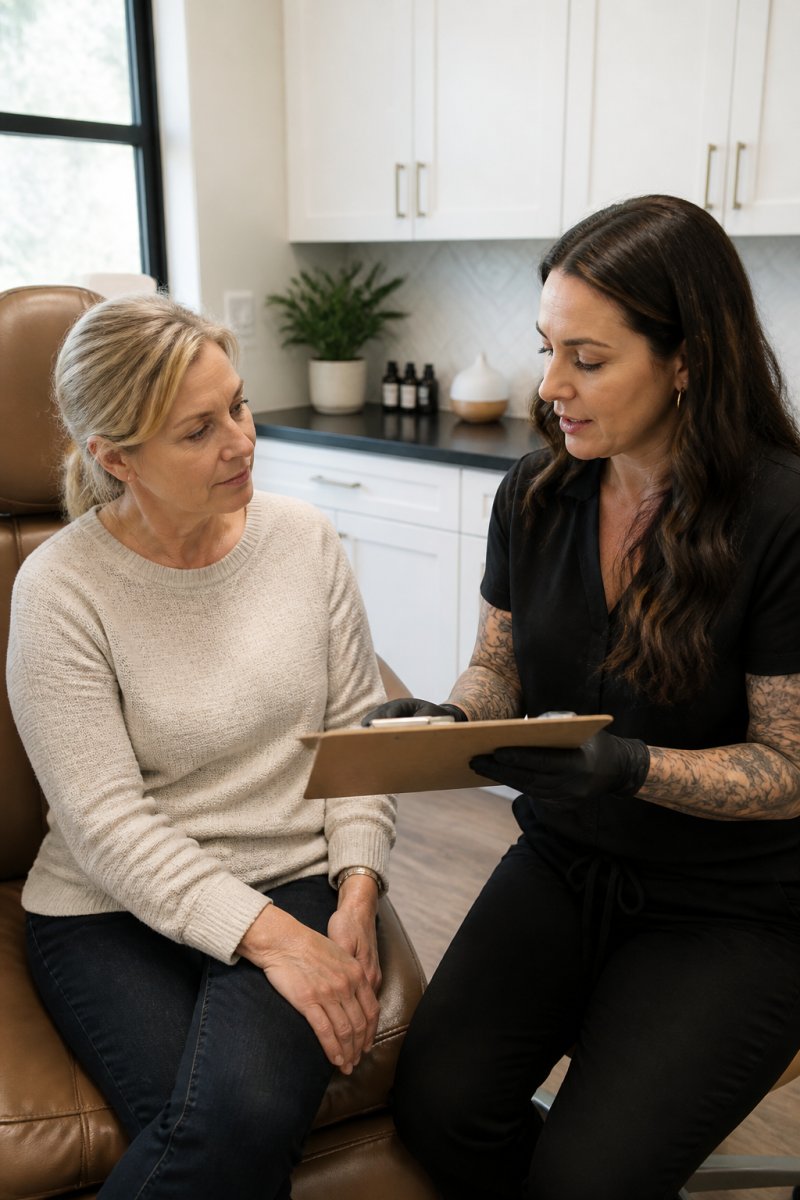
Your consultation should include a dermatological assessment of the treated area and an honest discussion of what is achievable. Look for a provider who evaluates your skin type and medical history before recommending a method. A patch testing protocol is a clinical safety standard that responsible practitioners follow to predict how your skin will react.
Saline vs Laser Tattoo Removal for Brows: Which Fits Your Case?
The choice between saline and laser tattoo removal for brows isn't a matter of preference, it's a clinical decision driven by pigment chemistry, skin tone, and the depth of the original implantation. Most providers offer both modalities, but they are not interchangeable. Understanding the mechanism of each is the first step in determining which one your skin and pigment will respond to safely.
How Saline Removal Works
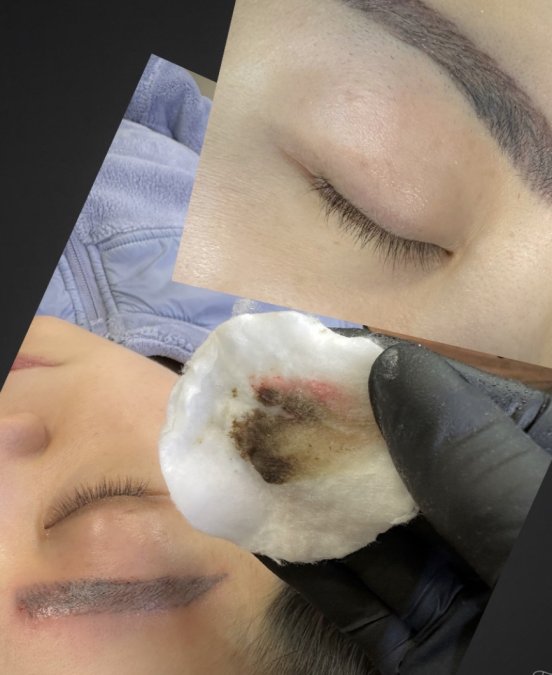
Saline removal is a non-light-based extraction method. A practitioner applies a sterile saline solution to the skin and uses a manual tool or tattoo machine with a sterile needle to create micro-channels in the epidermis. The saline draws pigment up and out of the skin as the area weeps and scabs over the following days. This process is often described as 'osmotic extraction' because the salt concentration pulls pigment particles toward the surface.
Saline is the preferred method for pigments that lasers cannot effectively target. This includes:
- Light or white pigments - Lasers cannot 'see' white or very light pigments, so they are ineffective. Saline physically lifts them.
- Pigments that have oxidized - Some iron-oxide-based pigments turn darker or change color after laser exposure. Saline avoids this reaction entirely.
- Fresh, superficial work - For emergency removal within 48 hours, saline is often the only safe option because the skin has not yet healed, and laser energy could cause unpredictable pigment darkening.
Saline is also the primary choice for clients with deeper skin tones (Fitzpatrick types IV-VI) because it does not rely on melanin absorption. The risk of hypopigmentation, permanent lightening of the skin, is significantly lower with saline than with laser in these skin types.
How Laser Removal Works
Laser removal uses focused light energy to break down pigment particles. The two main technologies are Q-switched lasers and pico lasers. Q-switched lasers deliver energy in nanosecond pulses, while pico lasers deliver it in trillionths of a second, creating a photoacoustic effect that shatters pigment more effectively.
The critical factor is wavelength selection. Different wavelengths target different pigment colors:
- 1064 nm (Nd:YAG) - Targets black and dark brown pigments, which are common in eyebrow tattoos.
- 532 nm (KTP) - Targets red, orange, and some brown pigments, often found in lip blushing.
- 755 nm (Alexandrite) - Targets blue-green and some black pigments.
A common pattern in PMU is that pigments are not pure black or brown. Many cosmetic inks are blends of iron oxides, titanium dioxide, and organic dyes. This is why a laser session can sometimes cause paradoxical darkening, the pigment chemically changes color rather than breaking down. This is a known risk with iron-oxide pigments, and a responsible provider will test a small area before full treatment.
According to guidance on laser tattoo removal safety from the American Society for Dermatologic Surgery, a trained professional must select the correct laser wavelength to avoid damaging surrounding tissue. For PMU, this is especially important because the skin on the eyelids, lips, and brow bone is thinner and more delicate than skin on the arms or legs.
Side-by-Side: Which Method Fits Your Case?
Factor | Saline Removal | Laser Removal |
|---|---|---|
Best for | Light, white, or oxidized pigments; fresh work; darker skin tones | Dark brown, black, or red pigments on lighter skin tones |
Mechanism | Osmotic extraction through micro-channels | Light energy fragments pigment particles |
Risk of hypopigmentation | Low | Moderate to high in deeper skin tones |
Risk of paradoxical darkening | None | Possible with iron-oxide pigments |
Typical session interval | 4-6 weeks | 6-8 weeks |
Sensation | Sharp, scratching sensation | Rubber-band snap sensation |
A common pattern in corrective work is that clients with darker skin tones or multiple layered PMU sessions are better candidates for saline. Clients with lighter skin and a single, dark pigment deposit may respond faster to laser. The only way to know for certain is a patch test and a consultation that reviews your pigment history.
How Effective Is Emergency PMU Removal?
Emergency PMU removal is a term used when a client is unhappy with fresh permanent makeup and wants the pigment addressed before it fully settles. Its effectiveness depends entirely on timing and the method used. If you act within the first 48 hours, a practitioner may be able to lift a significant portion of the pigment before the skin begins to heal over it.
However, emergency removal is not a magic eraser. The most realistic outcome is substantial lightening rather than complete elimination, and the treated area will still require follow-up sessions to refine the result. Many clients who seek emergency removal after a microblading session gone wrong find that a combination of immediate saline treatment and later corrective work delivers the best outcome. The key is to book a professional consultation immediately rather than waiting to see if the result improves.
The PMU Removal Healing Timeline, Session by Session
Understanding the pmu removal healing timeline prevents frustration and helps you plan your schedule realistically. Each session follows a predictable pattern, and the intervals between appointments are just as important as the treatments themselves.
Removal Phase | Healing Duration | What to Expect | Next Step |
|---|---|---|---|
Treatment session | Day 0-1 | Redness, swelling, and tenderness in the treated area | Apply aftercare as directed |
Crusting phase | Day 2-7 | Treated pigment rises to the surface and forms a light crust | Do not pick or scratch |
Shedding | Day 7-14 | Crust falls away, revealing lighter pigment | Book next session |
Skin recovery | Week 3-6 | Skin integrity fully restored, true lightening visible | Assess remaining pigment |
Session intervals typically range from four to eight weeks depending on the method and your skin's healing response. Rushing the process compromises skin integrity and can lead to scar tissue management issues that require additional treatment.
Your Permanent Makeup Removal Consultation and Aftercare Plan
A thorough consultation is the foundation of safe permanent makeup removal. Your provider should evaluate the pigment color and depth, review your medical history for contraindications, and explain which removal method aligns with your goals. But a consultation is not just a conversation, it is a clinical assessment that determines whether you are a candidate for removal at all.
Contraindications: When Removal Should Be Delayed or Avoided
Not everyone is a candidate for immediate PMU removal. A responsible provider will screen for the following conditions before recommending any treatment:
- Active skin infection or acne in the treatment area - Treatment should be postponed until the skin is clear.
- History of keloid scarring - Both saline and laser can trigger hypertrophic scarring in predisposed individuals. Your provider may recommend a small test spot first.
- Autoimmune conditions such as lupus or psoriasis - These can affect healing and pigment clearance. A physician's clearance may be required.
- Current use of isotretinoin (Accutane) - This medication severely impairs wound healing. Most practitioners require a 6-12 month waiting period after the last dose.
- Pregnancy or nursing - Hormonal changes can affect skin response and healing; most providers defer treatment.
- Recent sun exposure or tanning - Laser removal on tanned skin increases the risk of hypopigmentation. A 2-4 week waiting period is standard.
Skin types prone to hyperpigmentation (Fitzpatrick types III-VI) require special consideration. For these clients, laser removal carries a higher risk of post-inflammatory hyperpigmentation (PIH), where the skin darkens in response to trauma. Saline removal is often the safer choice, but even saline can cause PIH if the skin is not properly cared for during healing.
What Your Consultation Should Include
A comprehensive consultation should cover:
- Pigment analysis - A visual and sometimes digital assessment of the pigment color, depth, and density.
- Skin type assessment - Fitzpatrick scale classification and a review of any history of scarring or pigmentation issues.
- Patch testing - A small test spot to observe how your skin reacts to the proposed method. This is not optional for clients with sensitive skin or unknown pigment composition.
- Medical history review - Including current medications, supplements, and any history of cold sores (relevant for lip blushing removal).
- Realistic outcome discussion - Including the number of sessions likely required and the possibility of incomplete removal.
Aftercare: What You Must Do and What You Must Avoid
Post-procedure aftercare determines the quality of your final result. The healing process is not passive, it requires active participation.
Days 0-3: The Acute Phase
- Keep the area clean and dry. Gently rinse with sterile water if instructed.
- Apply the provided ointment in a thin layer. Do not over-moisturize, as this can trap bacteria.
- Avoid all makeup, sunscreen, and skincare products on the treated area.
- Do not ice the area directly. If swelling occurs, use a clean, cold compress wrapped in a barrier.
Days 4-14: The Crusting and Shedding Phase
- The treated area will form a light crust or scab. This is the pigment rising to the surface.
- Do not pick, scratch, or rub the area. Picking can pull out pigment unevenly and cause scarring.
- Let the crust fall off naturally. This typically takes 7-14 days.
- Avoid strenuous exercise that causes excessive sweating, as this can soften and prematurely remove the crust.
Weeks 3-6: The Recovery Phase
- The skin will appear lighter, but the final result is not visible until the skin fully regenerates.
- Redness, known clinically as erythema, is normal in the first days after treatment. What is not normal is severe pain, oozing, or signs of infection, which warrant immediate medical attention.
- Begin sun protection once the skin has fully healed. Use a broad-spectrum SPF 30+ sunscreen daily, as UV exposure can cause pigmentation changes in healing skin.
For clients in Olympia seeking permanent makeup removal services, the American Academy of Micropigmentation's standards for safe practice provide a useful benchmark for what professional care should include. Tonni Petty PMU Artistry brings over 22 years of experience to corrective work, offering a personalized consultation process that assesses your skin, pigment, and goals before any treatment begins. Our expertise extends beyond removal to Magnetic PMU Removal and corrective artistry, including Microblading Brows for clients who wish to refine their look after the removal process is complete. Whether you need lightening of unwanted cosmetic pigment or a complete corrective strategy, the right plan starts with an honest conversation.
Book Your Removal Consultation
Deciding to remove permanent makeup is a personal and often emotional step. The best way to move forward is to book a consultation where you can discuss your concerns, and receive a realistic treatment plan. At Tonni Petty PMU Artistry, we are trusted by thousands of clients across Washington State, and our Master Technician is certified through the American Institute of Intradermal Cosmetics and a member of the American Academy of Micropigmentation.
Permanent makeup removal is a process, not a single event. With the right provider and realistic expectations, you can achieve a result that restores your confidence and your skin's natural appearance. Contact Tonni Petty PMU Artistry to schedule your consultation and take the first step toward a fresh start.
Frequently Asked Questions
Will permanent makeup removal completely erase the ink?
Complete removal is possible but not guaranteed for every case. Results depend on ink density, pigment color, depth of placement, and your skin's response. Many clients see significant lightening, with some achieving full removal. Your consultation will include a realistic assessment of what can be achieved for your specific tattoo.
Does permanent makeup removal hurt?
Most removal methods use a topical anesthetic to minimize discomfort. You may feel a stinging sensation during the procedure, similar to the original tattoo application. Afterward, the treated area can feel tender or irritated for a few days. Your technician will discuss pain management options and aftercare steps to keep you comfortable throughout the process.
What is the difference between laser removal and saline removal for PMU?
Laser removal uses light energy to break up pigment particles in the skin, which your body then clears. It is often effective for darker pigments. Saline removal uses a saline solution to draw pigment out through the skin's surface. It can be a good option for lighter pigments or when laser is not suitable. The best method depends on your skin type, pigment color, and tattoo age.
What should I look for in a professional PMU removal technician?
Look for someone with specific training in pigment removal, not just general tattoo experience. Ask about their method, equipment, and safety protocols. A professional will offer a thorough consultation, review your medical history, and set realistic expectations. They should also provide clear aftercare instructions and be available for follow-up questions during your healing process.
Frequently Asked Questions
Q: Will permanent makeup removal completely erase the ink?
A: Complete removal is possible but not guaranteed for every case. Results depend on ink density, pigment color, depth of placement, and your skin's response. Many clients see significant lightening, with some achieving full removal. Your consultation will include a realistic assessment of what can be achieved for your specific tattoo.
Q: Does permanent makeup removal hurt?
A: Most removal methods use a topical anesthetic to minimize discomfort. You may feel a stinging sensation during the procedure, similar to the original tattoo application. Afterward, the treated area can feel tender or irritated for a few days. Your technician will discuss pain management options and aftercare steps to keep you comfortable throughout the process.
Q: What is the difference between laser removal and saline removal for PMU?
A: Laser removal uses light energy to break up pigment particles in the skin, which your body then clears. It is often effective for darker pigments. Saline removal uses a saline solution to draw pigment out through the skin's surface. It can be a good option for lighter pigments or when laser is not suitable. The best method depends on your skin type, pigment color, and tattoo age.
Q: What should I look for in a professional PMU removal technician?
A: Look for someone with specific training in pigment removal, not just general tattoo experience. Ask about their method, equipment, and safety protocols. A professional will offer a thorough consultation, review your medical history, and set realistic expectations. They should also provide clear aftercare instructions and be available for follow-up questions during your healing process.