 how-to
Does Permanent Eyeliner Hurt? What to Expect
Table of Contents
- Does Permanent Eyeliner Hurt? The Honest Answer
- What the Sensation Actually Feels Like During the Procedure
- Permanent Eyeliner Pain Level: Individual Variation and Sensitivity
- How Permanent Eyeliner Numbing Cream Reduces Discomfort
- What Happens During Your Appointment: A Step-by-Step Overview
- Permanent Eyeliner Healing Time and What to Expect After
- Permanent Eyeliner Aftercare: Managing Sensitivity and Ensuring Results
- Frequently Asked Questions
Last Updated: October 15, 2026
Does Permanent Eyeliner Hurt? The Honest Answer
The short answer: yes, permanent eyeliner hurts, but not in the way most people fear. Most clients describe the sensation as manageable, more pressure and vibration than sharp pain.
Permanent eyeliner hurt is a top concern before booking, but modern numbing techniques keep discomfort minimal for most clients.
It's not painless, but it's far from unbearable, many clients say anticipation causes more stress than the procedure itself. Here's exactly what to expect.
What the Sensation Actually Feels Like During the Procedure
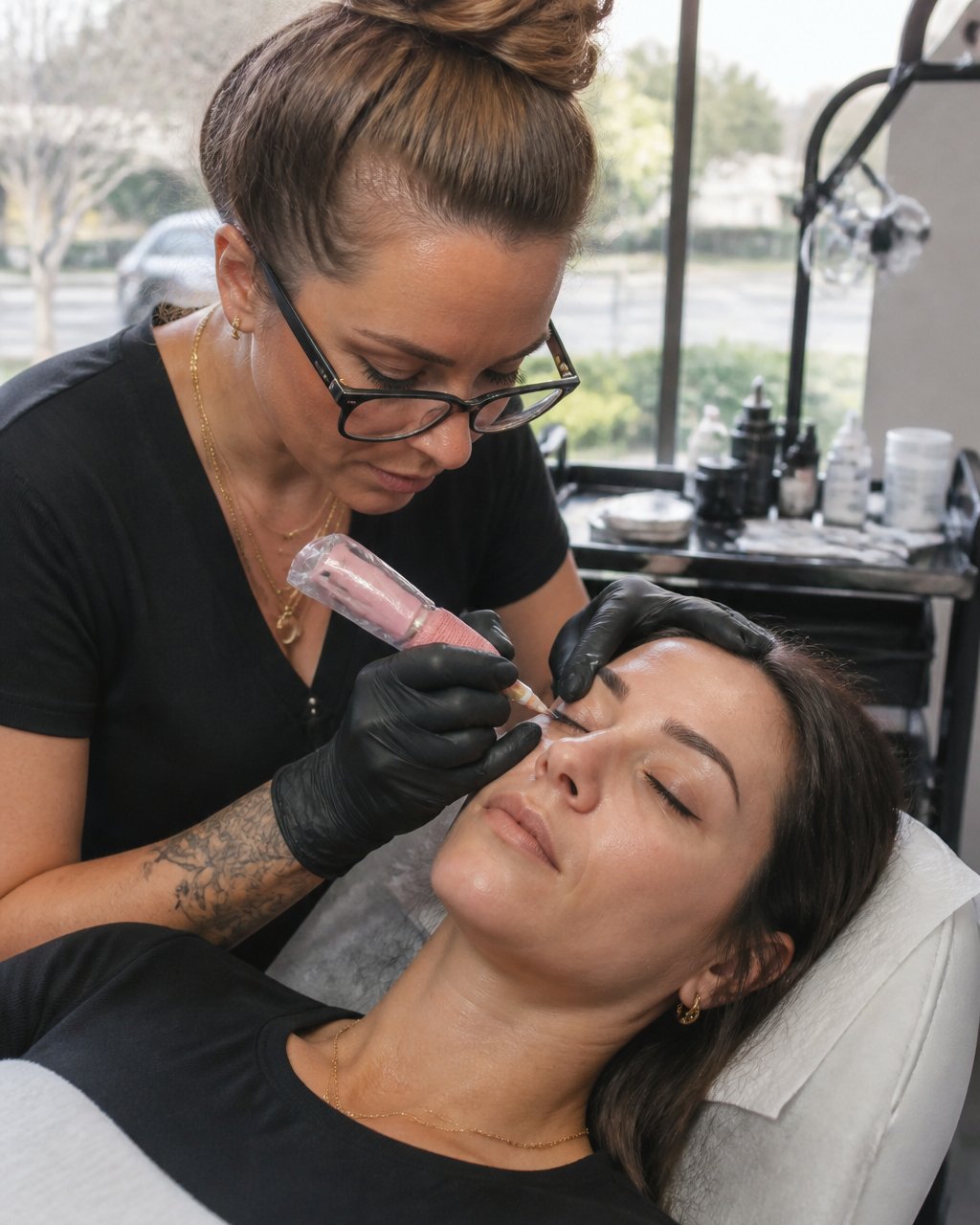
Most clients describe application as pressure, vibration, and mild scratching, a buzzing sensation along the lash line, not a sharp or stabbing needle.
The sensation varies by location. Your upper lash line is typically less sensitive than your lower lash line or waterline. Some clients report:
- Pressure and vibration along the lash line
- A tickling sensation
- Mild discomfort rather than acute pain
- Numbness after the first few minutes as the topical anesthetic kicks in
The procedure takes 60-90 minutes, with numbing cream reapplied at intervals. The first 10-15 minutes are often described as the most uncomfortable; after that, the numbing gel reduces sensation significantly.
Permanent Eyeliner Pain Level: Individual Variation and Sensitivity
Pain tolerance varies dramatically from person to person. Several factors influence your experience.
Your skin sensitivity matters most: sensitive skin means you'll likely feel more, and eyelid skin is thinner and more delicate than other areas of the face.
Other factors that affect pain level:
- Time of month: Hormonal changes can increase sensitivity
- Caffeine intake: Avoid caffeine before your appointment, it increases heart rate and can amplify sensation
- Stress level: Anxiety makes you tense, which intensifies discomfort
- Previous PMU experience: Clients who've had Microblading Brows or other permanent makeup procedures may find eyeliner less uncomfortable on their second or third procedure
Technique matters too. Experienced artists work with a light hand and proper needle depth, reducing trauma and discomfort.
How Permanent Eyeliner Numbing Cream Reduces Discomfort
Numbing cream is the single biggest lever on how much permanent eyeliner hurts. Knowing how it works, and what to ask, separates a manageable appointment from an uncomfortable one.
The mechanism, in plain terms
Topical anesthetics in permanent makeup typically rely on lidocaine, often combined with prilocaine, tetracaine, or benzocaine. They block sodium channels in nerve endings, stopping pain signals from reaching the brain. The effect is local and temporary: the tissue goes numb, but you stay awake.
Two things determine how well it works:
- Concentration and formulation. OTC lidocaine is capped at 4% by FDA monograph; professional-strength products can be significantly higher and may include vasoconstrictors such as epinephrine to reduce bleeding and prolong numbness. A licensed practitioner selects the formulation based on the treatment area and your health history.
- Contact time and skin prep. Eyelid skin is among the thinnest on the body, so absorption is fast, but the cream still needs 15-30 minutes under occlusion to reach full effect. Rushing this step is the most common reason clients feel more than expected.
How it is used during a permanent eyeliner appointment
A typical protocol looks like this:
- Pre-numbing before the outline. Cream or gel is applied along the lash line and left to set, usually 15-30 minutes. Some artists add a secondary liquid anesthetic once the skin is broken.
- Top-up during the procedure. Because the needle disrupts the surface, sensation can return, so artists typically reapply every 15-20 minutes.
- Adjusting for the lower lash line and waterline. These areas are more sensitive, so artists extend contact time or layer products rather than increasing concentration.
The first 10-15 minutes are often described as the most noticeable, then a steady drop in sensation as the anesthetic fully takes hold.
What to ask before your appointment
Bring these questions to your consultation:
- What products do you use, and what are the active ingredients and concentrations? You are entitled to know what is applied to your eyes.
- Do you screen for lidocaine or ester-anesthetic allergies? True allergy is uncommon but serious; disclose any reaction to dental anesthetics, certain antiarrhythmics, or sulfa drugs.
- How do you handle a client who is pregnant, breastfeeding, or on medication? Some anesthetics and vasoconstrictors are avoided in these situations, so your practitioner should refer you to your physician rather than guess.
- What is your protocol if numbing is inadequate? A reputable artist pauses, adds time, or reschedules, never pushes through.
What numbing cannot fix
Anesthetic dulls pain but not pressure, vibration, or the sound of the machine. If your fear is the needle, numbing helps. If it's the sensation of something working near your eye, the better tools are a slow, methodical artist, a break when you ask, and realistic expectations.
FDA information on topical anesthetic safety and maximum strength limits
What Happens During Your Appointment: A Step-by-Step Overview
Here's what a typical permanent eyeliner session looks like:
Before the procedure (15-20 minutes): Your technician reviews your goals and design. You'll see the proposed shape in a mirror and can request adjustments. Your artist applies the first round of numbing cream and lets it set.
During application (60-90 minutes): You recline while your technician works methodically along the lash line with precise needle strokes.
Finishing touches (5-10 minutes): Your technician assesses color, shape, and symmetry, makes minor adjustments, and shows you the result in a mirror.
Post-procedure (5 minutes): Your artist applies aftercare cream, reviews healing instructions, and sends you home with written guidelines.
The entire appointment typically takes 2-3 hours, so avoid back-to-back commitments.
Permanent Eyeliner Healing Time and What to Expect After
Healing from permanent eyeliner typically takes 7-14 days, with complete healing extending to 4 weeks.
Days 1-3: Eyelids may feel tender or tight, with mild swelling, redness, and a slight sunburn-like burning that subsides quickly.
Days 4-7: Scabbing begins, with small flakes along the lash line.
Days 8-14: Scabs fall off naturally and your eyeliner may look lighter or patchy as pigment continues to settle.
Weeks 3-4: The eyeliner stabilizes and you'll see the true color.
Permanent Eyeliner Aftercare: Managing Sensitivity and Ensuring Results
Aftercare is where permanent eyeliner results are won or lost: keep the area clean, keep it from drying out, and keep your hands off it while the skin repairs. Here's the why behind each instruction, and the line between normal healing and a problem needing medical attention.
Why aftercare matters more than you think
The pigment sits in the upper dermis. Over the first two weeks, your skin forms a thin protective layer, then sheds it along with some surface pigment. If that process is disrupted by picking, infection, or sun exposure, you lose pigment unevenly and may need extra touch-ups. Good aftercare protects both your health and your investment.
Immediate aftercare (first 24 hours)
- Keep the area dry. No water, cleanser, or makeup on the eyelids, water introduces bacteria and softens the forming crust.
- Do not touch, rub, or scratch. Hands carry bacteria, and friction lifts pigment.
- Sleep on your back if you can. Side-sleeping presses the eye into the pillow and can cause uneven healing.
- Apply the aftercare ointment as directed. A thin layer is enough; more is not better.
Days 2-7: the critical window
- Cleanse gently with a clean, damp cloth or your artist's recommended cleanser. Pat, do not rub.
- Moisturize 2-3 times daily with the provided ointment; a moist wound heals faster and holds pigment better than a dry, cracked one.
- Skip swimming, saunas, hot tubs, and steam rooms. Heat and shared water raise infection risk.
- No eye makeup, mascara, or eyelash curler. Even clean products can drag pigment out of healing skin.
- Avoid heavy sweating. Light walking is fine; intense cardio, hot yoga, and heavy lifting are not.
Weeks 2-4: protecting the result
- Continue gentle cleansing and light moisturizing.
- Avoid direct sun and tanning beds. UV light fades pigment and can cause hyperpigmentation along the healing line. Wear sunglasses and use SPF 30+ on surrounding skin, not directly on the healing eyeliner unless your artist says otherwise.
- Pause retinoids, AHAs, and vitamin C serums near the eyes; they accelerate cell turnover and can pull pigment out prematurely.
- Do not pick at scabs or flakes. Let them fall off on their own, picking is the number-one cause of patchy results and scarring.
Normal healing vs. warning signs
Here's how to tell the two apart.
Expected and normal:
- Mild swelling and redness for the first 2-3 days
- Tenderness or a tight, sunburn-like feeling
- Light flaking or scabbing along the lash line
- Color that looks darker, then lighter, then settles over 3-4 weeks
- Slight asymmetry that usually evens out
Call your practitioner if you notice:
- Swelling or redness that worsens after day 3 instead of improving
- A rash, hives, or itching that spreads beyond the treated area
- Blistering or weeping along the lash line
- Pigment that looks significantly uneven once healing is complete (this is a touch-up conversation, not an emergency)
Seek medical care promptly if you notice:
- Pus, a foul odor, or a fever
- Rapidly spreading redness or warmth
- Severe pain or throbbing that does not improve with rest
- Any change in vision, light sensitivity, or a feeling that something is in your eye
- Signs of an allergic reaction such as facial swelling, difficulty breathing, or widespread hives
When to expect a touch-up
Permanent eyeliner typically needs a touch-up 4-8 weeks after the initial appointment, once the skin has healed and the true color settled. Ask at your consultation about touch-up pricing so there are no surprises. If you're interested in exploring other permanent cosmetic options, Lip Blushing and Magnetic PMU Removal are also available for clients considering additional treatments or corrections.
CDC guidance on preventing infection after skin procedures
Frequently Asked Questions
Does permanent eyeliner hurt more than a regular tattoo?
Permanent eyeliner is generally less painful than a body tattoo because the needle penetrates only the superficial dermal layer of the eyelid, not deeper tissue. Many clients describe it as pressure, tickling, or mild discomfort rather than sharp pain. The eyelid area is sensitive, but the sensation is brief and manageable with numbing cream. Many people find the experience far less intense than they anticipated.
How long does the pain or discomfort last during a permanent eyeliner procedure?
The entire procedure typically takes 60-90 minutes, though the sensation is not constant. You'll feel pressure and mild discomfort during the actual tattooing, which occurs in intervals as the artist applies pigment along the lash line. Between passes, there are pauses that give your eyelid a brief rest. Many clients report that the discomfort is manageable throughout, especially with numbing gel applied beforehand.
What should I do if the pain becomes too much during the appointment?
Stop immediately and tell your artist. A skilled permanent makeup technician will pause the procedure, allow you time to rest, and reapply numbing cream if needed. Your comfort and safety are the priority. Taking a few deep breaths and communicating early can help prevent the situation from escalating. Your artist can also adjust technique or pace to match your tolerance.
How long does sensitivity last after permanent eyeliner, and when can I resume normal activities?
Mild tenderness and tightness around the eyelid are normal for 3-7 days after the procedure. Sensitivity typically subsides within two weeks. You can return to most daily activities immediately, but avoid swimming, heavy sweating, and direct water contact on the eyelid for at least one week. Sleeping on your back and using prescribed aftercare products will minimize discomfort and support proper healing.