
 listicle
Best Permanent Makeup Artist in Olympia, WA: Top Picks
Table of Contents
- What to Look for in the Best Permanent Makeup Artist in Olympia, WA
- How to Choose a PMU Artist: A Step-by-Step Evaluation Framework
- Top Permanent Makeup Artists and Studios in Olympia, WA
- Tonni Petty PMU Artistry: Master-Level Expertise and Scalp Micropigmentation
- KM Permanent Cosmetics: Transparent Pricing and Nano Brow Specialization
- Myong Sae Salon & Spa: Full-Service Salon with Removal Expertise
- Eastside Microblading Studio: Focused Microblading and Training
- Derma Medical Spa: Clinical Environment for Cosmetic Procedures
- Permanent Makeup Cost in Olympia, WA: What Affects Your Investment
- The Permanent Makeup Healing Process: A Week-by-Week Timeline
- Contraindications, Medical Eligibility, and Local Licensing Requirements
- Correction and Removal Services: When Your Previous PMU Needs Fixing
- Frequently Asked Questions
Last Updated: September 14, 2026
What to Look for in the Best Permanent Makeup Artist in Olympia, WA
Finding the best permanent makeup artist in Olympia, WA starts with verifying two things: current licensure and a portfolio that matches your goals. Washington State regulates cosmetic tattoo practitioners through local health departments, so a legitimate artist holds a current license and can show it. At Tonni Petty PMU Artistry, we've seen too many clients walk in with brows they hate because they skipped this step.
Permanent makeup is a cosmetic tattooing procedure that implants pigment into the upper dermis to simulate brow hair, lip color, or eyeliner. It's also called semi-permanent makeup or dermal pigmentation.
Credentials, Certifications, and Licensing in Washington State
Washington requires cosmetic tattoo artists to complete bloodborne pathogens training and register with their county health department before touching a client. Ask to see that registration, not just a certificate from a weekend course. The Washington State Department of Health tattoo and body art licensing page outlines the requirements artists must meet.
Beyond the legal minimum, look for advanced certification. Master Technician credentials, membership in professional bodies, and continuing education all signal an artist who treats this as a career, not a side hustle.
Portfolio Review and Before-and-After Results
A portfolio tells you more than any review. Look for healed results, not just fresh work, the real test is how pigment settles after four to six weeks.
Ask for clients with your skin tone, undertone, and brow density. Pigment behaves differently on oily, mature, and previously tattooed skin.
How to Choose a PMU Artist: A Step-by-Step Evaluation Framework
Choosing a permanent makeup artist comes down to five checks: license, portfolio, consultation quality, sanitation, and honest pricing.
- Verify licensure with your county health department
- Review healed photos across at least 20 clients
- Book a consultation and judge whether the artist asks about your skin, lifestyle, and goals
- Watch their setup for single-use needles, fresh gloves, and sealed pigment cups
- Ask about touch-ups and what happens if you need a correction
| Check | What to Look For | Why It Matters |
|---|---|---|
| Licensing | County registration, bloodborne pathogens cert | Legal requirement and basic safety |
| Portfolio | Healed photos, varied skin tones | Proves real-world retention |
| Consultation | Questions about skin type, goals | Customized pigment blending |
| Sanitation | Single-use needles, barrier film | Prevents infection |
| Pricing | Written quote, touch-up policy | No surprise costs later |
A common mistake is booking on price alone. The cheapest option often means fewer sessions, lower-grade pigment, or no touch-up included.
Top Permanent Makeup Artists and Studios in Olympia, WA
The best permanent makeup artists in Olympia combine technical skill with a consultation that treats your face as unique. Here are the studios worth considering.
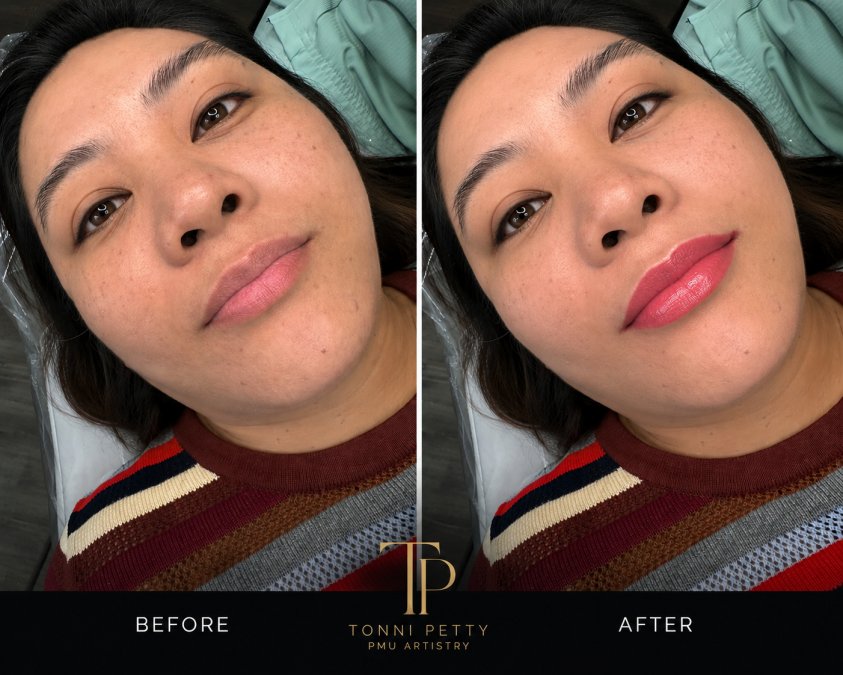
Tonni Petty PMU Artistry: Master-Level Expertise and Scalp Micropigmentation
Tonni Petty PMU Artistry leads this list for one reason: over 22 years in permanent cosmetics and Master Technician certification through the American Institute of Intradermal Cosmetics. That combination is rare in a market full of newer artists.
The studio covers microblading, powder and combo brows, lip blushing, permanent eyeliner, and scalp micropigmentation for hair thinning, plus cosmetic pigment removal for corrections. Every appointment starts with a personalized consultation covering skin undertones and brow mapping.
Membership in the American Academy of Micropigmentation and one-on-one Master Instructor training round out the credentials. If you want a practitioner who has seen every skin type and correction scenario, book here.
KM Permanent Cosmetics: Transparent Pricing and Nano Brow Specialization
Myong Sae Salon & Spa: Full-Service Salon with Removal Expertise
Eastside Microblading Studio: Focused Microblading and Training
Derma Medical Spa: Clinical Environment for Cosmetic Procedures
Permanent Makeup Cost in Olympia, WA: What Affects Your Investment
Permanent makeup pricing in this market is not standardized, the biggest source of sticker shock for first-timers. Most studios quote per service, and the same procedure can vary by hundreds of dollars between artists. Understanding what drives the number is the only way to compare quotes honestly.
Typical Price Ranges by Service
Pricing depends on the specific service, artist experience, and individual client needs. For current prices, please refer to Tonni Petty PMU Artistry's website or book a consultation.
These are ranges, not quotes. A master-level artist with two decades of experience sits at the top of the band; a newer artist building a portfolio sits at the bottom. Neither price is automatically right for you.
What Actually Moves the Price
Technique. Nano and combo brows take longer than basic microblading because the artist builds individual hair strokes or layers powder and stroke work. Time is the biggest cost driver.
Artist experience and credentials. Master Technician certification, advanced training, and years of correction work justify a higher rate. A cheaper artist who over-tattoos or picks the wrong pigment undertone can cost you more in corrections later than you saved upfront.
Correction work. Fixing previous pigment is slower and less predictable than a fresh application. Old microblading turned orange or gray often needs lightening sessions before new pigment can be placed, stacking cost.
Touch-up inclusion. Some studios bundle the six-week touch-up into the initial price; others charge separately. A $299 brow with a $150 touch-up is a $449 brow. Always ask which model applies.
Pigment quality and aftercare products. Higher-grade pigments and included aftercare kits add to the sticker price but reduce the odds of poor retention or a reaction.
How to Compare Quotes Without Getting Burned
Ask every artist for a written quote breaking out four line items: the initial session, the touch-up, any correction or lightening fees, and aftercare products. A studio that won't put numbers in writing before you book is one to skip. Also ask whether a second touch-up is included or billed.
Clients who book on price alone often end up paying for correction work within a year. If a quote is dramatically lower than the rest of the market, ask what's missing: a touch-up, a consultation, a specific pigment line, or a licensed practitioner.
The Permanent Makeup Healing Process: A Week-by-Week Timeline
The permanent makeup healing process runs roughly six weeks from first session to final result, but the day-to-day reality is where most clients get blindsided. Here's what the skin is doing at each stage, and what should prompt a call to your artist.
Days 1-2: Inflammation and the "Too Dark" Phase
Immediately after your session, the treated area is an open wound. Expect redness, mild swelling, and pigment that looks 20-30% darker and more saturated than the final result, inflammation, not the color you paid for. Brows may feel tight; lips swollen and tender; eyeliner may cause slight puffiness for 24 hours. Keep the area dry, sleep on your back if you can, and avoid sweating, saunas, and steam. No makeup over the treated area.
Days 3-5: The Darkening and Tightening Window
Days three through five, the skin forms a thin protective layer. Color often deepens before it lightens, surprising first-timers, brows can look almost painted on, and lips may crack at the corners. This is when clients most want to pick or scratch, the single most common cause of patchy retention. Hands off.
Days 6-10: Peeling, Flaking, and the "It's Disappearing" Panic
Flaking typically starts around day six and runs through day ten. The pigment appears to lift with the flakes, alarming almost everyone, it's the top layer of skin shedding, not the pigment vanishing, while color settles into the dermis. Expect the area to look uneven, patchy, or too light. This is normal. Continue your prescribed aftercare, usually a thin layer of ointment or balm, and resist "fixing" anything yourself.
Days 11-14: The Ghosting Phase
By the end of week two, most flaking is done and color looks softer, sometimes 30-40% lighter than day one. This is the ghosting phase, when clients worry the pigment didn't take. It did, the skin is still healing underneath, and color keeps shifting as the dermis repairs.
Weeks 3-4: Color Stabilizing and Skin Normalizing
The treated area stops feeling tight and looks more like skin as pigment settles into its final tone. Slight asymmetry or small gaps are exactly what the touch-up is for. Don't judge the final result yet.
Weeks 5-6: Touch-Up Session and Final Result
The touch-up typically happens around week six, once the skin has fully healed. Your artist fills gaps, adjusts color, and refines shape. After this session the result is stable and retention peaks, followed by a shorter two-to-three-week healing cycle of mild flaking.
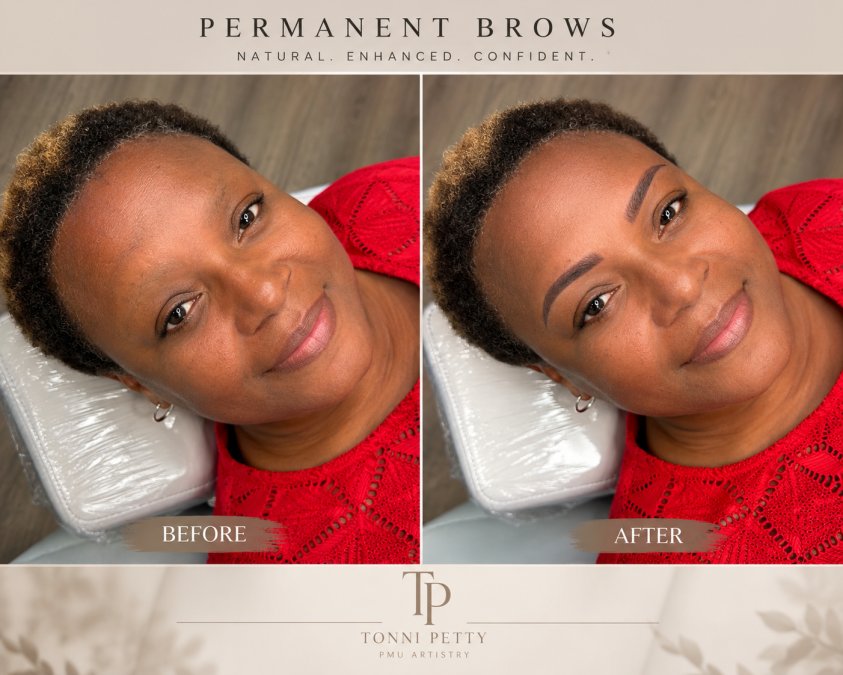
Retention varies by skin type. Oily, mature, and previously tattooed skin often hold pigment differently and may need a second touch-up. Ask your artist what retention pattern they typically see for your skin type before booking.
Contraindications, Medical Eligibility, and Local Licensing Requirements
Medical eligibility matters more than most clients realize. Certain conditions and medications make cosmetic tattooing unsafe or unpredictable, and a responsible artist screens for them during consultation.
Common contraindications include active skin infections near the treatment area, certain blood-thinning medications, and uncontrolled diabetes. Chemotherapy clients should wait for physician clearance, since skin can be sensitive during treatment.
On the licensing side, Olympia falls under Thurston County health jurisdiction. Artists must register locally and complete bloodborne pathogens certification. The Thurston County Public Health body art program maintains current requirements. Verifying an artist's registration takes minutes and protects you from unlicensed work with no recourse.
Correction and Removal Services: When Your Previous PMU Needs Fixing
Correction and removal services fix pigment that has shifted color, faded unevenly, or never suited your face. Old microblading often turns orange or gray as pigment breaks down, and the fix isn't always more ink.
Magnetic pigment removal and cosmetic lightening lift unwanted color before a fresh application, cleaner than tattooing over problem pigment. For asymmetrical brows from a previous artist, correction starts with an honest assessment of what's salvageable.
The U.S. Food and Drug Administration guidance on tattoo inks and pigments notes that ink reactions and migration are documented risks, which is why choosing a qualified artist the first time matters so much.
Correcting bad permanent makeup costs more than getting it right the first time, and living with brows you hate is worse. Tonni Petty PMU Artistry brings over 22 years of experience, Master Technician certification through the American Institute of Intradermal Cosmetics, and a personalized consultation to every appointment, microblading, lip blushing, scalp micropigmentation, or correction of previous work. Book with Tonni Petty PMU Artistry for results built around your features, not a template.
Frequently Asked Questions
What is the average cost of permanent makeup in Olympia, WA?
Permanent makeup cost in Olympia varies based on the service, artist experience, and studio location. Many studios, including Tonni Petty PMU Artistry, provide personalized quotes after a consultation to account for your specific needs and desired results. For current pricing, please refer to Tonni Petty PMU Artistry's website.
How do I choose a PMU artist who will give me natural-looking results?
Start by reviewing the artist's portfolio for healed results, not just fresh work. Look for clients with similar skin tones and features to yours. Verify credentials such as bloodborne pathogens certification and membership in professional organizations like the American Academy of Micropigmentation. Schedule a consultation to discuss brow mapping, color theory, and your expectations. A skilled artist will customize pigment blending to your skin undertones and explain the healing process clearly before you commit.
What does the permanent makeup healing process look like week by week?
The permanent makeup healing process unfolds over four to six weeks. Days 1-3: brows or lips appear darker and may feel tender. Days 4-14: pigment peels and flakes, and color softens significantly. Weeks 3-6: the touch-up session refines shape and saturation. Following aftercare instructions, such as avoiding sun exposure and keeping the area dry, protects your investment. Most clients see final results after the touch-up, with color settling into a natural, long-lasting finish.
Is permanent makeup safe, and what qualifications should I look for?
Permanent makeup is safe when performed by a trained professional in a sanitary studio. Look for artists with bloodborne pathogens certification, state licensing where required, and membership in organizations like the American Academy of Micropigmentation. Ask about sanitation protocols, needle configuration, and patch tests for allergies. In Washington State, local health departments regulate tattooing and permanent cosmetics, so confirm the studio meets those standards. A thorough consultation and patch test further reduce risks.
What is the difference between microblading and powder brows?
Microblading uses a manual tool to create hair-like strokes that mimic natural brow hairs, ideal for dry or normal skin. Powder brows use a machine to deposit pigment evenly, creating a soft, shaded look similar to makeup. Combo brows blend both techniques for texture and fullness. Nano brows, a newer option, use a machine to draw fine hairs with less trauma to the skin. Your artist will recommend the best method based on your skin type, lifestyle, and desired outcome.