
 how-to
How to Choose PMU Pigment Color: A Guide
Table of Contents
- Understanding Skin Undertones for Permanent Makeup
- PMU Color Theory for Beginners
- Matching Pigments to Hair Color and Features
- Testing Pigments on Skin Before Commitment
- Preventing PMU Pigment Fading and Color Shifts
- Choosing the Right Pigment for Your Specific Needs
- The Role of Natural Lighting in Pigment Selection
- Common Mistakes When Choosing PMU Pigment Color
- Frequently Asked Questions
Last Updated: September 29, 2026
Understanding Skin Undertones for Permanent Makeup
When you choose PMU pigment color, it starts with understanding your skin undertones. Your undertone is the color beneath your skin's surface, separate from your surface skin tone. It determines which pigment shades will look natural and harmonious on your face.
Undertones fall into three categories: cool, warm, and neutral. Identifying yours is the foundation for selecting pigments that enhance rather than clash with your natural coloring.
Cool, Warm, and Neutral Undertones
Cool undertones have blue, red, or pink hues beneath the skin. If you have cool undertones, your veins appear more blue or purple, and you look better in silver jewelry and cool-toned colors like jewel tones and grays.
Warm undertones lean toward yellow, peachy, or golden hues. Your veins appear greenish, gold jewelry flatters you, and warm colors like coral, bronze, and warm reds complement your skin.
Neutral undertones blend cool and warm tones equally. You can wear both silver and gold jewelry well, and both cool and warm colors suit you.
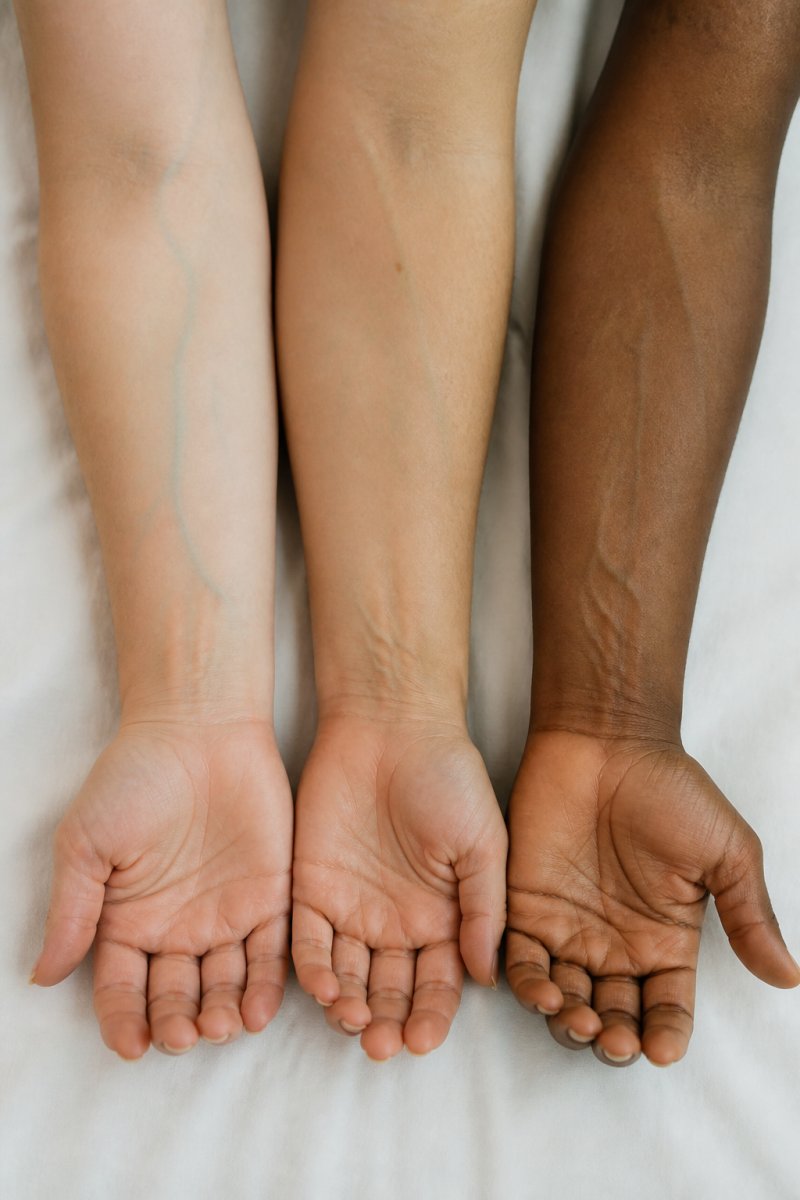
To identify your undertone, look at your inner wrist in natural light. Check your vein color. Examine which metals (silver or gold) make your skin glow. Ask yourself which color families you've always been drawn to.
At Tonni Petty PMU Artistry, we assess undertones during the consultation process. This step ensures your pigment choice complements your natural coloring and creates results that look intentional and harmonious.
Using the Fitzpatrick Scale in PMU Selection
The Fitzpatrick scale measures skin type from I to VI based on melanin content and sun sensitivity. This scale helps PMU artists predict how your skin will heal and how pigments will appear over time.
Type I skin is very fair and burns easily. Pigments may appear slightly darker than intended during healing.
Type II skin is fair with some sun sensitivity. Pigments settle predictably with minimal shift.
Type III skin is medium and tans gradually. Pigment retention is generally reliable.
Type IV skin is olive or tan. Pigments may oxidize slightly, appearing warmer after healing.
Type V skin is deep brown. Pigments need sufficient saturation to remain visible through healing.
Type VI skin is very dark. High-saturation pigments work best to ensure visibility after the healing process completes.
Understanding your Fitzpatrick type helps your artist select pigment formulations that will look right on your skin after healing. Lighter skin types may need cooler pigments to prevent warmth shifts, while deeper skin types benefit from pigments with higher saturation to maintain definition.
PMU Color Theory for Beginners
Color theory is essential for selecting PMU pigment color that works with your features. The color wheel shows relationships between hues. Understanding these relationships helps you choose pigments that enhance rather than compete with your natural coloring.
Complementary colors sit opposite each other on the color wheel. Red and green are complementary. Blue and orange are complementary. Using a small amount of a complementary color can neutralize unwanted tones.
The Color Wheel and Pigment Selection
The color wheel organizes colors into warm and cool families. Warm colors (reds, oranges, yellows) energize. Cool colors (blues, greens, purples) calm and recede.
For brows, if your natural hair is warm-toned (golden or reddish brown), a warm ash-based pigment with golden undertones looks natural. If your hair is cool-toned (ashy brown or black), a cooler pigment with less warmth prevents the "orange brow" problem many people experience.
For lips, the color wheel helps you choose between true reds, berry tones, and mauve options. A cool-undertoned person looks better in berry or mauve shades. A warm-undertoned person suits coral-reds and warm berry tones.
The key is matching your pigment's undertone to your skin and hair undertones. Mismatched undertones create that obvious, artificial look people try to avoid.
Modifiers and Correctors in PMU
Modifiers are lighter pigments mixed into darker shades to adjust tone and saturation. A modifier can cool down a warm pigment or warm up a cool one. Modifiers allow customization without starting from scratch.
Correctors are specialized pigments designed to neutralize unwanted color shifts. If previous PMU turned orange or red, a corrector with green or blue undertones can neutralize the warmth before applying new pigment.
Many artists use correctors to fix healed results that shifted unexpectedly. This is where understanding color theory prevents costly corrections. A pigment selected with proper undertone matching rarely needs correcting.
Matching Pigments to Hair Color and Features
Your natural hair color is the anchor for PMU pigment selection. Eyebrows should complement your hair, not match it exactly. Lips and eyeliner follow different rules based on their purpose.
Brows: Selecting Shade and Depth
Brow pigment should be slightly lighter and softer than your natural hair color. This creates definition without harshness. If your hair is black, your brow pigment might be dark brown. If your hair is light brown, your brow pigment might be medium taupe.
The depth of your pigment depends on your skin tone and hair color contrast. High contrast (dark hair, fair skin) can support deeper pigments. Low contrast (similar hair and skin tones) needs careful shade selection to avoid muddy results.
Consider your natural brow shape and your face shape. Straight brows suit angular faces. Arched brows suit round faces. Your pigment choice should enhance the shape you're creating, not fight against it.
For microblading or powder brows, the pigment needs to stay true as it heals. Warm pigments tend to shift warmer. Cool pigments stay more stable. This is why selecting the right undertone matters more than picking the "perfect" shade.
Lips and Eyeliner: Different Pigment Considerations
Lip pigments behave differently than brow pigments. Lips have higher blood flow and more active skin turnover. Pigments oxidize faster on lips, often shifting warmer or darker during healing.
Select a lip pigment one shade cooler or more neutral than your desired healed result. This compensates for oxidation. A true red may heal coral. A berry may heal more burgundy. Understanding this shift prevents disappointment.
Eyeliner pigments need to stay crisp and defined. Black pigments should stay true black, not shift to brown. Brown pigments should remain warm brown without cooling. Eyeliner placement on the lash line also affects how the color reads, pigment on the waterline appears more saturated than pigment on the lid.
Testing Pigments on Skin Before Commitment
Patch testing before permanent application is standard practice. A small amount of pigment applied to the skin reveals how your body processes it and how the color settles.
Apply a small dot of pigment to your inner arm or behind your ear. Wait 24 hours. Check the color in natural daylight. Observe any redness, swelling, or irritation. Check the color again after one week to see how it oxidizes on your skin.
This simple test prevents allergic reactions and shows you the actual healed color.
Preventing PMU Pigment Fading and Color Shifts
PMU pigment fading is natural. Most pigments fade 30-40% in the first year. Understanding why helps you choose pigments that hold color longer and select shades that still look good as they fade.
Pigment Oxidation and Healed Results
Pigment oxidation happens when pigments interact with oxygen in the dermal layer. Some pigments oxidize quickly, shifting color within days. Others oxidize slowly over months.
Pigment Quality and Ingredient Safety
Professional PMU pigments meet safety standards for inert, non-toxic ingredients. Quality pigments use iron oxides, titanium dioxide, and other approved colorants. Cheap pigments may contain heavy metals or untested compounds.
Choosing the Right Pigment for Your Specific Needs
Different PMU applications need different pigment types. Brows, lips, eyeliner, and scalp micropigmentation each have specific pigment requirements. Selecting the right formulation prevents poor results and excessive fading.
Organic vs. Inorganic Pigments
Inorganic pigments are mineral-based (iron oxides, titanium dioxide, chromium oxide). They're stable, fade predictably, and rarely cause allergic reactions. Most professional PMU uses inorganic pigments.
Pigment Viscosity and Application Technique
Pigment viscosity (thickness) affects how it flows through the needle and deposits in the skin. Thicker pigments require more pressure and a sharper needle. Thinner pigments flow easier with less trauma to the skin.
The Role of Natural Lighting in Pigment Selection
Pigment color looks different under different lighting. Fluorescent light makes warm pigments look orange. Natural daylight shows true color. Dim lighting obscures detail and saturation.
Common Mistakes When Choosing PMU Pigment Color
The biggest mistake is selecting pigment based on how it looks in the bottle or on a color wheel. Pigments look completely different on skin. What's true red in the bottle may look orange-red on warm skin or burgundy on cool skin.
Frequently Asked Questions
How do I determine my skin undertone for PMU pigment selection?
Check your wrist veins in natural light, blue or purple veins indicate cool undertones, green veins suggest warm undertones, and a mix indicates neutral. You can also observe how gold versus silver jewelry complements your skin. Cool undertones pair well with ash-based pigments and cooler shades, while warm undertones work better with golden hues and warmer pigments. This foundation determines which PMU pigment colors will look most natural and harmonious with your natural coloring.
Why does my PMU pigment color look different after it heals?
Pigment oxidation occurs during the healing process, and color shifts are common as pigments settle into the dermal layer. The healed result may appear lighter and shift in tone compared to the initial application. Patch testing and consulting with an experienced technician about expected healed results helps you choose pigments with predictable color stability.
What's the difference between organic and inorganic PMU pigments?
Organic pigments are carbon-based. Inorganic pigments are mineral-based. Your choice depends on your skin type, undertone, and desired color longevity.
How does PMU color theory help me choose the right pigment shade?
Color theory teaches you how to use the color wheel to select complementary and harmonious shades. For example, if you have warm undertones and golden hair, warm-toned pigments create a cohesive look, while cool pigments may appear muddy. Understanding color correction, using ash or cool modifiers to neutralize warm or orange tones, helps you avoid common pigment fading issues. This knowledge allows you to make informed decisions about pigment selection based on your natural coloring rather than guessing.